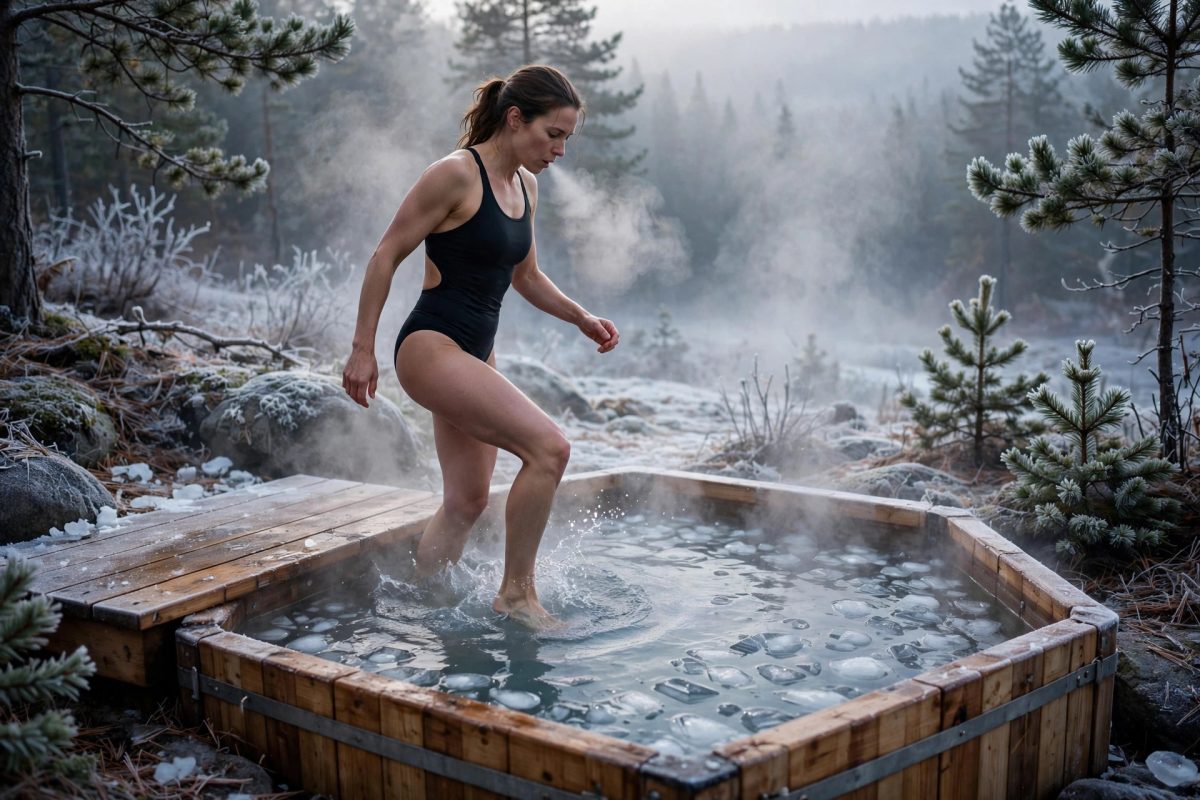
How long should you stay in a cold plunge? For most people, in typical 50–59°F (10–15°C) water, the answer is 2 to 3 minutes — and if it is your first time, 1 to 2 minutes no matter how warm the water is. Cold water is not a test of toughness: the colder the water, the shorter the safe time, and no session here ever exceeds 10 minutes. Enter your water temperature and experience level below for a conservative time range, then read the safety guidance before you get in. This calculator gives planning ranges only — it is never a prescription, and some people should not plunge at all (see the who-should-not list below). Getting enough sleep after hard sessions matters just as much as the plunge itself.
In 50–59°F (10–15°C) water, a typical session is 2 to 3 minutes. First-timers stay to 1 to 2 minutes at any temperature. Experienced plungers may go longer in warmer water, but nothing on this page exceeds 10 minutes — longer is not better, and the benefits do not keep climbing with time in the cold.
There is no single official cold-plunge duration, so this calculator uses conservative planning ranges built on two rules that every reputable cold-exposure guide agrees on: colder water means a shorter session, and beginners start far shorter than experienced plungers. The table below is the whole model — the calculator simply looks up your temperature band and experience level, applies the first-timer cap, and enforces the 10-minute absolute ceiling. Nothing here is a prescription for you personally; it is a starting range to plan around, and you should always get out earlier if your body tells you to.
| Water temperature | First-timer | Some experience | Experienced |
|---|---|---|---|
| Below 40°F (below 4°C) | 1–2 min | 1–2 min | 2–3 min |
| 40–49°F (4–9°C) | 1–2 min | 2–3 min | 3–5 min |
| 50–59°F (10–15°C) | 1–2 min | 2–3 min | 3–5 min |
| 60–70°F (16–21°C) | 1–2 min | 3–5 min | 5–8 min |
Two features of the table deserve emphasis. First, the first-timer row never rises above 1–2 minutes, even in the warmest band: a first plunge is mostly about the cold-shock response — the gasp, the racing heart, the urge to climb straight back out — and that response does not care that the water is "only" 65°F (18°C). Second, the coldest band caps even experienced plungers at 2–3 minutes, because water below 40°F (4°C) strips heat fast enough that numbness and loss of coordination can arrive sooner than you expect. The 10-minute ceiling is a hard cap on top of the table: no combination of warm water and long experience on this page produces a recommendation above 10 minutes, and most sessions should be well under it.
The first minute is the dangerous minute. Sudden immersion in cold water triggers the cold-shock response: an involuntary gasp, rapid breathing, a spike in heart rate and blood pressure, and a surge of stress hormones. That gasp is the reason for the most important safety rule on this page — never plunge alone, and never put your head under on a first plunge — because inhaling water during the gasp reflex is how cold-water immersion turns fatal. Enter gradually, keep your head above water, and focus on slow, controlled breathing until the gasp passes, usually within the first minute. If you cannot control your breathing, get out: that is your body telling you the session is over, whatever the timer says.
The second hazard arrives after you get out. Afterdrop is the continued fall in core body temperature once you leave the water, as cold blood from your limbs circulates back to your core — you can feel colder and start shivering harder 10 to 20 minutes after a plunge than you did in the tub. Warm up gradually with dry clothes, a warm (not hot) drink, and gentle movement; do not jump into a hot shower or sauna immediately, which can drop your blood pressure and make you dizzy. Shivering is normal and healthy — it is your body rewarming itself. Shivering that stops while you still feel cold, or any confusion, slurred speech, or clumsiness, is a warning sign: get warm and seek help.

Example 1 — 55°F (13°C) water, some experience. 55°F falls in the 50–59°F band, and "some experience" in that band gives 2–3 minutes — the typical session most guides describe for this common plunge temperature. Start at 2 minutes and only build toward 3 over several sessions if you stay comfortable and in control of your breathing throughout.
Example 2 — 38°F (3°C) water, experienced. 38°F is below 40°F, the coldest band, where even experienced plungers are capped at 2–3 minutes. The water is cold enough that heat loss is rapid, so experience buys you composure, not extra time: enter gradually, keep your head out, and get out at the first sign of numbness.
Example 3 — 65°F (18°C) water, first-timer. 65°F is in the warmest band, but the first-timer cap applies at every temperature, so the range is still 1–2 minutes. Warm-feeling water still triggers a cold-shock response in a newcomer, and a short first session teaches you how your body reacts without pushing into numbness or panic.
Example 4 — 45°F (7°C) water, experienced. 45°F sits in the 40–49°F band, where experienced plungers get 3–5 minutes. Even here, 5 minutes is the top of the range, not a target: most experienced plungers find 3 minutes plenty, and you should treat the upper end as available, not expected.
Cold plunging is not for everyone, and this list is the part of the page to take most seriously. Do not cold plunge — or check with your doctor first — if you have heart disease or a history of heart attack or stroke, uncontrolled high blood pressure, Raynaud's disease, epilepsy, or any condition affecting circulation or feeling in your limbs. Do not plunge if you are pregnant, if you have an open wound or infection, or if you have been drinking alcohol. Children should not use adult cold plunges unsupervised, and anyone who has fainted in cold water before should not try again without medical advice. This list is not exhaustive: if you take heart or blood-pressure medication, or you are unsure whether cold immersion is safe for you, ask your doctor before your first session — a two-minute phone call beats a cold-water emergency.
Use the range as a ceiling, not a goal. Your first sessions should sit at the bottom of your range: 1 minute for a first-timer, even if the table allows 2. Build up by 30 seconds at a time over weeks, never by jumping from 2 minutes to 8 because the water felt fine once. Always plunge with someone nearby who can help, keep your phone and a towel within reach, and set a timer you can see — cold water distorts your sense of time, and "a couple more minutes" is how a planned 3-minute plunge becomes an 8-minute one. Track how you feel afterward, not just how long you lasted: better sleep, less soreness, and a calm mood after are the outcomes that matter, and if you consistently feel drained, anxious, or chilled for hours afterward, you are going too long or too cold. For a fuller recovery plan, pair plunging sensibly with sleep and rest days — our sleep calculator can help you protect the sleep that actually drives recovery.
Written by the Live Fitness Check editorial team · Reviewed against our calculator methodology · Last updated November 2026
Disclaimer: This calculator is for educational purposes only and is not medical advice or a prescription. Cold plunge time ranges are conservative planning ranges, not a recommendation for you personally. Cold-water immersion carries real risks, including cold shock and hypothermia. Never plunge alone, and if you have heart disease, uncontrolled blood pressure, Raynaud's disease, epilepsy, are pregnant, or are unsure whether cold immersion is safe for you, check with your doctor first.
