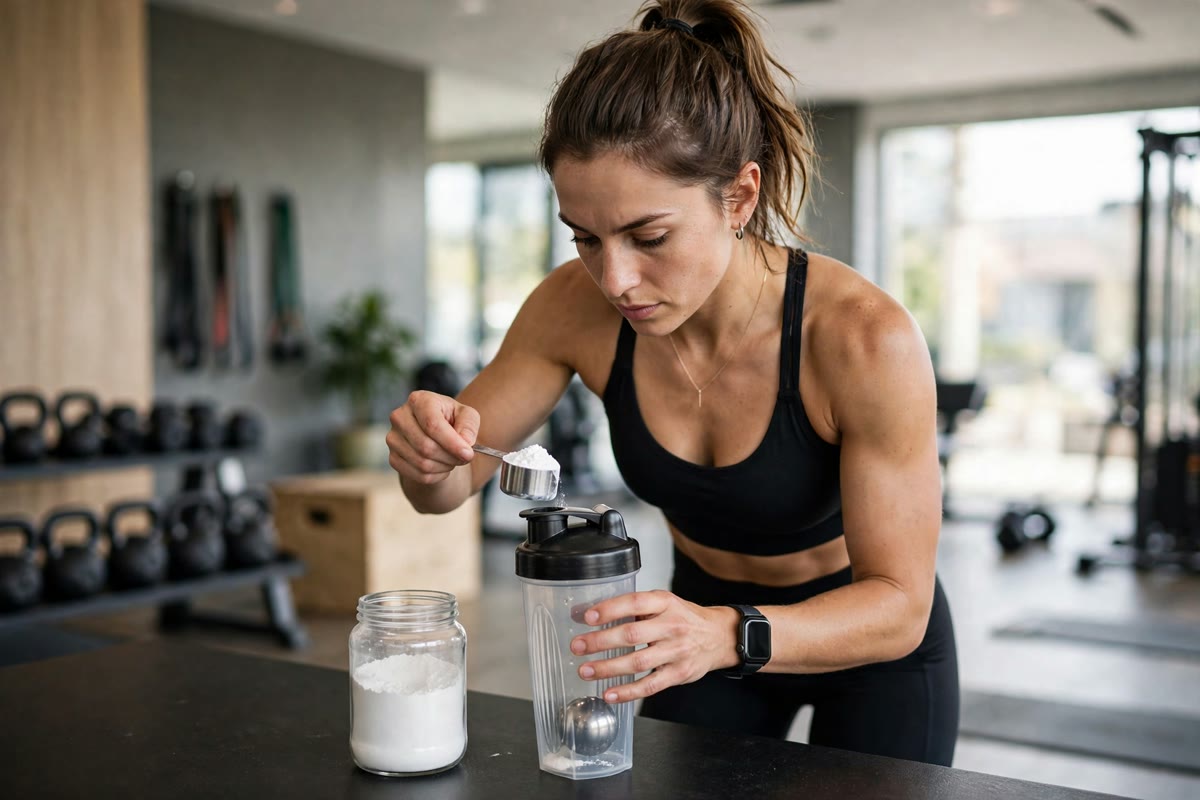
Here is the short answer: creatine monohydrate is one of the most studied supplements in all of sports nutrition — hundreds of trials, decades of safety data — and the research applies to women just as much as men. The standard approach is 3–5 grams of creatine monohydrate per day, every day, with no loading phase and no cycling required. It does not cause bulky muscles, it does not damage healthy kidneys, and the "water weight" it adds is mostly inside the muscle, not under the skin. In this guide you will see what creatine actually does, what the evidence says about benefits for women specifically, the myths that refuse to die, and who should skip it — or set your training nutrition with our protein calculator.
Creatine supports training — protein builds from it. Find your daily target with our protein calculator and your energy needs with the TDEE calculator.
Find My Protein TargetYour muscles run on ATP — adenosine triphosphate — and they only store a few seconds' worth. For hard efforts (a heavy set, a sprint, an explosive rep), muscles recharge ATP using phosphocreatine, a backup battery stored in the muscle. Supplementing creatine increases those phosphocreatine stores by roughly 20–40%, which means a few more reps before fatigue, a slightly faster recovery between sets, and over weeks, a slightly larger training stimulus.
That is the entire mechanism, and it is not sex-specific. Women typically start with lower baseline muscle creatine stores than men (partly because of lower average muscle mass and lower dietary intake — creatine comes mostly from meat and fish), which if anything suggests women have more headroom to benefit, not less. The International Society of Sports Nutrition's position stand — the most-cited summary in the field — concludes creatine monohydrate is effective and safe for healthy individuals across sexes when used as directed.
Strength and training performance. This is the well-established one: meta-analyses consistently show creatine improves maximal strength and high-intensity exercise performance by a modest but real margin — think a few percent on top of what training alone delivers. For women doing resistance training, that compounds over months into measurably more strength and lean mass than training without it.
Muscle tone without bulk. Creatine does not contain hormones and does not trigger masculine muscle growth — it simply lets you train slightly harder. Women worried about "getting bulky" should know that building large muscles requires years of dedicated heavy training plus a calorie surplus; 5 grams of creatine will not override your genetics.
Bone and emerging areas. Some research explores creatine's role alongside resistance training for bone health in postmenopausal women, and early-stage work looks at cognitive effects under stress (sleep deprivation, intense mental load). Treat these as promising but preliminary — the evidence is nowhere near as solid as the strength data, and anyone selling creatine as a brain or bone supplement is ahead of the science.
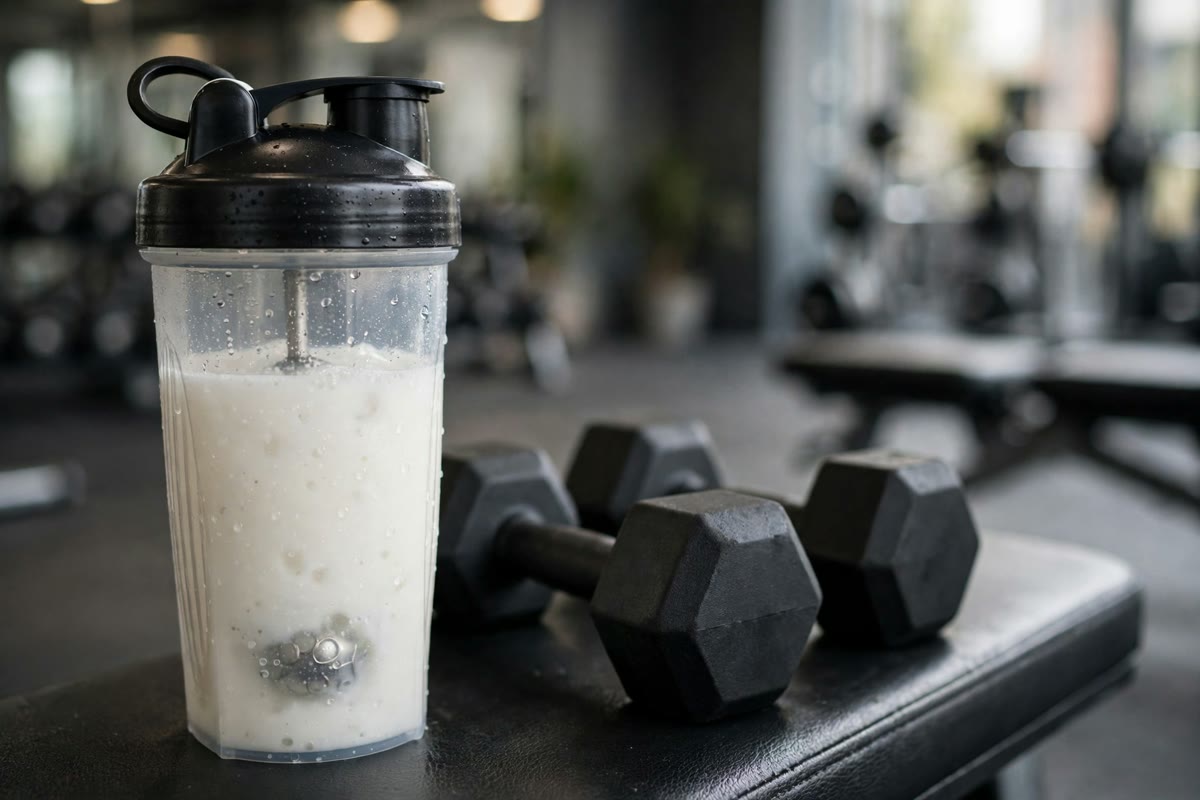
The research-backed protocol is boring, which is why it works: 3–5 grams of creatine monohydrate per day, every day, mixed into water or any drink. Timing does not meaningfully matter — post-workout has a slight edge in some studies, but consistency beats timing by a mile. It takes about 3–4 weeks of daily use to fully saturate muscle stores; after that you are simply maintaining.
You do not need a loading phase (20 g/day for a week gets you there faster but causes more stomach discomfort and gains you nothing long-term), you do not need to cycle off, and you do not need fancy forms — plain creatine monohydrate is the form used in the vast majority of studies, it is the cheapest, and "buffered," "ethyl ester," and other variants have not shown superiority. Look for third-party tested products (NSF Certified for Sport or Informed-Sport marks) and skip proprietary blends that hide the actual dose. For the nutrition side of your training, our guides on protein for weight loss and protein per meal pair with this one.
"Creatine damages your kidneys." In healthy individuals, long-term studies (up to 5 years) show no adverse effects on kidney function at recommended doses. The confusion comes from creatinine — a breakdown product of creatine that is also the marker doctors use to estimate kidney function. Supplementing raises creatinine levels on blood tests, which can look like a kidney issue to an uninformed reader of the lab report; tell your doctor you supplement so they interpret it correctly. Anyone with existing kidney disease should only use creatine under medical supervision.
"It causes bloating and water retention." Creatine pulls water into muscle cells (intracellular), which is part of how it works — muscles look slightly fuller, not puffy. The scale typically rises 1–3 lb (0.5–1.5 kg) in the first month; that is water in the muscle, not fat, and not the subcutaneous bloat people fear. It is also why the scale bump confuses dieters — track measurements and photos alongside weight.
"It is a steroid / it is banned." Creatine is not a steroid, not a hormone, and not banned by any major sports organization — it is a compound your body already makes and that occurs naturally in meat and fish. A pound of beef contains roughly 1–2 grams; the supplement just delivers the studied dose without the steak.
"Women should take a smaller dose." The 3–5 g/day range is not weight-scaled in the research the way protein is; smaller women often do fine at 3 g and larger or very active women at 5 g, but there is no separate "women's dose" in the evidence. More is not better — excess is simply excreted.
Creatine is not for everyone. Pregnant or breastfeeding women should skip it — there is insufficient safety data, and that alone is reason enough. Anyone with kidney disease, uncontrolled high blood pressure, or taking medications affecting the kidneys should get medical clearance first. Teenagers should prioritize food, sleep, and training consistency; the evidence base in adolescents is thinner. And if a product promises dramatic transformations, proprietary blends, or "creatine without water weight" — that is marketing, not science.
Dial in the foundation first: our protein calculator sets your daily target in seconds.
Find My Protein TargetWritten by the Live Fitness Check editorial team · Reviewed against our calculator methodology · Last updated October 2026
Disclaimer: This guide is for educational purposes only and is not medical advice. Supplements affect individuals differently; talk to your doctor before starting creatine, especially if you are pregnant, breastfeeding, managing a kidney condition, or taking medication. Do not exceed the studied 3–5 g/day range without medical guidance.