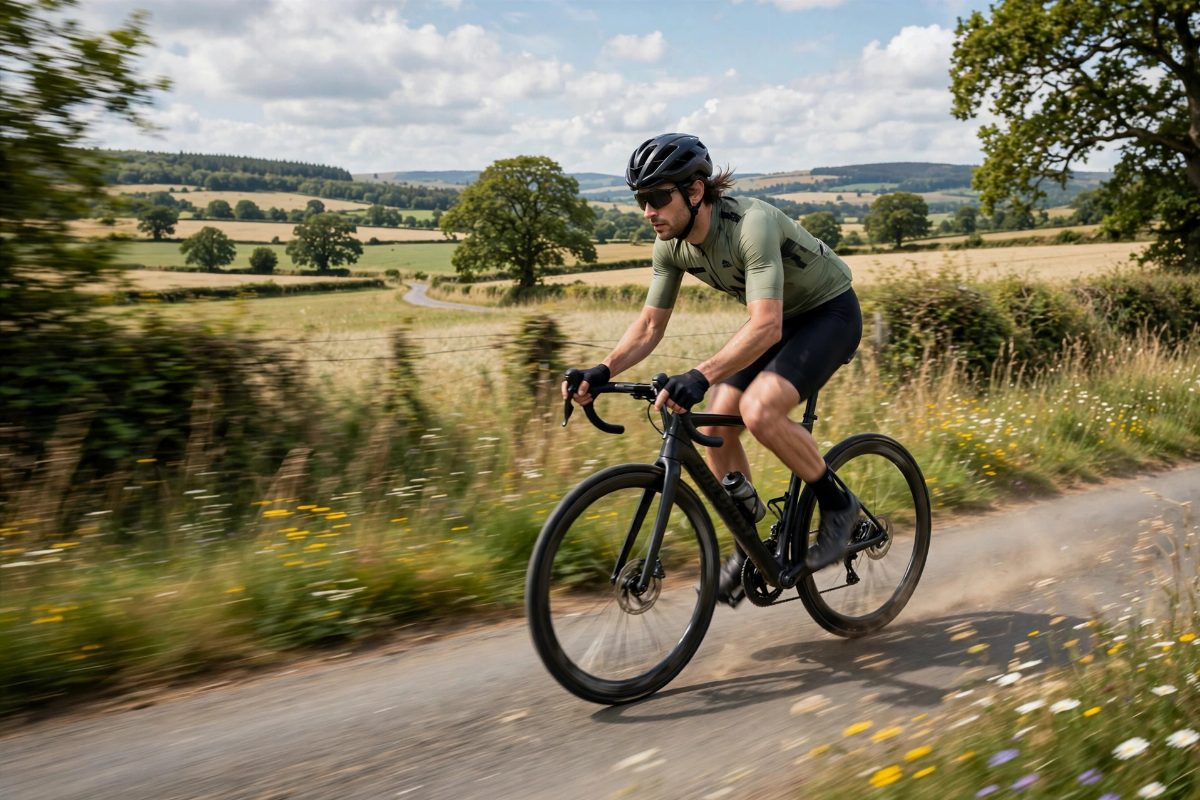
Cycling burns roughly 290 calories an hour at a leisurely pace and 871 calories an hour at race pace for a 160 lb (73 kg) rider — a threefold range driven almost entirely by speed. No other common exercise scales this steeply with pace, because aerodynamic drag rises sharply as you go faster. In this guide you will see the speed-by-weight chart, why indoor and outdoor rides differ, and why your bike display probably flatters you — or check any ride instantly with our calories burned calculator.
A 160 lb rider burns about 290 calories an hour below 10 mph, 493 at 10–11.9 mph, 581 at 12–13.9 mph, 726 at 14–15.9 mph, and 871 at 16–19 mph. Hills, wind, and bike type move these numbers, but speed dominates: going from a 13 mph cruise to a 17 mph hammer session adds about 50% more burn per hour. Try your own numbers in our calories burned calculator or TDEE calculator.
Calculate My RideThe Compendium of Physical Activities rates cycling by speed band, and the formula is the standard one: calories = MET x weight in kg x hours. Mountain biking and spin classes sit in their own rows because terrain and instructor-driven intervals change the effort profile:
| Speed / type (MET) | 130 lb (59 kg) | 160 lb (73 kg) | 190 lb (86 kg) | 220 lb (100 kg) |
|---|---|---|---|---|
| Leisure, under 10 mph (4.0) | ~236 | ~290 | ~345 | ~399 |
| Light, 10–11.9 mph (6.8) | ~401 | ~493 | ~586 | ~679 |
| Moderate, 12–13.9 mph (8.0) | ~472 | ~581 | ~689 | ~798 |
| Vigorous, 14–15.9 mph (10.0) | ~590 | ~726 | ~862 | ~998 |
| Racing, 16–19 mph (12.0) | ~708 | ~871 | ~1,034 | ~1,197 |
| Mountain biking, general (8.5) | ~501 | ~617 | ~733 | ~848 |
| Spin class, indoor (9.0) | ~531 | ~653 | ~776 | ~898 |
The physics explains the shape of the table. At low speeds, rolling resistance dominates and the burn grows gently with speed; above about 14 mph, aerodynamic drag — which grows with the square of speed — takes over, so each extra mile per hour costs disproportionately more energy. That is also why drafting in a group feels so much easier: riding in a paceline can cut the power you need by roughly 30%, and with it, your calorie burn at the same speed. A solo rider and a group rider at 17 mph are not doing the same workout, even though their speedometers agree.
Stationary bikes and spin classes look comparable on paper — moderate stationary riding rates about 6.8 METs, vigorous about 10.8 — but the experience differs in ways that change the real burn. Outdoors you coast on descents, fight headwinds, and climb hills, so the effort is spiky; indoors the resistance is constant and there is no coasting, which often makes an indoor hour slightly harder at the same perceived effort. The bigger indoor trap is the display: built-in bike computers commonly overestimate by 15 to 40% because they use generic formulas that ignore your actual weight and fitness. If your spin bike claims 900 calories for a moderate hour at 160 lb, the chart says about 650 — trust the chart, or better, pair the ride with a chest-strap heart rate monitor for a second opinion.
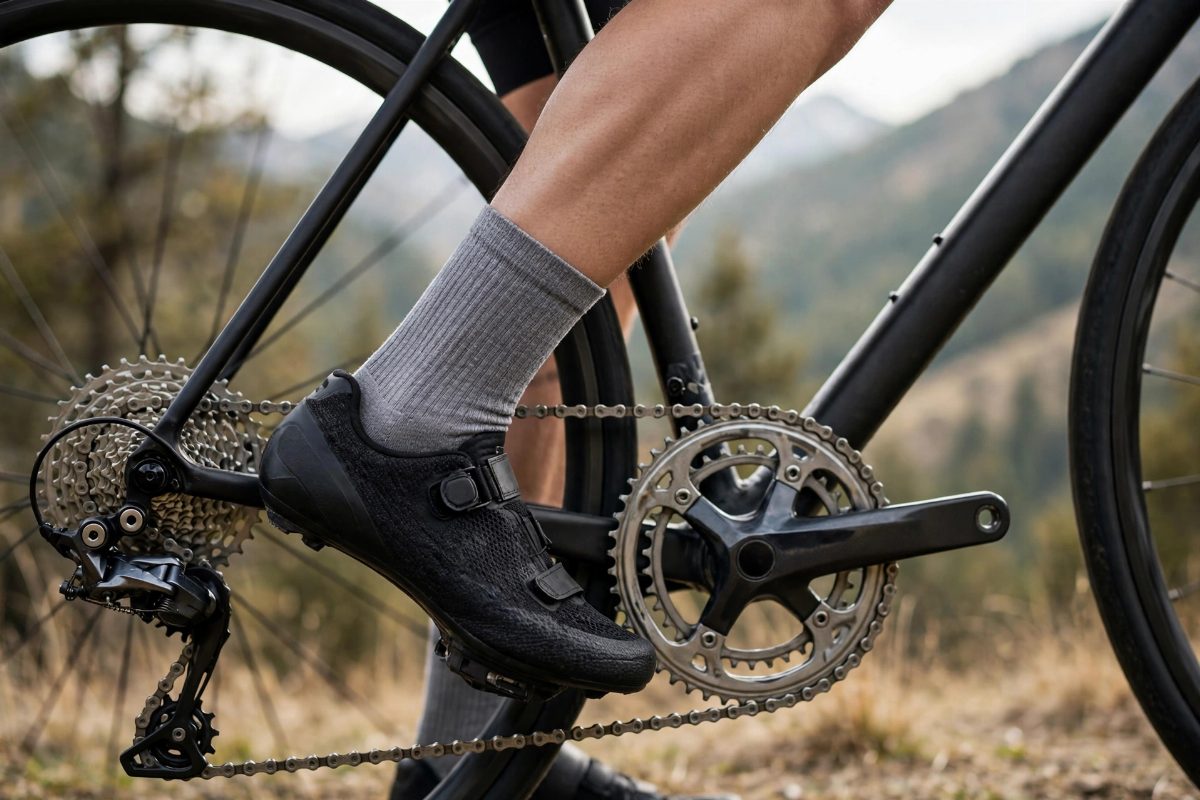
Take a 160 lb (72.6 kg) rider holding 13 mph — the middle of the moderate band, 8.0 METs — for 45 minutes. The math: 8.0 x 72.6 kg x 0.75 hours = 436 calories. The same rider at a leisurely 9 mph for the same 45 minutes burns only about 218 calories (4.0 x 72.6 x 0.75 = 218), while a 17 mph hammer session burns about 653 (12.0 x 72.6 x 0.75 = 653). Weekly math makes the point: five 45-minute moderate rides burn about 2,180 calories a week — roughly 0.6 lb of fat per week before diet — while five leisurely rides burn about half that. If your goal is weight loss, the most effective change is rarely a longer ride; it is a slightly faster one, or adding one interval session a week. And as with running, the deficit still does most of the work — cycling just makes the deficit cheaper in time and kinder on knees.
Three factors move a ride off the chart. Hills are the biggest: climbing a sustained 5% grade can roughly double the effort of flat riding at the same speed, which is why hilly 13 mph rides feel like flat 16 mph rides. Headwinds act like invisible hills — a 10 mph headwind at 15 mph ground speed means you are pushing through 25 mph of air. Bike type matters less than people think on the road, but off-road it matters a lot: knobby tires, suspension bob, and soft surfaces push mountain biking to about 8.5 METs even at modest speeds, and a fat bike on sand is harder still. E-bikes deserve an honest note: pedal-assist riding still burns a real 250 to 400 calories an hour at moderate assist, because you are still pedaling — it is simply not the same workout as the same route unassisted, and counting it as such will overstate your deficit.
The plan that survives contact with real life is three rides a week: two moderate 45-minute rides plus one longer weekend ride of 90 minutes, with one of the moderate rides including intervals (for example, 6 rounds of 3 minutes hard and 3 minutes easy). At 160 lb that is roughly 436 + 436 + 871 = 1,743 calories a week from cycling alone, before any diet change — and because cycling is low-impact, most people can hold that volume for months without the joint complaints that end running plans. Protect the plan with the basics: a helmet every ride, lights after dark, water on any ride over 45 minutes, and a proper bike fit — knee pain on a bike is almost always a saddle-height problem, not a fitness problem. Check your zones with our heart rate zones calculator to keep easy rides genuinely easy.
Our calories burned calculator checks any ride in seconds.
Calculate My RideWritten by the Live Fitness Check editorial team · Reviewed against our calculator methodology · Last updated October 2026
Disclaimer: This guide is for educational purposes only and is not medical advice. Calorie figures are estimates from the Compendium of Physical Activities; actual burn varies with speed, hills, wind, drafting, bike type, and fitness. Wear a helmet, follow local traffic laws, and talk to your doctor before starting vigorous exercise.