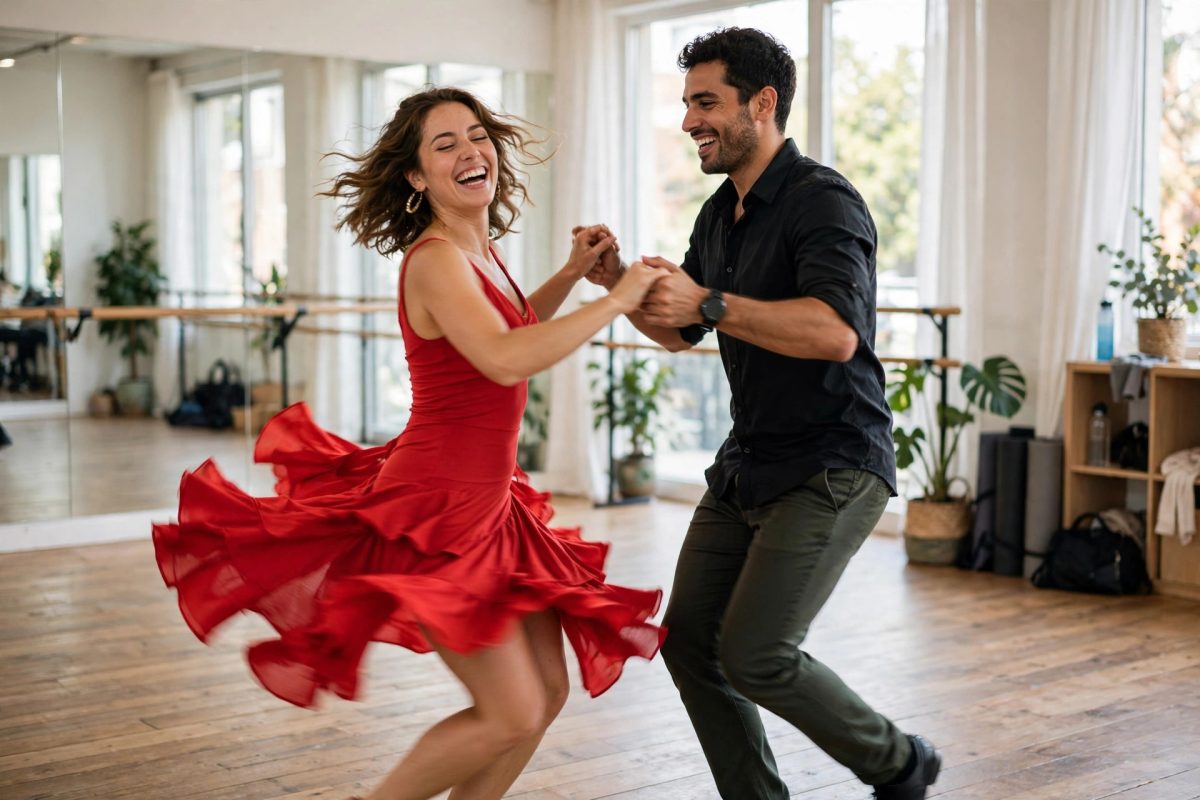
Dancing burns anywhere from about 230 calories an hour for slow ballroom to about 570 an hour for a hard Zumba class, at 160 lb — a 2.5x range driven entirely by style and intensity. That spread is why "dancing burns X calories" is meaningless without naming the dance. In this guide you will see the style-by-style chart for four body weights, the formula behind every number, why your class burns less than the chart says, and what dancing does to a weekly deficit — or check any session instantly with our calories burned calculator.
Every number in this guide comes from one formula: calories = MET x 3.5 x weight in kg / 200 x minutes. MET (metabolic equivalent) is the intensity of the dance: slow ballroom is 3.0, salsa is 4.8, ballet class is 5.0, hip-hop is 5.8, and Zumba is 7.5. A 160 lb (72.6 kg) person doing 45 minutes of Zumba burns 7.5 x 3.5 x 72.6 / 200 x 45 = ~429 calories. Try your own numbers in our calories burned calculator or TDEE calculator.
Calculate My Dance SessionAll figures are for 60 minutes of continuous dancing at the stated intensity. Your class will differ — see the breaks caveat below — but this is the honest comparison:
| Dance style (MET) | 130 lb (59 kg) | 160 lb (73 kg) | 190 lb (86 kg) | 220 lb (100 kg) |
|---|---|---|---|---|
| Slow ballroom, waltz (3.0) | ~186 | ~229 | ~271 | ~314 |
| Salsa, partner (4.8) | ~297 | ~366 | ~434 | ~503 |
| Ballet / jazz class (5.0) | ~310 | ~381 | ~452 | ~524 |
| Hip-hop (5.8) | ~359 | ~442 | ~525 | ~608 |
| Zumba (7.5) | ~464 | ~571 | ~679 | ~786 |
Read the table two ways. First, style dominates: an hour of Zumba burns roughly what two and a half hours of slow ballroom burns. Second, weight scales everything: a 220 lb dancer burns about 70% more than a 130 lb dancer doing the same routine, because moving more mass costs more energy. Neither fact is a judgment — it is physics, and it is why generic "dancing burns 400 calories an hour" claims are useless without your weight and your style.
Here is the honest correction most articles skip. A 60-minute class typically includes instruction, waiting for your turn, water breaks, and stretching — often only 40 to 45 minutes of actual movement. A 160 lb dancer in a Zumba class therefore burns more like 380 to 430 calories per class, not the full 571 the chart shows. Partner dancing has the same issue: social dances include sitting out songs, chatting, and switching partners. The fix is simple: count only your moving minutes. A 45-minute Zumba session at 160 lb is ~429 calories (worked above); a 40-minute social salsa night at the same weight is ~244. If you wear a fitness tracker, expect it to read 10 to 30% high for dance, because wrist motion confuses step-based estimates.
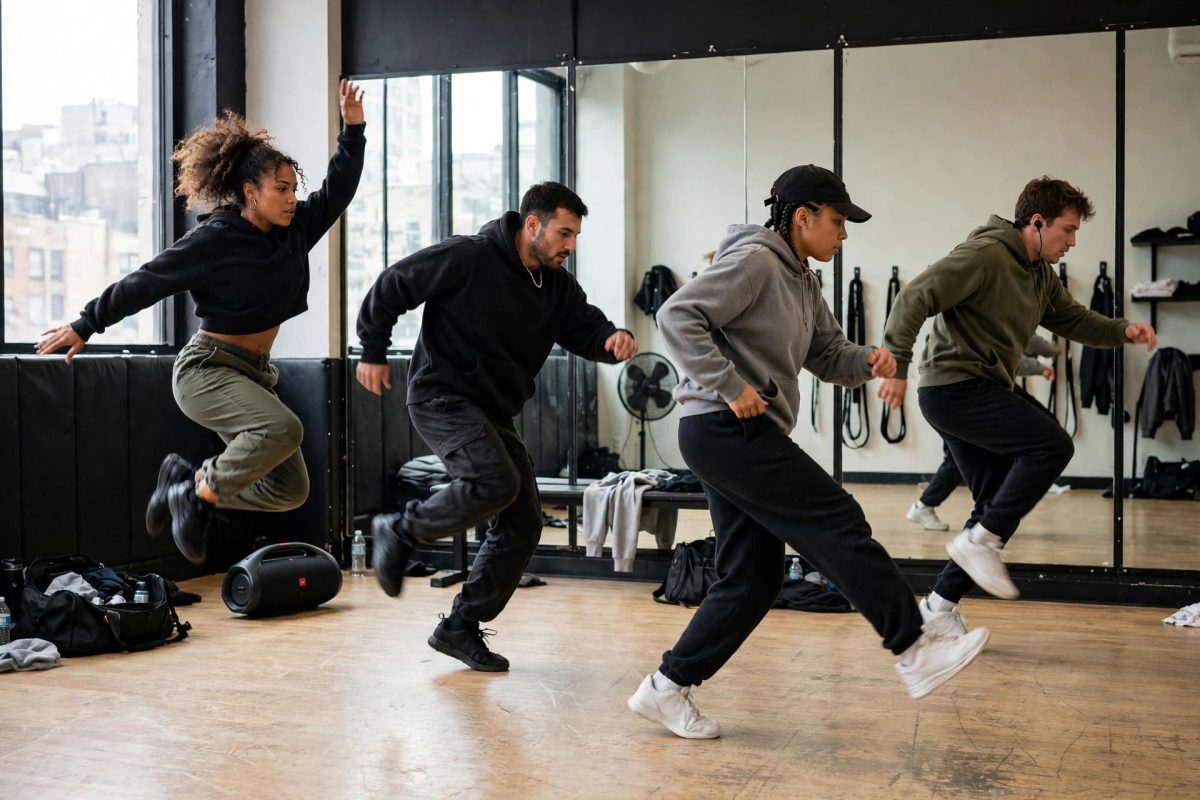
How does dancing stack up? Slow ballroom (~229/hr at 160 lb) is comparable to gentle yoga and easy walking; salsa (~366) matches moderate cycling; hip-hop (~442) matches vigorous swimming; Zumba (~571) approaches running at a moderate pace. But dancing has one advantage no treadmill offers: adherence. People quit treadmills; they keep going to dance classes because they enjoy them, and the workout you actually do beats the perfect workout you skip. Weekly math for a 160 lb dancer: three 45-minute Zumba classes burn ~1,287 calories a week; three 60-minute social salsa nights (counting 40 moving minutes each) burn ~732. Either way, that is real deficit material — about a quarter to a third of a pound of fat per week from dance alone, before any diet change.
Pick by enjoyment first and burn second, because consistency beats intensity. If you love Latin music, salsa's ~366/hr done three times a week beats a Zumba class you attend twice and quit. If you want the biggest burn and you like high energy, Zumba and hip-hop are the top of the social-dance chart. If you are older or returning to exercise, slow ballroom still burns ~229/hr and adds balance, coordination, and social contact — benefits no calorie chart captures. Beginners actually burn slightly more than skilled dancers for the same routine, because inefficient movement wastes energy; as you improve, your burn per hour drops a little, which is a sign of skill, not failure. And if you are choosing between dance styles for weight loss, pair the dancing with the basics: a calorie deficit from food does most of the work, and dance makes the deficit enjoyable instead of miserable.
The best dance plan is the one that survives contact with a real week. For a 160 lb dancer, here is a sustainable template: Monday, a 45-minute Zumba class (~429 calories); Wednesday, a 60-minute social salsa night with about 40 moving minutes (~244); Saturday, a 30-minute at-home hip-hop practice session (~221). Total: ~894 calories a week from three enjoyable sessions, plus better balance, coordination, and mood than the same time on a treadmill. If weight loss is the goal, add one more session rather than making sessions longer — four sessions a week at this mix passes 1,100 calories, and variety protects your joints and your motivation better than grinding one style daily. Track only moving minutes, keep a regular class time so it becomes a habit rather than a decision, and bring a friend: social accountability is the most reliable adherence tool exercise science has found, and dance is one of the few workouts where bringing a friend is the whole point.
Our calories burned calculator checks any session in seconds.
Calculate My SessionWritten by the Live Fitness Check editorial team · Reviewed against our calculator methodology · Last updated October 2026
Disclaimer: This guide is for educational purposes only and is not medical advice. Calorie figures are estimates from standard MET values; actual burn varies with intensity, breaks, skill, and body composition. If you have a heart condition or are returning to exercise after illness, talk to your doctor.
