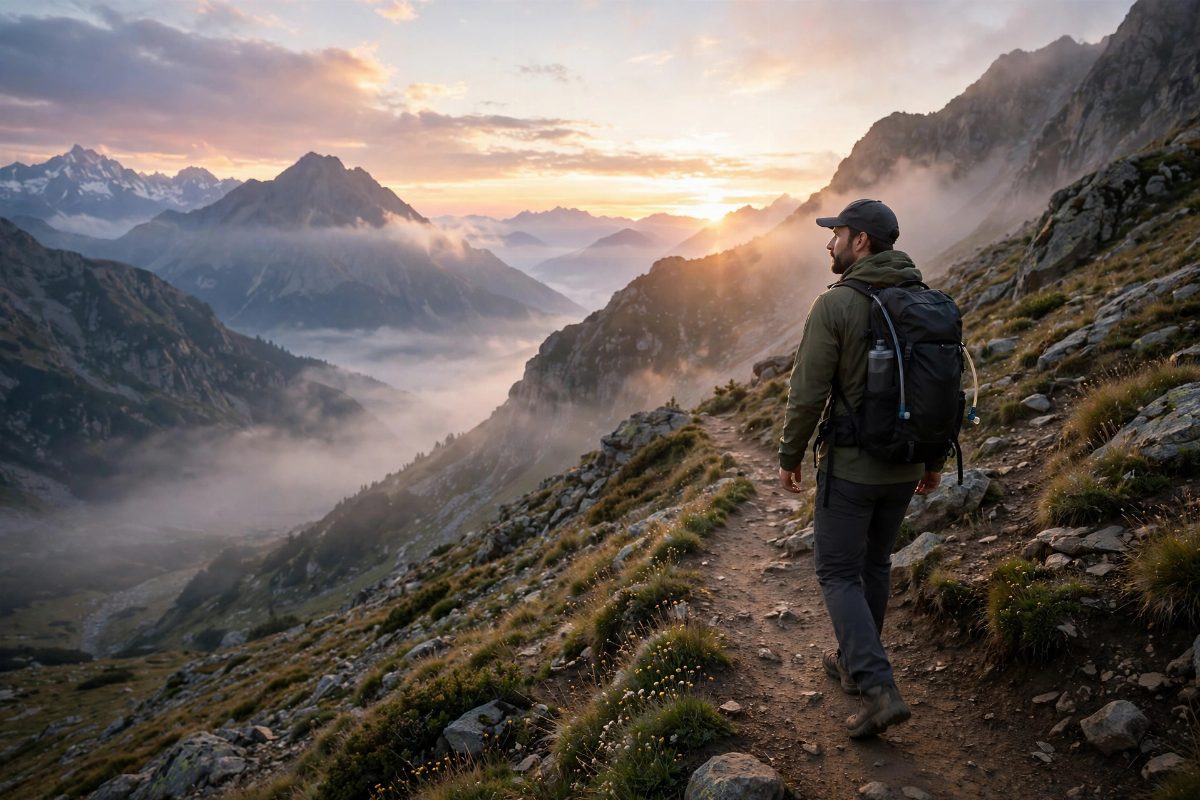
Hiking burns roughly 313 calories an hour on a moderate trail for a 160 lb (73 kg) hiker, rising to about 508 calories an hour on steep ground with a heavy pack. Grade and pack weight decide almost everything: the same person on the same mountain can burn 40% more simply by adding a loaded backpack and choosing the steeper route. In this guide you will see the grade-by-pack chart by body weight, why your watch probably overcounts the hike, and how to count a real hike honestly — or check any outing instantly with our calories burned calculator.
A 160 lb hiker burns about 327 calories an hour on easy trails, 385 on moderate trails, and 508 on steep trails with a heavy pack. The catch is moving time: a "4-hour hike" usually holds 3 to 3.5 hours of actual walking once viewpoints, snacks, and photos are removed. Count moving hours, not trailhead-to-car hours, or every estimate below will read high. Try your own numbers in our calories burned calculator or TDEE calculator.
Calculate My HikeThe Compendium of Physical Activities rates hiking by effort, and effort on a trail is mostly grade plus load. Easy trails are gentle, well-graded paths; moderate trails roll with sustained climbs; steep-with-pack means sustained grades carrying a loaded daypack or overnight pack. Calories = MET x weight in kg x hours:
| Trail type (MET) | 130 lb (59 kg) | 160 lb (73 kg) | 190 lb (86 kg) | 220 lb (100 kg) |
|---|---|---|---|---|
| Easy, gentle trail (4.5) | ~265 | ~327 | ~388 | ~449 |
| Moderate, rolling climbs (5.3) | ~313 | ~385 | ~457 | ~529 |
| Steep + heavy pack (7.0) | ~413 | ~508 | ~603 | ~699 |
Two things stand out. First, pack weight is not a rounding error: moving from moderate to steep-with-pack adds roughly 30% at the same body weight, because every step lifts both you and the load against gravity. Second, weight scales the burn linearly — a 220 lb hiker burns about 70% more than a 130 lb hiker on the same trail, which is why generic "600 calories an hour" claims are meaningless without a weight attached. A good rule of thumb for trip planning: budget 350 to 450 calories per moving hour for most adults on moderate terrain, then adjust up for steep grades and heavy packs.
Almost every hiker overcounts, because the clock at the trailhead keeps running while you are standing still. Viewpoints, lunch, route-finding, and group regroups easily eat 30 to 60 minutes out of a 4-hour outing. A realistic accounting looks like this: 4 hours trailhead-to-car, minus 45 minutes of stops, leaves 3 hours 15 minutes of moving time. At a moderate 385 calories an hour for a 160 lb hiker, that is about 1,251 calories — not the 1,540 you get from multiplying by 4. GPS watches help here if you read the "moving time" field rather than the elapsed field, but even watches overcount on steep descents, where the effort is real but lower than the climb. For weight-loss math, always use moving time and the moderate column unless the route was genuinely steep and loaded the whole way.
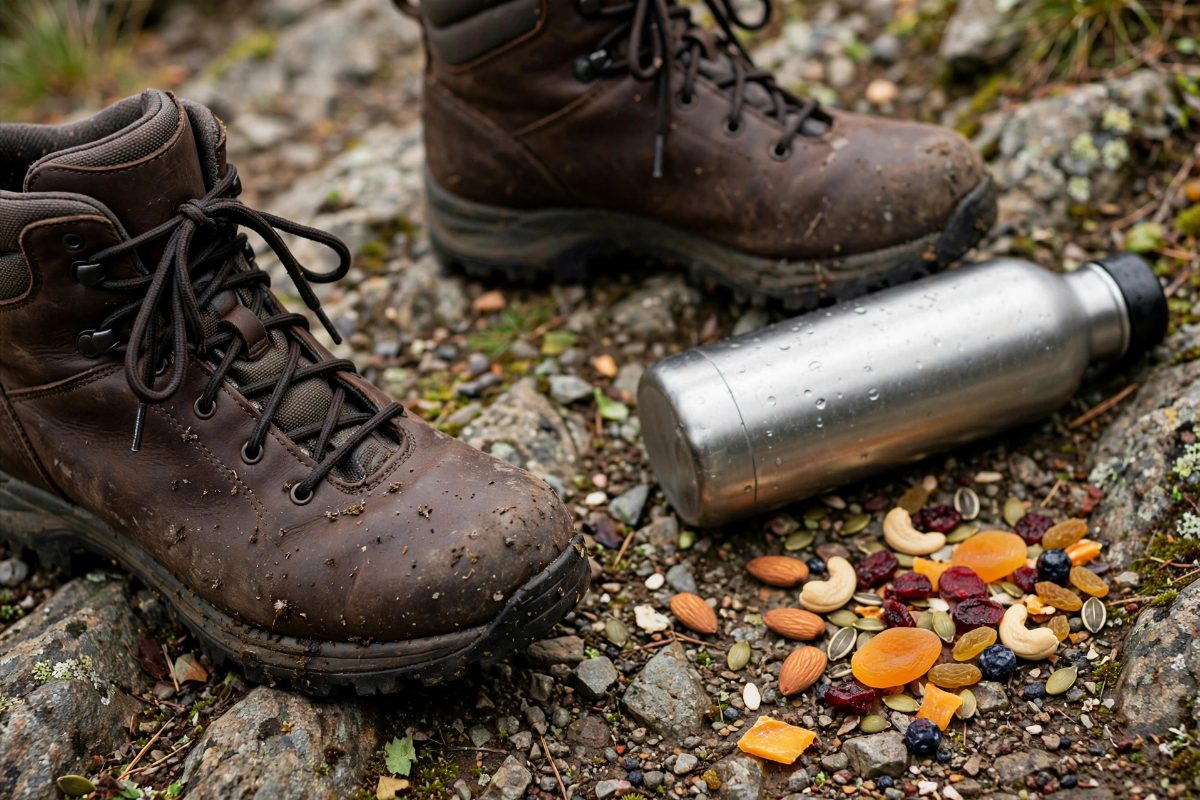
Take a 160 lb (73 kg) hiker on a rolling trail rated moderate, 5.3 METs, walking for 3 moving hours at about 2.5 miles per hour — roughly 7.5 miles with elevation along the way. The math: 5.3 x 72.6 kg x 3 hours = 1,154 calories. Add a 20 lb daypack and a steeper middle section and the honest estimate rises toward the 7.0 MET column for part of the route — say 1 hour steep-with-pack (508) plus 2 hours moderate (770), totaling about 1,278 calories. That single outing covers roughly half a pound of fat's worth of energy (about 3,500 calories per pound) before food, which is exactly why hiking pairs so well with a calorie deficit: it is enjoyable enough to repeat weekly, unlike the punishing sessions people quit. Carry water and a snack for anything over 90 minutes — a 300-calorie snack on a 1,200-calorie hike is fuel, not failure.
Hiking sits between walking and running on effort, and the comparison explains its popularity. Brisk flat walking at 3.5 mph burns about 280 calories an hour at 160 lb; moderate hiking at 385 is roughly 40% more for the same hour, thanks to grade and uneven ground engaging calves, glutes, and core. Running at 6 mph burns about 720 an hour but is unsustainable for most people beyond an hour and punishes knees on descents. Rucking — walking with a weighted pack on purpose — is hiking's training cousin: the same pack-weight principle, applied on flat ground, which is why rucking calculators and hiking estimates converge around 400 to 550 calories an hour for loaded walking. If your goal is weekly burn with low injury risk, three moderate hikes a week beat one heroic mountain day followed by six days on the couch.
The honest ways to raise the burn are the boring ones: pick hillier routes, carry a sensibly loaded pack (start at 10 to 15 lb and build up — a pack over a third of your body weight is a recipe for knee and back trouble), and hike longer rather than faster, since downhill speed raises impact without much extra burn. Trekking poles do not cut the burn much and they save knees on descents, so use them on steep routes without guilt. Eat before long hikes, drink on a schedule rather than waiting for thirst, and remember that altitude, heat, and rough footing all raise effort — and risk — together. If you have a heart condition, knee problems, or you are hiking above 8,000 feet for the first time, check with your doctor and build distance gradually.
Our calories burned calculator checks any hike in seconds.
Calculate My HikeWritten by the Live Fitness Check editorial team · Reviewed against our calculator methodology · Last updated October 2026
Disclaimer: This guide is for educational purposes only and is not medical advice. Calorie figures are estimates from the Compendium of Physical Activities; actual burn varies with grade, pack weight, footing, altitude, and fitness. If you have a heart condition or joint problems, talk to your doctor before strenuous hiking.
