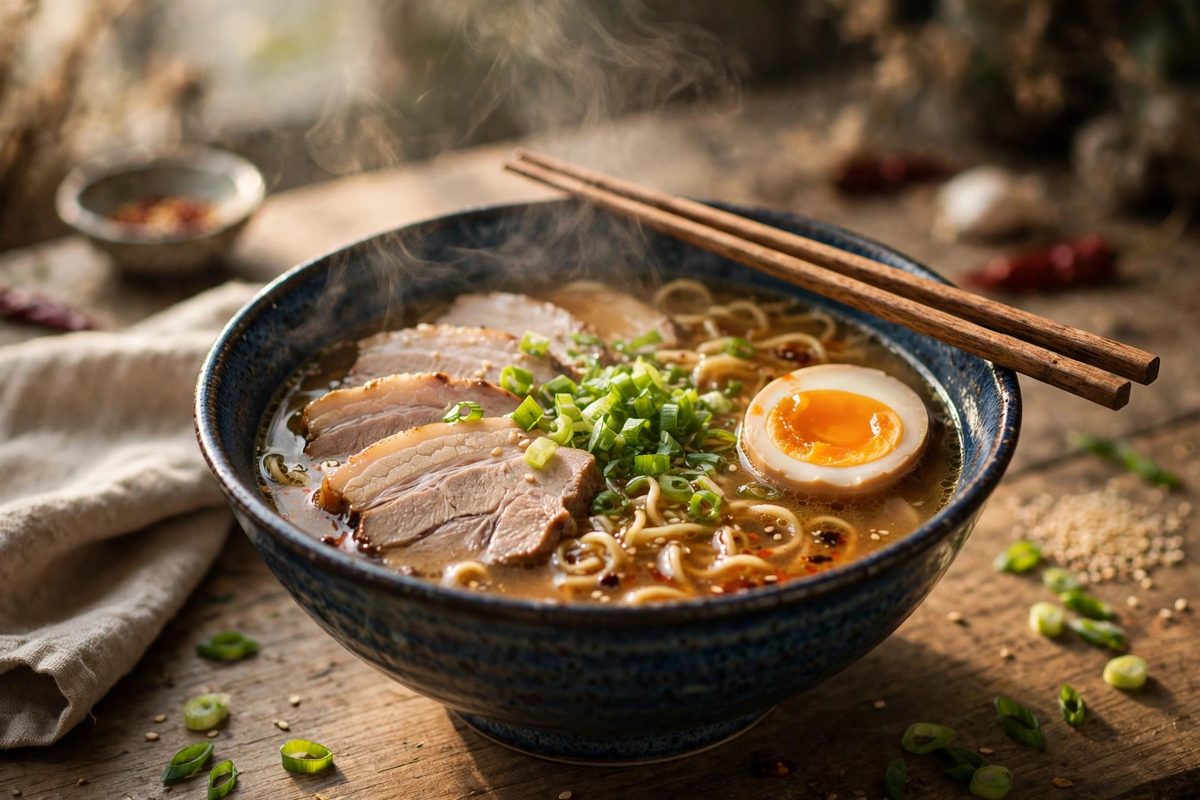
An instant ramen packet is about 380 calories; a restaurant bowl of tonkotsu ramen is about 700. The gap is the broth and the pork: instant ramen is mostly noodles and salt, while a restaurant bowl adds rich broth, chashu pork, and an egg — and the toppings are where the calories live. Use our calorie calculator to see what a 700-calorie bowl means against your daily target — this guide breaks down every style, from instant to tonkotsu, and the lighter orders that keep the flavor.
A packet of instant ramen is about 380 calories for the whole packet, noodles plus seasoning. A restaurant tonkotsu bowl runs about 700: noodles about 350, broth about 100, chashu pork about 150, a soft egg 72, and toppings about 50. A lighter shoyu-style bowl is about 450 to 550. The table below is the full breakdown.
Check My Daily TargetRamen is four parts, and each part has its own calories. The noodles are the biggest share: a standard restaurant serving of fresh ramen noodles is about 350 calories, and the dried noodle block in an instant packet is about 300 of the packet's 380. The broth is next, and it varies the most: a clear shoyu (soy sauce) broth is about 50 to 100 calories, while a tonkotsu broth — pork bones simmered for hours until the fat emulsifies into the soup — is about 100 to 200 calories on its own. The toppings are where a bowl gets heavy: two slices of chashu pork are about 150 calories, a soft-boiled egg is 72, a sheet of nori is about 5, and bamboo shoots and green onions are about 10 to 20 together. Extra pork, extra noodles, and extra oil (the flavored oil many shops float on top) are the add-ons that push a bowl from 700 toward 900.
| Style or part | Amount | Calories |
|---|---|---|
| Instant ramen, whole packet | 1 packet | ~380 |
| Restaurant tonkotsu bowl, typical | 1 bowl | ~700 |
| Restaurant shoyu bowl, typical | 1 bowl | ~450–550 |
| Noodles (restaurant serving) | 1 portion | ~350 |
| Tonkotsu broth | 1 bowl | ~100 |
| Chashu pork | 2 slices | ~150 |
| Soft-boiled egg | 1 | 72 |
| Nori, bamboo, green onions | Standard topping | ~50 |
| Tonkotsu breakdown total | 350 + 100 + 150 + 72 + 50 | ~722 |
The breakdown adds up: 350 + 100 + 150 + 72 + 50 = 722, which is why this guide says "about 700" for a typical tonkotsu bowl — the exact number moves with the shop, the noodle portion, and how much pork lands on top. A bowl with extra noodles (kaedama, a second noodle portion) adds another 200 to 350 calories, and extra chashu adds 150 more, so the "extra everything" order that regulars love is easily a 1,000-calorie bowl. Against a 2,000-calorie day, a 700-calorie bowl is 35% of the day — a real lunch, not a snack, and it leaves about 1,300 calories for the rest of the day.
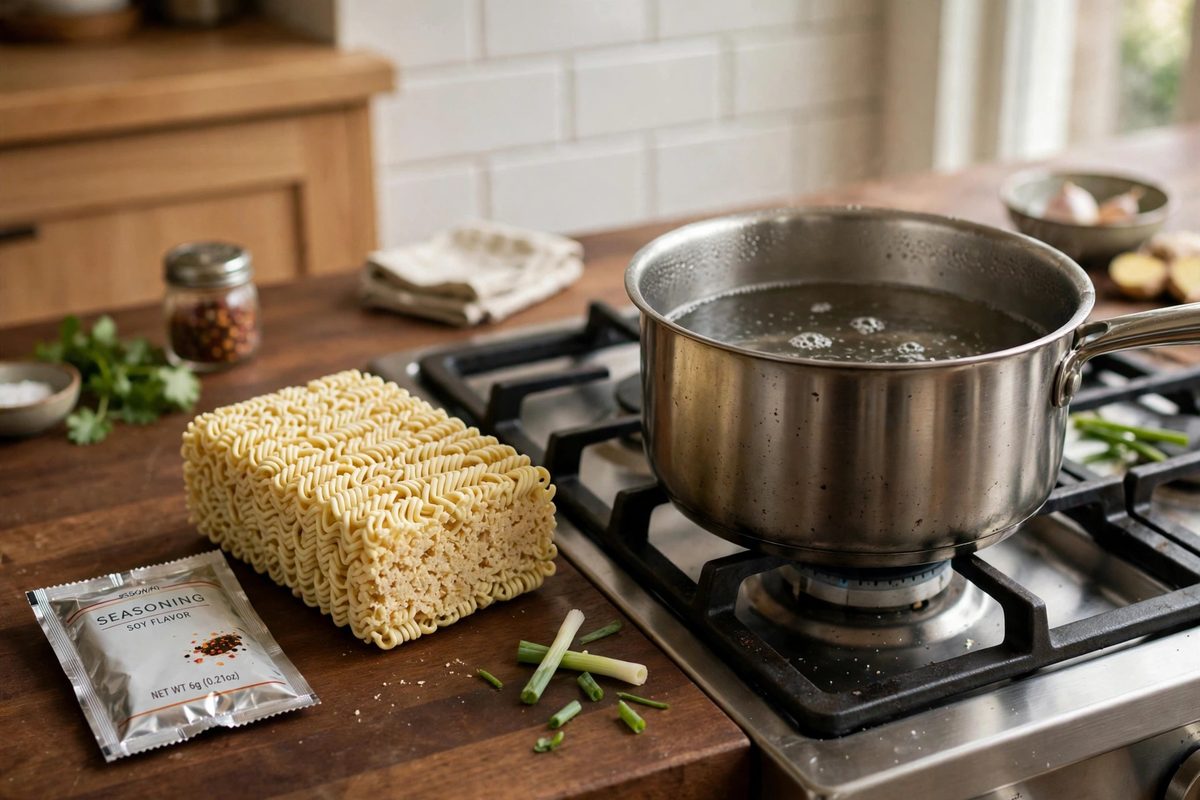
Instant ramen is a different food from restaurant ramen, and the label tells the story: one packet is about 380 calories, almost all of it refined wheat noodles and the oil they are fried in, with 8 to 10 g of protein and very little fiber. The seasoning packet adds most of the flavor and most of the sodium — a typical packet carries about 1,800 mg of sodium, or about 78% of the 2,300 mg daily limit the US dietary guidelines suggest. Adding an egg (72 calories) and a handful of frozen vegetables (about 30 calories) turns it into a more complete meal at about 480 calories, and it is the cheapest upgrade in this guide. What instant ramen is not is a protein meal: at 8 to 10 g of protein per packet, it leaves you hungry an hour later unless you add an egg, tofu, or leftover chicken. It is fine as an occasional quick lunch; as a daily habit, the sodium and the low protein are the problem, not the 380 calories.
Ramen's calories are manageable; its sodium is not. A restaurant bowl commonly carries 2,000 to 3,000 mg of sodium — the whole day's suggested limit in one bowl — and an instant packet carries about 1,800 mg. Most of it is in the broth, which is also the part you can control: drinking half the broth instead of all of it roughly halves the sodium you actually consume, and asking for a light-sodium or half-broth serving is a normal request at most shops. The calories in the broth are small — about 100 in tonkotsu, less in shoyu — so leaving broth is a sodium decision, not a calorie decision. If you have high blood pressure or your doctor has mentioned sodium, the broth is the part of the bowl to manage, and the noodles and toppings are the part to enjoy.
You do not have to give up ramen to keep a bowl under 550 calories — you have to order it like someone who knows the breakdown. Choose shoyu over tonkotsu: the clear broth saves roughly 100 to 200 calories and a lot of fat. Ask for half noodles and extra bean sprouts or vegetables: the sprouts add crunch and volume for about 10 calories, and the smaller noodle portion saves about 175. Keep the egg — at 72 calories it is the best protein value in the bowl — and skip the extra pork, which is 150 calories a serving. Drink half the broth. That order — shoyu, half noodles, egg, extra vegetables, half the broth — lands around 450 to 500 calories with the flavor intact. And at home, the instant upgrade is real: one packet (380) plus an egg (72) and frozen vegetables (about 30) is a 482-calorie meal with 15 g of protein instead of 8, for about a dollar more.
Our calorie calculator sets your daily target — then you can see whether a 700-calorie bowl fits or crowds out dinner.
Calculate My Daily TargetWritten by the Live Fitness Check editorial team · Reviewed against our calculator methodology · Last updated November 2026
Disclaimer: This guide is for general information only and is not medical advice. Calorie and sodium figures are typical values and vary widely by restaurant, recipe, and serving size. Talk to your doctor or a registered dietitian before starting a weight-loss or restricted diet, especially if you have high blood pressure or kidney disease.