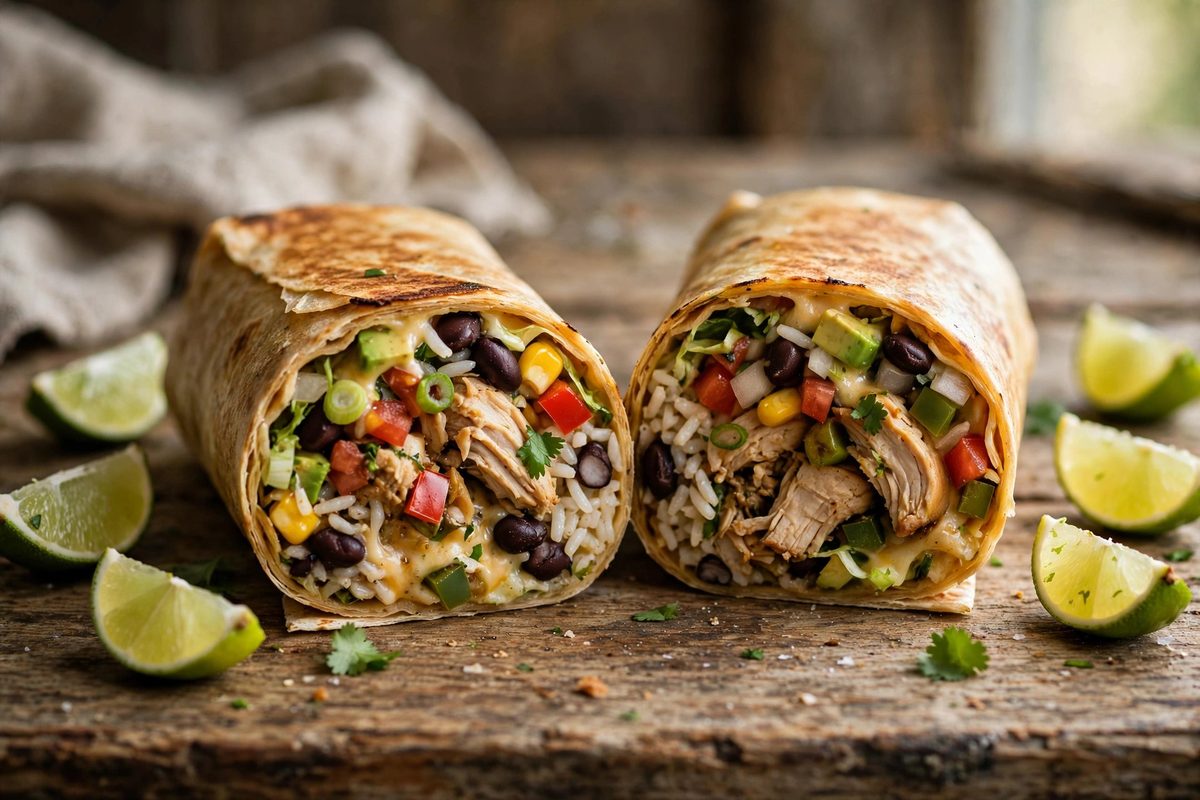
A burrito is anywhere from about 300 to 1,200+ calories — and the build decides everything. The same menu item can be a reasonable lunch or more than half a day's food energy, depending on the tortilla, the scoops, and the extras. If you are tracking toward a daily target, plug your maintenance number into our calorie calculator first, then use the build chart below to see exactly where your burrito's calories come from — so you can eat the burrito and still hit your goal.
There is no single number: a light burrito bowl can land near 480 calories, a standard restaurant burrito sits around 1,000–1,060, and a fully loaded one with guacamole, queso, and sour cream pushes past 1,200–1,300. The tortilla alone (~300 calories) is the single biggest line item.
Think of a burrito as a sum, not a meal. Every component adds a line to the total, and chain portions run generous — the "scoop" of rice or beans at a US counter-service spot is typically 4 oz (113 g), not the 1/2 cup (120 ml) you would serve at home. Here is what each standard component costs, using typical counter-service portions:
| Component (typical portion) | Calories | Notes |
|---|---|---|
| Flour tortilla, 12-inch (30 cm) | ~300 | The biggest single item. This alone is why the bowl saves 200–300 calories. |
| White rice, one 4 oz (113 g) scoop | +210 | Brown rice is nearly identical — swap for fiber, not for calories. |
| Black or pinto beans, 4 oz (113 g) | +120–150 | One of the best calories-per-dollar lines in the whole build. |
| Chicken, 4 oz (113 g) | +180–230 | The leanest mainstream protein choice; roughly 32–35 g of protein. |
| Steak, 4 oz (113 g) | +180–210 | Close to chicken, slightly fattier cuts push the top end. |
| Carnitas (pork), 4 oz (113 g) | +210–240 | Higher because pork shoulder carries more fat. |
| Shredded cheese, 1 oz (28 g) | +110 | A modest-looking sprinkle is rarely just 1 oz at the counter. |
| Sour cream, ~2 oz (57 g) | +110 | Pure fat and almost no protein — an expensive line for what it adds. |
| Guacamole, 4 oz (113 g) | +230 | Nutrient-dense fats, but the most calorie-costly single topping. |
| Queso, 4 oz (113 g) | +120 | A drizzle looks harmless; the scoop rarely is. |
| Salsa (tomato), 4 oz (113 g) | +20–30 | The free flavor upgrade — load up. |
| Fajita veggies + lettuce | +25 | Volume and crunch for almost nothing. |
All figures are approximate ranges based on published chain nutrition panels and USDA values for these portions; individual restaurant builds vary.
Let us price a typical order step by step — tortilla, rice, black beans, chicken, cheese, and sour cream:
Now the fully loaded version — add a full scoop of guacamole (+230): 1,290 calories. Swap in carnitas instead of chicken and you are closer to 1,350. This is how a "normal lunch" quietly becomes 60–70% of a smaller adult's entire daily food budget.
Using the nutrition information published by major US burrito chains, here are the approximate landed ranges:
Two things drive the spread. First, portion size: a chain "scoop" varies by location and employee, so treat any published number as ±10–15%. Second, the freebies and add-ons: guacamole alone is the calorie equivalent of adding another small meal to the order. Always check the chain's own nutrition calculator for the exact location formula — and remember that what is listed for a 4 oz (113 g) portion often arrives closer to 6 oz (170 g).
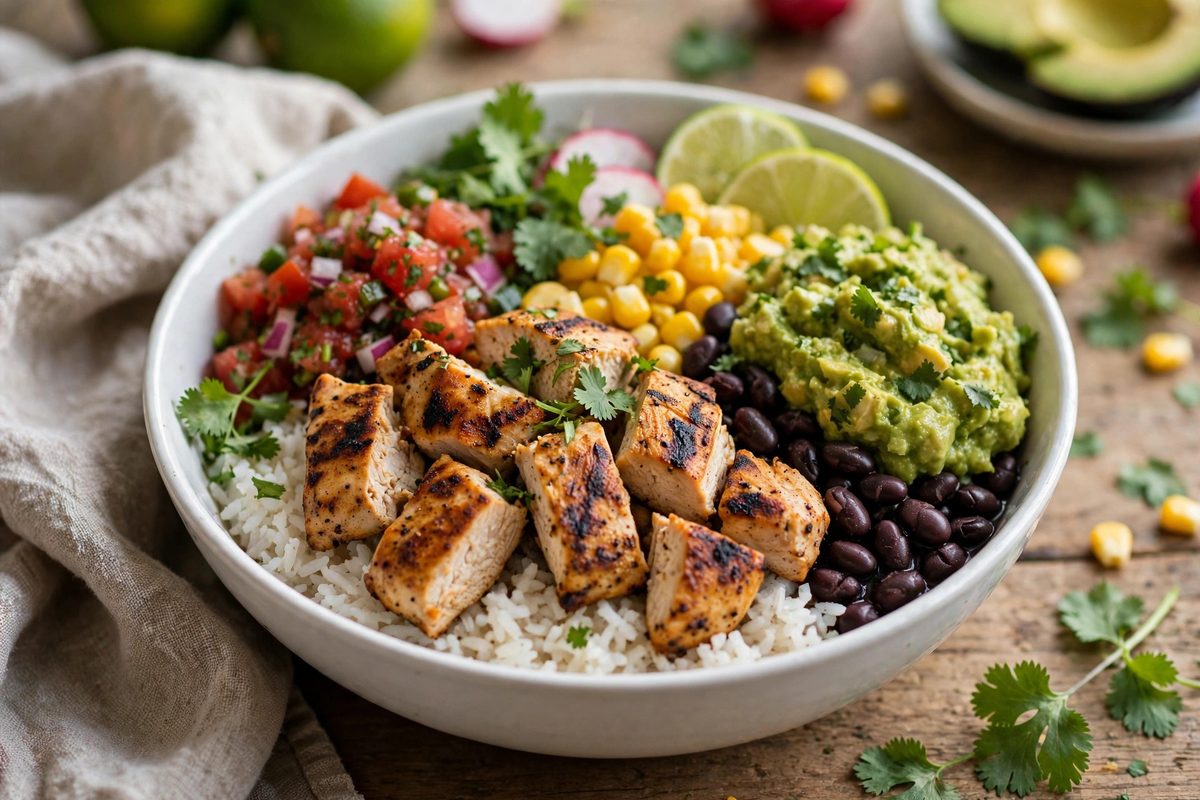
Order the exact same ingredients as a bowl instead of a wrapped burrito and you drop the tortilla — about 300 calories — without removing a single filling. Our standard 1,060-calorie build becomes a 760-calorie bowl instantly, which for many people is the entire difference between "fits my lunch budget" and "wrecks my day." The math: 1,060 − 300 = 760.
The bowl also solves the real problem with restaurant burritos: the wrapper hides the portions. Seeing your food in a bowl makes over-scooped rice and cheese obvious, and you can eat half, pause, and reassess — something a sealed burrito never lets you do.
You do not need a plain chicken-and-lettuce wrap to eat burritos on a plan. Use these swaps:
Bowl, no tortilla: half rice (105) + black beans (130) + chicken (200) + fajita veggies and lettuce (25) + tomato salsa (20) = ~480 calories, with roughly 35 g of protein. A solid training-day lunch that leaves room for dinner.
A 1,060-calorie burrito is not a diet disaster — context decides. On a 2,800-calorie maintenance target for an active 200 lb (91 kg) man, it is 38% of the day: an honest lunch. On a 1,600-calorie weight-loss target, it is 66%: the whole plan hinges on it. That is why the build matters more than the craving. Work out your own numbers with our weight loss calculator and macro calculator, then check the burrito against them.
A few planning notes:
Disclaimer: This content is for informational purposes only and is not medical advice. Nutrition figures are approximate ranges based on typical counter-service portions and published chain nutrition information; actual values vary by restaurant and serving size. If you have a medical condition, take medication, are pregnant, or have a history of disordered eating, talk to your doctor or a registered dietitian before changing how you eat.
Written by the Live Fitness Check editorial team · Reviewed against our calculator methodology · Last updated October 2026