Search "how many calories in a cheeseburger" and you will get a dozen different answers — 300, 500, 700, even 1,000. They can all be right, because a cheeseburger is not one thing: it is a build, and the patty, cheese, bun, and sauce you stack together decide the final number. A plain homemade cheeseburger lands around 500 calories, a double-bacon monster pushes past 1,000, and a lean build can sneak under 400. Before you eyeball it, get your personal calorie target right with our calorie calculator — then use the build-your-own chart below to see exactly what your burger costs you.
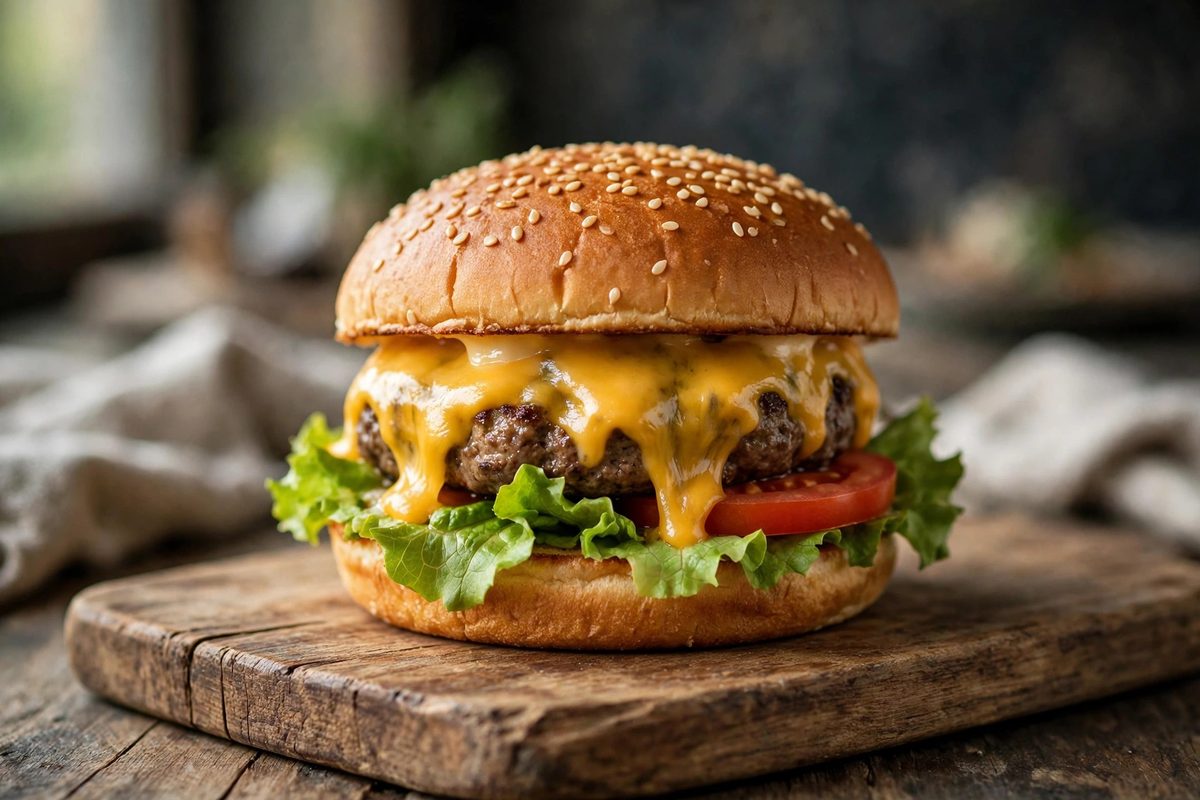
If you need a number right now: most single-patty cheeseburgers land between 300 and 700 calories. A small fast food cheeseburger sits near the bottom of that range; a homemade 4 oz (113 g) patty burger with a standard bun and one cheese slice sits squarely in the middle at about 500 calories; and anything with a double patty, bacon, and a rich sauce climbs past 700. The spread comes from four moving parts — the beef, the cheese, the bun, and whatever you smear or stack on top — so the honest way to count a cheeseburger is to add up its pieces.
Here is what each component contributes, with typical US serving sizes. Add up your own combination and you will have a number you can trust far more than a generic guess.
| Component | Typical serving | Calories |
|---|---|---|
| Beef patty, 80/20 ground beef | 4 oz (113 g), cooked | 280–300 |
| Beef patty, lean 90/10 ground beef | 4 oz (113 g), cooked | ~220 |
| Beef patty, 80/20, double | 8 oz (227 g), cooked | 560–600 |
| American cheese slice | 1 slice (~0.75 oz / 21 g) | 50–70 |
| Cheddar slice | 1 slice (~1 oz / 28 g) | 100–115 |
| Standard white burger bun | 1 bun (~2 oz / 57 g) | 120–150 |
| Brioche bun | 1 bun | 180–220 |
| Mayonnaise | 1 tbsp (15 g) | 90–100 |
| Ketchup | 1 tbsp (17 g) | ~20 |
| Mustard | 1 tsp (5 g) | ~5 |
| Bacon | 2 strips | 80–100 |
| Fried egg | 1 large | ~90 |
| Lettuce, tomato, onion, pickles | as served | 5–15 |
| French fries (small) | ~2.5 oz (71 g) | 220–250 |
Memorize this anchor: a 4 oz (113 g) 80/20 patty (280) + one American cheese slice (60) + standard bun (140) + ketchup (20) = 500 calories. Every upgrade stacks on top of it: a second patty adds ~280, bacon adds ~90, and a tablespoon of mayo adds ~95.
Here is the arithmetic for three common cheeseburgers, so you can see exactly where the calories hide:
| Build | The math | Total |
|---|---|---|
| Homemade classic (4 oz 80/20, 1 cheese slice, bun, ketchup) | 280 + 60 + 140 + 20 | 500 |
| Double cheeseburger (two 4 oz patties, 1 cheese slice, bun, ketchup) | 560 + 60 + 140 + 20 | 780 |
| Bacon double with mayo (two patties, 2 cheese slices, bun, mayo, 2 bacon strips) | 560 + 120 + 140 + 95 + 90 | ~1,000 |
| Lean build (4 oz 90/10 patty, 1 cheese slice, bun, ketchup) | 220 + 60 + 140 + 20 | 440 |
| Lettuce wrap (4 oz 80/20 patty, 1 cheese slice, veggies, no bun) | 280 + 60 + 10 | 350 |
Notice the pattern: the patty is roughly half the total, the bun is about a quarter, and the rest is cheese and sauce. When you want to trim a burger, attack the biggest levers first — which brings us to the ordering tricks below.
Restaurant numbers come straight from each chain's published nutrition pages, but they change when menus change, so treat these as current approximations, not lab measurements:
| Item | Approximate calories |
|---|---|
| McDonald's cheeseburger | ~300 |
| McDonald's Quarter Pounder with Cheese | ~520 |
| McDonald's Big Mac | ~590 |
| Five Guys little cheeseburger | ~550–600 |
| Five Guys cheeseburger | ~840 |
| Shake Shack single ShackBurger | ~400 |
| Shake Shack double ShackBurger | ~710 |
Two things jump out. First, McDonald's keeps numbers lower with small patties and thin buns — its classic cheeseburger is the lightest on the list. Second, Five Guys is famous for generous portions, which is why a full-size cheeseburger there can run past 800 calories before fries. Always check the chain's own nutrition calculator before you go, and remember that a small fries order adds another 220–250 calories on top.
The jump from single to double is nearly linear — and that is the problem. A second 4 oz (113 g) patty adds roughly 280 calories, and doubles almost always bring a second cheese slice, so the realistic upgrade cost is about 340 calories (280 + 60). That single choice turns our 500-calorie classic into a 780-calorie double. If you love a big burger but not the calorie math, a single patty with double cheese lands around 560 — you keep the cheesy richness and skip most of the damage. For the full energy-budget picture, compare it against your maintenance level with our TDEE calculator: a 780-calorie double is roughly a third of many adults' daily burn.
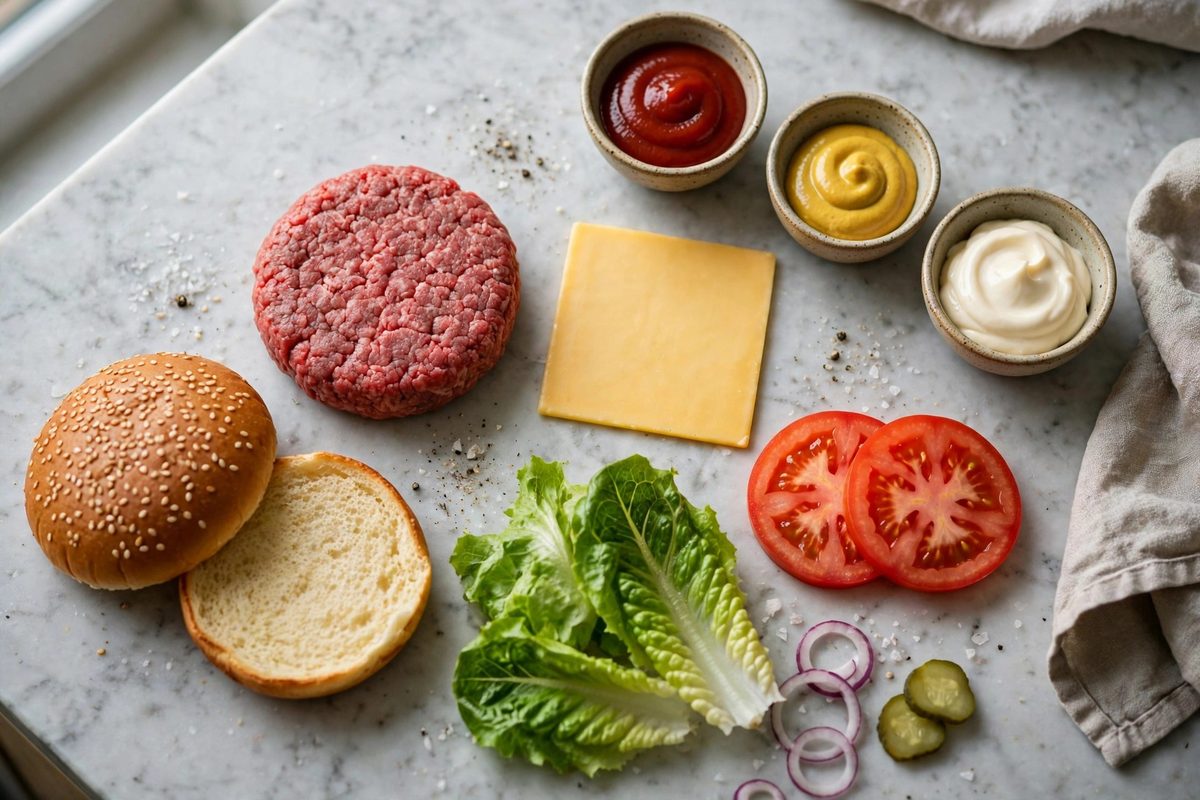
You do not have to give up cheeseburgers to stay on plan. These five swaps are ordered by impact, biggest saving first:
Stacked together, these moves can take a 780-calorie double with fries (~1,000 total) down to about 450: single patty, one cheese slice, open-face bun, mustard, side salad. Same craving, less than half the calories.
A 500-calorie cheeseburger is roughly 25% of a 2,000-calorie day — a normal lunch, not a diet disaster. But a 1,000-calorie bacon double with fries is half that budget in one sitting. If you are cutting, plan the burger into your day with our weight loss calculator, and check where you stand with our BMI calculator first. Want to see the protein and fat split of your build? Our macro calculator helps you set daily protein targets so a high-protein patty actually works in your favor.
Disclaimer: This content is for informational purposes only and is not medical advice. Calorie figures are estimates based on typical US serving sizes and published chain nutrition pages, which change over time. Individual needs vary — if you have a medical condition, take medication, are pregnant, or have a history of disordered eating, talk to your doctor or a registered dietitian before changing how you eat.
Written by the Live Fitness Check editorial team · Reviewed against our calculator methodology · Last updated October 2026