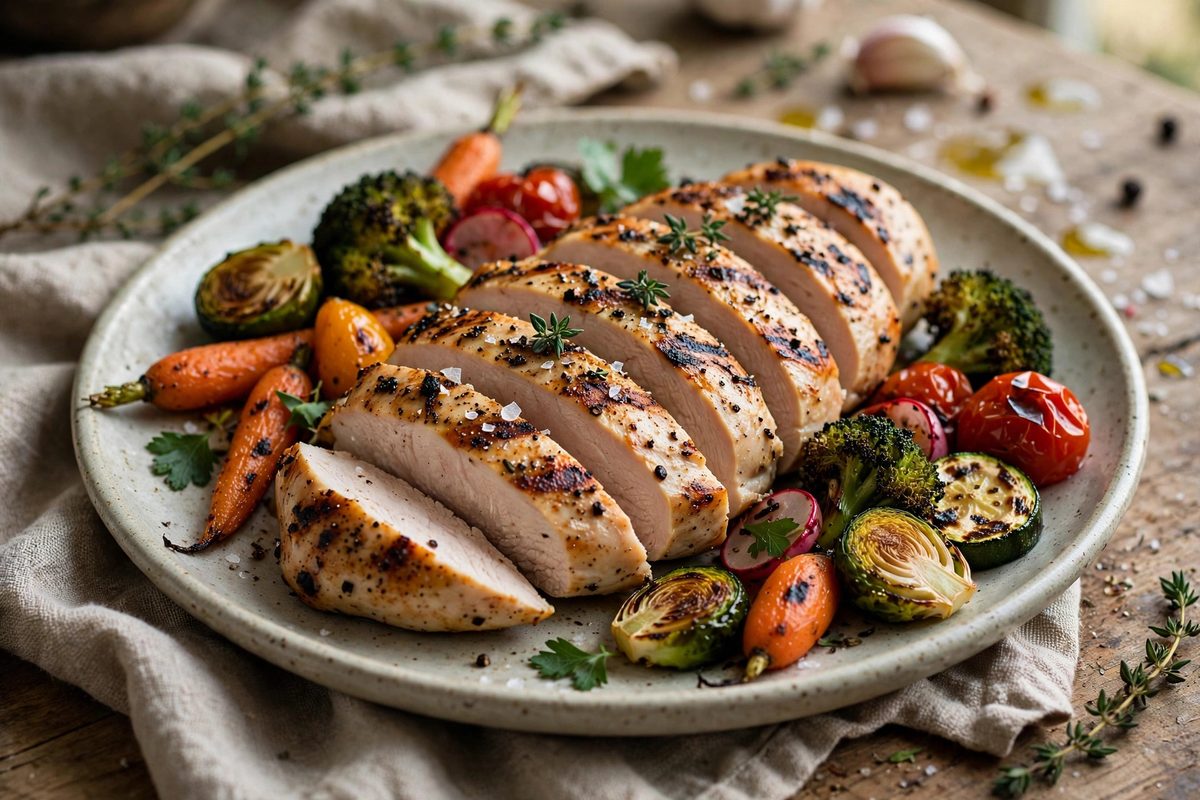
A 6 oz (170 g) cooked chicken breast is about 281 calories — but the number most people quote is wrong, because they weigh the chicken raw, look up the cooked figure, or forget that cooking shrinks it by about a quarter. Skinless grilled chicken breast runs about 165 calories per 100 g, while breaded and fried chicken reaches about 290 per 100 g, and skin alone adds roughly 50–70 calories per 100 g. In this guide you will untangle the raw-versus-cooked trap, climb the cooking-method ladder, and price the portions people actually eat — or total your plate with our calorie calculator.
Skinless grilled chicken breast is about 165 calories per 100 g cooked (about 31 g of protein). A 4 oz cooked portion is about 187 calories, 6 oz about 281, and 8 oz about 375. Raw weight is about 25% heavier than cooked weight, so weigh raw or cooked — but never mix the two — and check any portion with our calorie calculator or macro calculator.
Calculate My Chicken PortionDirect answer: chicken breast loses about 25% of its weight during cooking as water cooks out, so 100 g raw becomes about 75 g cooked — and the calories stay with the piece, not with the water. Raw breast is about 120 calories per 100 g; cooked breast is about 165 per 100 g, and that rise per 100 g is exactly the water leaving, not new calories appearing. The trap is mixing the systems: weighing a breast raw and multiplying by the cooked figure, or weighing it cooked and multiplying by the raw figure, either of which misstates the meal by roughly a quarter. The safe rules are simple: if you weigh raw, use about 120 calories per 100 g raw; if you weigh cooked, use about 165 per 100 g cooked; and if you only know one weight, convert with the 25% rule before you multiply.
| Raw weight | Cooked weight (~75%) | Calories in the piece |
|---|---|---|
| 100 g raw (3.5 oz) | ~75 g cooked (2.6 oz) | ~120 (raw) ≈ ~124 (cooked weight × 1.65) |
| 150 g raw (5.3 oz) | ~113 g cooked (4 oz) | ~180 (raw) ≈ ~187 (cooked weight × 1.65) |
| 200 g raw (7 oz) | ~150 g cooked (5.3 oz) | ~240 (raw) ≈ ~248 (cooked weight × 1.65) |
| 227 g raw (8 oz) | ~170 g cooked (6 oz) | ~272 (raw) ≈ ~281 (cooked weight × 1.65) |
Read the table as one piece of chicken described two ways: the raw and cooked columns agree within rounding, because the calories never left the meat — only water did. A 200 g raw breast holds about 240 calories, and after cooking it weighs about 150 g, which at 165 per 100 g cooked is about 248 calories; the small gap is rounding between the raw and cooked reference figures, not calories gained in the pan. The rule that prevents the error: pick one system and stay in it — weigh raw and use the raw figure, or weigh cooked and use the cooked figure, and never apply one figure to the other weight. Protein follows the same logic: about 23 g per 100 g raw and about 31 g per 100 g cooked, so a 200 g raw breast delivers about 46 g of protein however you weigh it. The same raw-versus-cooked discipline applies to every meat, and it is the single most common error in home calorie counting — bigger than any sauce or side.
Direct answer: leaving the skin on adds roughly 50–70 calories per 100 g, taking chicken breast from about 165 to roughly 215–235 calories per 100 g with skin. The skin is almost pure fat, and fat carries 9 calories per gram versus 4 for protein, so even a thin layer moves the number fast. A rotisserie chicken breast eaten with the skin lands around 200 calories per 100 g — slightly below the top of the range because rotisserie cooking renders some fat away — while a pan-fried skin-on breast keeps closer to the full addition. Removing the skin after cooking saves most but not all of the difference, since some fat renders into the meat; removing it before cooking saves the most. The practical version: if you love crispy skin, eat it and count about 60 extra calories per 100 g; if you are cutting, skinless is the cheapest calorie saving in this article, worth more than switching cooking methods.
| Preparation (per 100 g) | Calories | Notes |
|---|---|---|
| Grilled / baked, skinless | ~165 | The baseline: lean, predictable, highest protein per calorie |
| Poached / steamed, skinless | ~165 | Same as grilled — water adds no calories |
| Rotisserie, with skin | ~200 | Skin on, some fat rendered away in cooking |
| Pan-fried, skin-on | ~215–235 | Skin plus absorbed cooking fat |
| Breaded and deep-fried | ~290 | Breading absorbs oil; the biggest jump in this guide |
| Air-fried, lightly breaded | ~220–240 | Less oil than deep-frying, but breading still adds up |
The fried figure deserves a pause, because it surprises people who think of fried chicken as "still chicken." A 100 g piece of breaded fried chicken at 290 calories carries 125 more calories than the same weight grilled — a 76% increase — and a typical fried portion is larger than 100 g, so a 200 g fried breast can reach 580 calories before a single side. Marinades, by contrast, are nearly free: lemon, herbs, garlic, and vinegar add single-digit calories, while a sugary barbecue glaze can add 30–50 calories per 2 tablespoons. The cooking-method ladder, in one sentence: grill, bake, or poach skinless for the leanest result; keep the skin as an occasional treat; and count fried chicken as a different food from grilled chicken, because calorically it is.
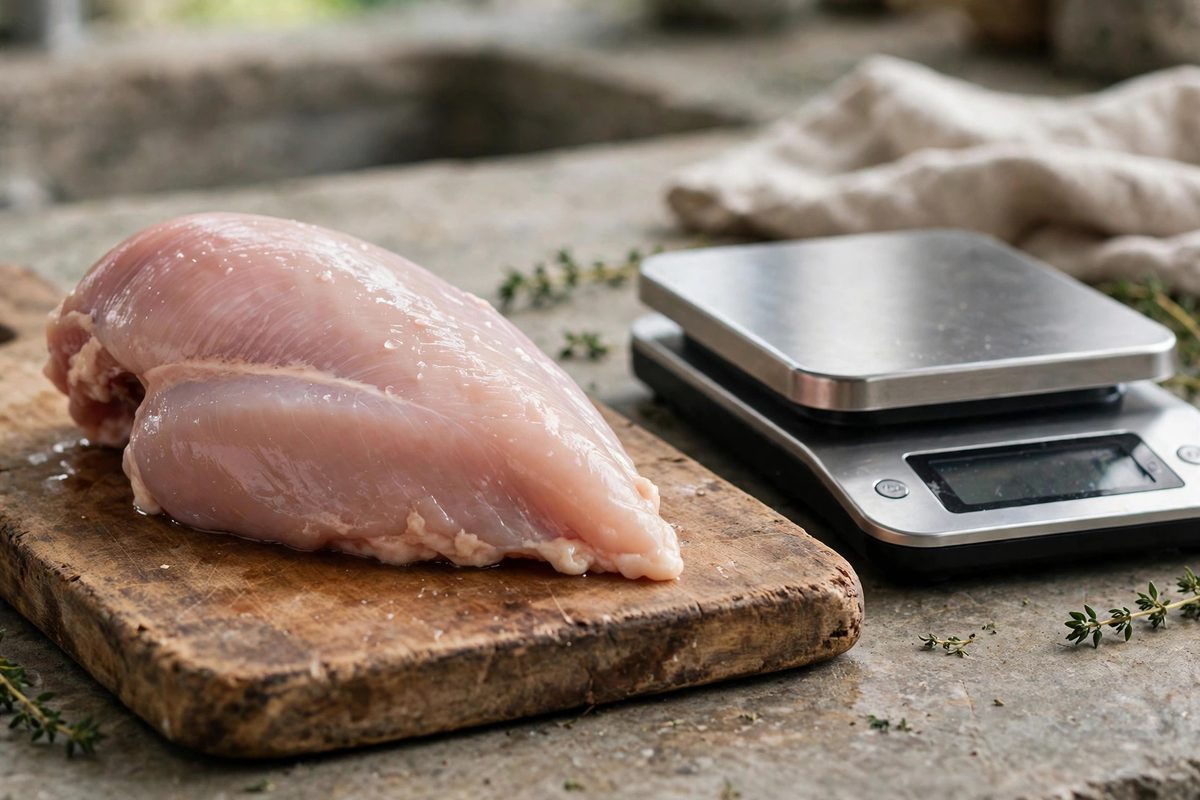
Direct answer: a 4 oz cooked chicken breast is about 187 calories, 6 oz about 281, and 8 oz about 375, at 165 calories per 100 g. A "chicken breast" on a plate is usually 6 to 8 oz cooked — a palm-and-a-half to two palms — not the 4 oz deck-of-cards portion that nutrition labels assume. Restaurant breasts routinely reach 8 to 10 oz cooked (375–470 calories), and a rotisserie breast with skin at 8 oz is about 454 calories (227 g × 2.00). The table below prices cooked, skinless, grilled portions, with the fried equivalent alongside for comparison.
| Cooked portion (skinless, grilled) | Weight | Calories | Fried equivalent (~290/100 g) |
|---|---|---|---|
| 4 oz (palm-sized) | 113 g | ~187 | ~328 |
| 6 oz (typical breast) | 170 g | ~281 | ~493 |
| 8 oz (large breast) | 227 g | ~375 | ~658 |
| 10 oz (restaurant breast) | 284 g | ~469 | ~824 |
Check the headline figure: 6 oz is 170 g, and 170 × 1.65 = 280.5, rounded to 281. For protein planning, the same cooked portions deliver about 35 g (4 oz), 53 g (6 oz), and 70 g (8 oz) of protein at 31 g per 100 g cooked — which is why chicken breast is the default protein in nearly every fitness meal plan. A 6 oz breast plus a cup of rice (about 204 calories) and vegetables (about 50) is a complete, filling meal at roughly 535 calories; the same meal with fried chicken instead of grilled jumps to about 747. That 212-calorie gap, repeated across a week of lunches, is the difference between a deficit and a plateau — and it comes from one cooking choice, not from eating less chicken. Size your protein target with our protein calculator, and compare the fiber side of the plate with our fiber calculator.
Direct answer: for weight loss, choose skinless and grilled, eat the 6 oz portion, and fill the rest of the plate with vegetables; for muscle gain, eat the 8 oz portion and add a calorie-dense side like rice or potatoes. Chicken breast is unusually forgiving because its protein is so high per calorie — even the fried version delivers plenty of protein, just with a fat surcharge. The most common mistake is not the chicken but the company it keeps: creamy sauces (ranch at about 140 per 2 tablespoons, mayonnaise-based sauces higher), cheese toppings, and buttered sides can add more calories than the cooking method changed. A grilled 6 oz breast (281) with 2 tablespoons of ranch (140) is 421 calories of "healthy chicken meal" — still fine, but no longer the lean meal people imagine. Swap the ranch for salsa, mustard, or hot sauce (near-zero calories) and the meal stays lean without losing flavor. Browse the rest of the protein series on the Body & Nutrition hub.
Our calorie calculator totals any portion in seconds.
Calculate My PortionWritten by the Live Fitness Check editorial team · Reviewed against our calculator methodology · Last updated October 2026
Disclaimer: This guide is for educational purposes only and is not medical advice. Calorie figures are USDA-based estimates; actual values vary by cut, brand, and preparation. Cook poultry to 165°F (74°C) internal temperature. If you follow a prescribed diet, talk to your doctor or dietitian.
