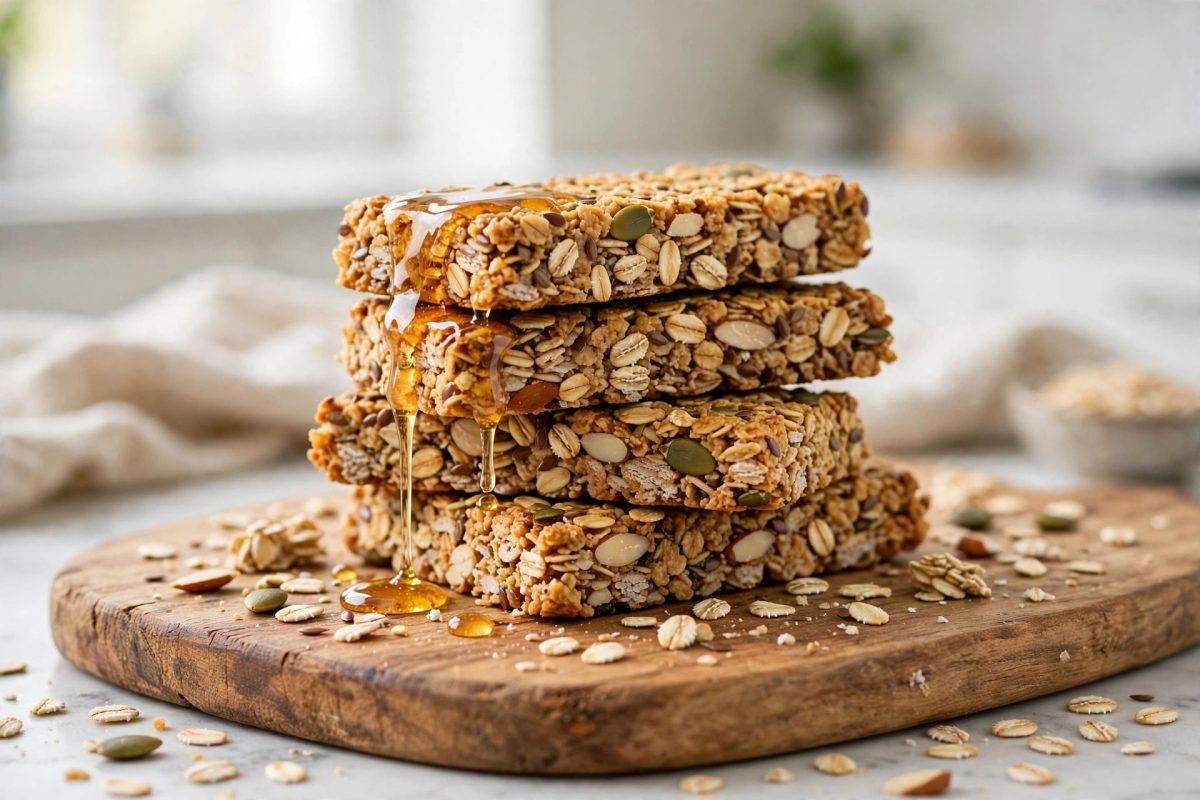
A granola bar runs 100 to 250 calories — a plain USDA bar is about 132 calories, a Quaker Chewy bar about 100, a KIND bar about 180, and a Clif Bar about 250. The spread is almost entirely sugar and size: the bar's weight decides the calories. Use our calorie calculator to see what a 250-calorie bar means against your daily target — this guide compares the big brands, does the sugar math, and shows the smarter picks.
The USDA's plain hard granola bar is 471 calories per 100 g, so a 28 g (1 oz) bar is about 132 calories and a 21 g bar about 99. Brand bars are heavier: a KIND bar is 180 at 40 g, a Nature Valley crunchy bar is about 95 per bar (190 per 2-bar pack), and a Clif Bar is about 250 at 68 g. Sugar runs 5 g in a KIND bar to 17 g or more in a Clif Bar.
Check My Daily TargetGranola bars are not one food. They range from a 24 g chewy bar to a 68 g meal-replacement-style bar, and the calories follow the weight almost exactly — granola itself is about 420 to 490 calories per 100 g, so every 10 g of bar is roughly 45 calories. That is why the label's serving size matters more than the brand name: a Clif Bar is 250 calories because it weighs 68 g, not because its recipe is unusual. The table below uses published label values.
| Bar | Weight | Calories | Sugar | Protein |
|---|---|---|---|---|
| USDA plain hard granola bar | 28 g (1 oz) | ~132 | ~18 g | ~3 g |
| Nature Valley Crunchy (1 bar) | 21 g | ~95 | ~6 g | ~2 g |
| Quaker Chewy | 24 g | ~100 | ~7 g | ~1 g |
| KIND Dark Chocolate Nuts & Sea Salt | 40 g | ~180 | ~5 g | ~6 g |
| Nature Valley Protein | 40 g | ~190 | ~7 g | ~10 g |
| Clif Bar (Chocolate Chip) | 68 g | ~250 | ~17 g | ~9 g |
The pattern is clear: the lightest bars are the smallest, and the "protein" and "energy" bars are the heaviest. A 100-calorie Quaker Chewy bar is a snack; a 250-calorie Clif Bar is a quarter of a light lunch, and it is marketed to people who just burned 500 calories on a bike ride — which is exactly when 250 calories makes sense. The problem is the everyday case: a Clif Bar eaten at a desk, with no workout attached, is 250 calories of mostly sugar and oats that leaves you hungry again in an hour. The KIND bar is the best compromise in the table at 180 calories with 6 g of protein and only 5 g of sugar, because most of its weight is nuts rather than sweetened oats. And the plain USDA bar is the warning label: 132 calories with 18 g of sugar and 3 g of protein is dessert in a wrapper, not a health food.
Sugar is the number that separates a decent granola bar from a candy bar. A KIND bar carries 5 g of sugar — about a teaspoon — while a Clif Bar carries 17 g, or just over 4 teaspoons, and some flavors reach 21 g. The USDA plain bar is worst in proportion: 18 g of sugar in a 132-calorie bar means about 55% of its calories come from sugar (18 g × 4 = 72 of 132). The rule of thumb that works: under 8 g of sugar per bar is a snack, 8 to 12 g is a sweet snack, and over 15 g is a candy bar with oats in it. Fiber is the counterweight — a bar with 3 g or more of fiber will keep you full longer — and protein above 8 g turns a snack into something that actually holds you until the next meal. The bars that fail both tests, low fiber and low protein with high sugar, are the ones that spike your blood sugar and leave you hungry by 10:30 AM.
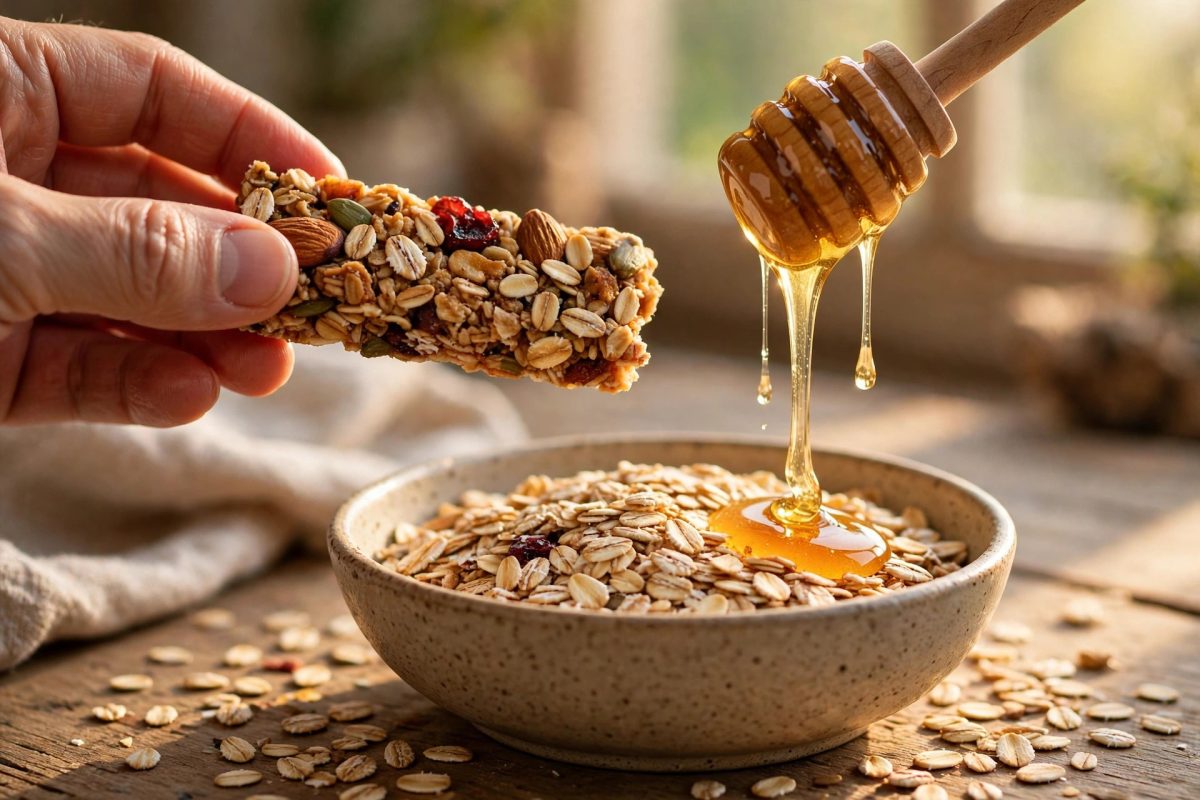
Compare the 180-calorie KIND bar with the same calories from whole foods: an apple (95) plus a small handful of almonds (about 100 for 15 g) is about 195 calories with 5 g of fiber, 4 g of protein, and no added sugar — and it keeps you full longer than the bar. A cup of nonfat Greek yogurt (100) plus a handful of berries (40) is 140 calories with 17 g of protein. The bar wins on one thing only: it lives in your bag for a month and needs no fridge. That is a real advantage — for a hike, a flight, or a long drive, a granola bar is the right tool. For a desk drawer at 3 PM, it is usually the wrong one, because the same 180 calories from yogurt or fruit and nuts does the job better. If you do keep bars around, buy the ones with nuts first on the ingredient list, sugar under 8 g, and at least 3 g of fiber — and treat the 250-calorie bars as meal replacements, not snacks.
They can fit, but they are easy to miscount. The most common mistake is the two-bar pack: a Nature Valley pack is 190 calories because it holds two 95-calorie bars, and most people eat both bars and log one. The second mistake is the "healthy" halo — because the box says granola, people eat a 250-calorie Clif Bar and then eat lunch as usual, adding 250 calories a day that quietly becomes about 2 pounds a month (250 × 30 = 7,500 calories, or just over 2 lbs at 3,500 per pound). The bars that work for weight loss are the 100-to-140-calorie ones with at least 3 g of fiber and under 8 g of sugar, eaten as a planned snack — not the 250-calorie bars eaten on top of a normal day. If you want the crunch without the calories, a small bowl of plain oats with berries is about the same food for fewer calories, and a homemade bar (oats, peanut butter, honey, baked and cut) runs about 150 calories at 40 g with ingredients you control.
Our calorie calculator sets your daily target — then you can see whether a 100-calorie snack bar fits, or whether a 250-calorie energy bar needs a workout attached.
Calculate My Daily TargetWritten by the Live Fitness Check editorial team · Reviewed against our calculator methodology · Last updated November 2026
Disclaimer: This guide is for general information only and is not medical advice. Calorie figures are standard averages and published label values, and vary by brand, recipe, and serving size. Talk to your doctor or a registered dietitian before starting a weight-loss or restricted diet.