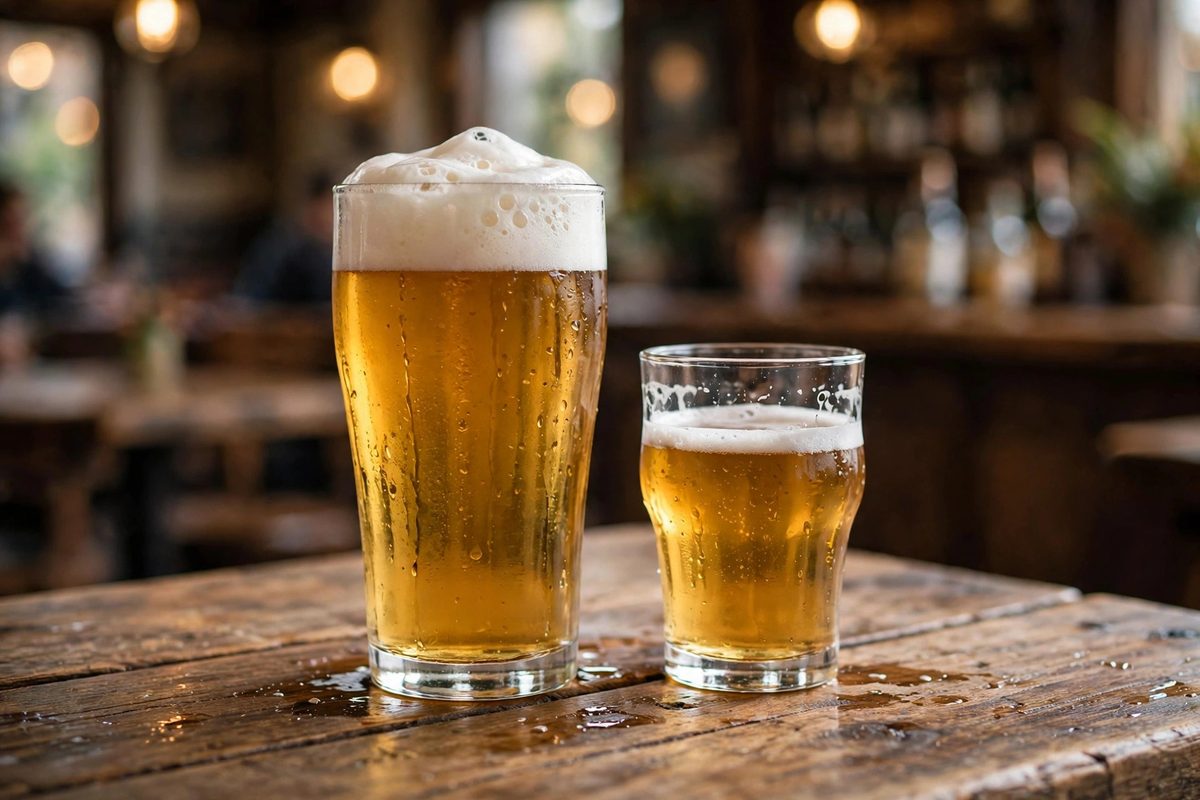
Ask a room full of people how many calories are in a pint of beer and you will get answers anywhere from 120 to 400. All of them can be right — because a pint of light lager and a pint of double IPA are barely the same drink. The short answer: a pint of regular-strength beer lands somewhere around 180 to 250 calories, but the real number depends on two things — the alcohol percentage (ABV) and whether you mean a US pint or a UK pint. Before you order, run your own pour through our alcohol unit calculator to see exactly how many units and calories your drink adds up to.
For the most common pint poured in a bar — a standard lager or ale at about 4 to 5% ABV — you are looking at roughly:
That range is huge — the heaviest pint can carry three times the calories of the lightest. To understand why, you need to know where beer calories actually come from.
Beer calories come from two sources: alcohol at 7 calories per gram (yes, more than carbs or protein at 4) plus leftover carbohydrates the yeast never fermented. More alcohol plus more residual sugar equals more calories. That is the entire physics of it.
Alcohol is surprisingly calorie-dense: every gram of pure ethanol delivers 7 calories, nearly twice the energy of a gram of carbohydrate or protein. So a beer's calories are dominated by its alcohol content, with a smaller top-up from residual carbs and a tiny amount of protein. Watch the math on a familiar drink — a 12 fl oz (355 ml) can of regular 5% lager:
Scale that same 5% beer up to a US pint (16 fl oz / 473 ml) and you multiply everything by 16/12: about 18.7 grams of alcohol giving roughly 131 calories, plus around 65 to 75 calories of carbs, for around 200 to 210 calories.
Now take a UK pint (568 ml) at 4.2% ABV: 568 × 4.2% = 23.9 ml of ethanol, × 0.789 ≈ 18.8 grams, × 7 ≈ 132 calories from alcohol, plus around 50 to 75 calories of residual carbs, for about 180 to 210 calories.
This is why brewery labeling and diet apps that quote "calories per 12 oz" quietly undercount your bar night: the glass in front of you is usually a third bigger (US pint) or well over half bigger (UK pint) than the can the number came from. Check how any single evening moves your weekly total with our calorie calculator — three UK pints at dinner can land around 600 to 700 calories, roughly a third of many people's daily budget.
Most of the conflicting numbers online exist because "a pint" is two different measures:
The practical effect: a UK pint of 4% lager (~190 to 200 calories) can come in lighter than a US pint of 5% lager (~200 to 210) despite being bigger, while a UK pint of 5% lager (~230 to 260) runs heavier than both. Size and strength multiply, so check both before you quote a number.
| Beer style (typical ABV) | 12 oz can (355 ml) | US pint 16 oz (473 ml) | UK pint 20 oz (568 ml) |
|---|---|---|---|
| Light lager (3.5–4.2%) | 95–110 | 125–150 | 155–185 |
| Regular lager (4.5–5.5%) | 140–160 | 185–215 | 215–260 |
| Wheat beer / pale ale (5–6%) | 150–180 | 200–240 | 240–290 |
| IPA (6–7.5%) | 190–230 | 250–305 | 310–380 |
| Guinness Draught (4.2%) | ~125 | ~165 | ~200–210 |
| Stout / porter (6–7%) | 200–235 | 265–310 | 320–375 |
| Strong ale / double IPA (8–10%) | 280–340 | 370–450 | 465–550 |
| Non-alcoholic (0.0–0.5%) | 50–70 | 65–95 | 80–115 |
These are honest ranges, not exact figures — recipes, residual sugar, and serving sizes vary by brewery and bar. A bar that pours with a generous head is doing you a calorie favor; a "pint" that is really 20 ounces of 7% IPA in a cheater pint glass is doing you the opposite. When precision matters, our alcohol unit calculator converts any serving size and ABV into units and estimated calories.
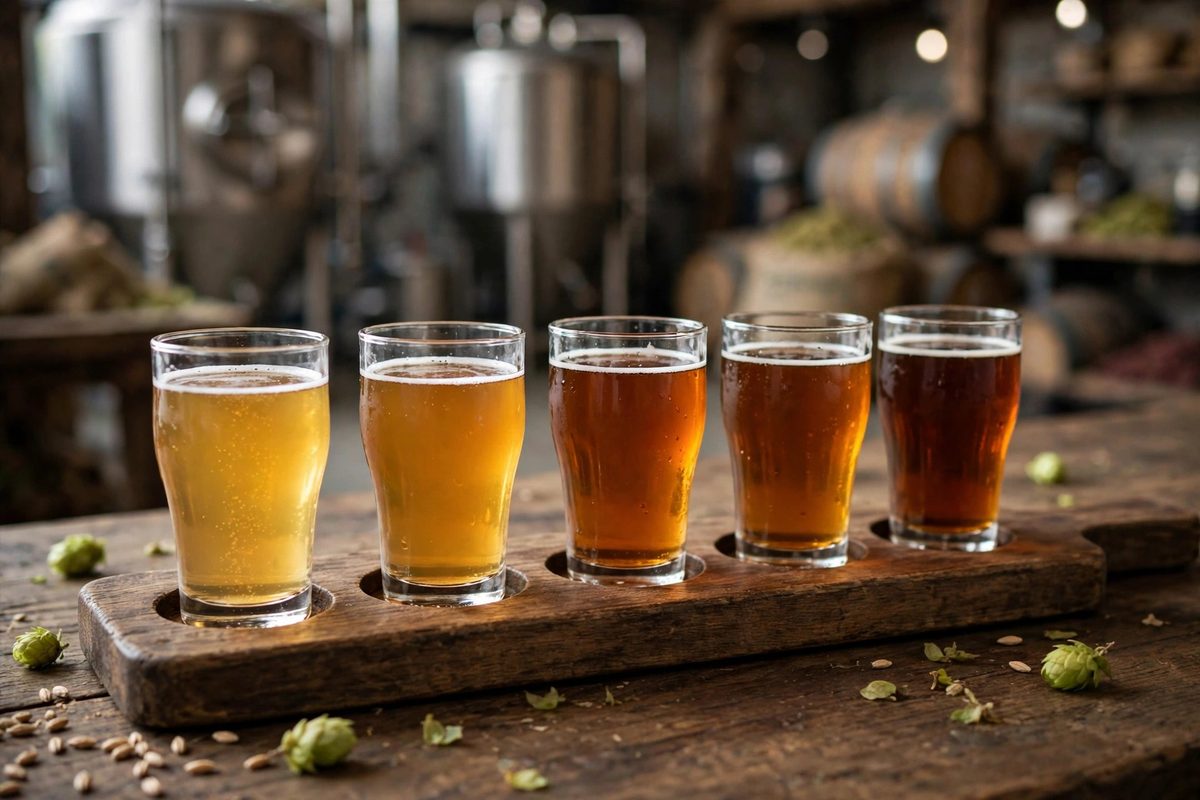
Here is the party trick this article exists to teach you: Guinness Draught (4.2% ABV) has about 125 calories per 12 oz — less than most regular lagers — and roughly 200 to 210 calories in a UK pint. The deep black color makes people assume it is the heaviest thing on the menu, but color comes from roasted barley, which adds almost no calories. What matters is alcohol and unfermented sugar, and Guinness is low in both compared with a 5% premium lager.
The trap is assuming this logic extends to all dark beers. It does not. A 6.5% chocolate stout or a 7% oatmeal stout can carry 250 to 350 calories a pint or more. Color tells you about malt flavor, not calories — ABV tells you about calories.
Beer does not contain a special fat that goes straight to your stomach. The so-called beer belly is really three ordinary effects stacking up:
That said, moderate drinkers who fit their pints inside their daily energy budget do not automatically gain belly fat. The math is unforgiving but simple: if the beer pushes you into a sustained surplus, you gain weight; if it fits inside your TDEE, you maintain. If you are actively trying to lose, plug your numbers into our weight loss calculator and budget your drinking days like any other calorie source.
You do not have to give up the pub to protect your deficit. Ranked from lightest to heaviest, your practical options:
One more habit worth building: alternate each pint with a glass of water. It slows the pace, cuts the night's total by roughly a third, and makes the next morning considerably kinder.
Expect 180 to 250 calories for a normal pint, under 150 for light or non-alcoholic pours, and 300+ once you enter IPA and strong-ale territory. The two levers are always the same: ABV and glass size.
Disclaimer: This content is for informational purposes only and is not medical advice. Alcohol affects everyone differently and carries health risks even in moderate amounts; if you are pregnant, take medication, have a medical condition, or have concerns about alcohol use, talk to your doctor. Drink responsibly and never drink and drive.
Written by the Live Fitness Check editorial team · Reviewed against our calculator methodology · Last updated October 2026