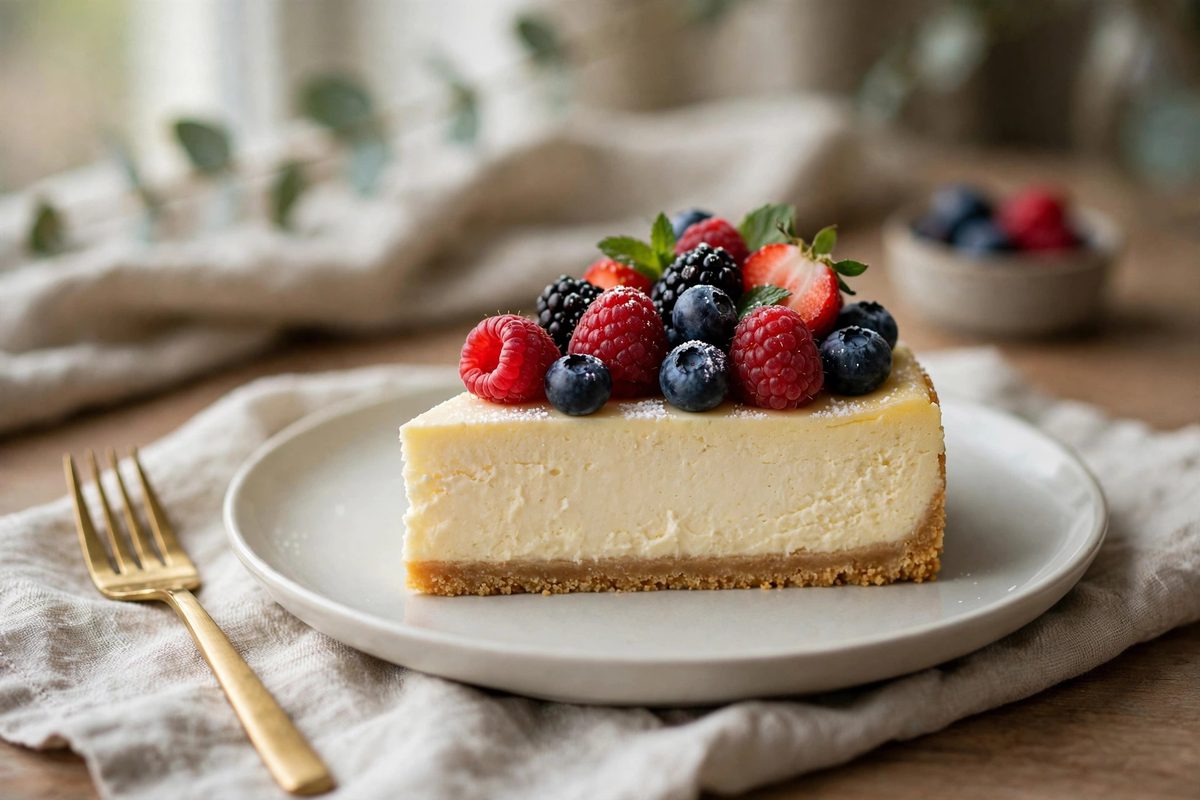
A standard plain slice of cheesecake — one-twelfth of a 9-inch cake, about 4 to 5 oz (120 to 140 g) — runs about 320 to 400 calories. But restaurant slices are a different food: a slice of The Cheesecake Factory Original is 830 calories, more than double a home slice, and flavored Factory slices climb past 1,000 calories, with the Reese's Peanut Butter Chocolate Cake Cheesecake reaching about 1,530 calories per slice. The gap is portion size plus richness — Factory slices are much larger than a home slice and far richer than a plain homemade cake. Here is the full breakdown — or check where dessert fits your day with our calorie calculator.
A home slice is about 4 to 5 oz; a Cheesecake Factory slice is a restaurant portion roughly twice that weight, made with a richer recipe. That is why the Factory Original (830) is about 2.4 times a typical plain home slice (about 350): 830 ÷ 350 = 2.37. Flavored slices add candy, chocolate, and caramel on top of an already rich base, which is how some pass 1,500 calories. If you only remember one number, remember the portion: a home slice and a restaurant slice are not the same serving.
Check My Daily TargetPlain cheesecake is cream cheese, sugar, eggs, and a graham cracker crust, and its calories come almost entirely from fat and sugar: cream cheese is about 100 calories per ounce, sugar is about 48 calories per tablespoon, and a graham crust adds roughly 70 to 100 calories per slice. USDA-based nutrition entries for plain cheesecake put a standard slice (about 120 grams) at about 400 calories, with about 5 grams of protein and about 38 grams of carbohydrate, while lighter homemade recipes land closer to 320 calories for a similar slice — hence the 320 to 400 range used in this guide. The variation is real and recipe-driven: a New York-style baked cheesecake with sour cream topping is richer than a light no-bake version set with gelatin, and a crust made with extra butter costs more than a thin crust. A whole 9-inch homemade plain cheesecake cut into 12 slices therefore totals about 3,840 to 4,800 calories (320 × 12 = 3,840; 400 × 12 = 4,800), which is a useful check when a recipe claims a suspiciously light per-slice number. If the whole cake math does not add up, the slice number is wrong.
| Plain cheesecake slice | Calories | Notes |
|---|---|---|
| Homemade plain, light recipe (1/12 cake) | ~320 | Thin crust, less sugar |
| Plain, standard recipe (1/12 cake, ~120 g) | ~400 | USDA-based entry, 5 g protein |
| No-bake plain (1/12 cake) | ~280–330 | Lighter, gelatin-set, less butter |
| New York-style with sour cream topping | ~420–450 | Richer filling + topping |
| Strawberry topping added | +~50–80 | Fresh berries light; glazed topping heavier |
The Cheesecake Factory's published nutrition puts its Original Cheesecake slice at 830 calories, with about 59 grams of fat, 63 grams of carbohydrate, and 12 grams of protein. That is not a different recipe magic — it is portion plus richness. A Factory slice is a large restaurant portion, and the recipe is a dense, full-fat New York-style cake with a thick graham crust and sour cream topping. Compared with a 350-calorie home slice, the Factory slice is about 2.4 times the calories (830 ÷ 350 = 2.37), which tracks with a slice roughly twice the weight and a richer formula. The flavored slices climb from there because they add calorie-dense toppings to the same rich base: the Fresh Strawberry Cheesecake is about 1,000 calories, the White Chocolate Raspberry Truffle about 1,220, the Chocolate Tuxedo Cream about 1,250, and the Reese's Peanut Butter Chocolate Cake Cheesecake about 1,530 — nearly a full day's calories for many adults in a single dessert. The lighter end of the Factory menu is the Low-Licious (formerly SkinnyLicious) cheesecake at about 590 calories per slice — still heavier than a home slice, but about 240 calories below the Original. Junior's Original, a famous New York bakery version, is about 540 calories per slice — a useful middle reference between home and Factory portions. The lesson: when a menu lists cheesecake calories, always check whether the slice is a home-sized portion or a restaurant portion, because the two differ by a factor of two or more.
| Cheesecake slice | Calories | Source / note |
|---|---|---|
| Homemade plain (1/12 cake) | ~320–400 | USDA-based entries |
| Junior's Original | ~540 | Bakery slice, published nutrition |
| Cheesecake Factory Low-Licious | ~590 | Factory's lighter line |
| Cheesecake Factory Original | 830 | Factory published nutrition |
| Cheesecake Factory Fresh Strawberry | ~1,000 | Factory published nutrition |
| Cheesecake Factory White Chocolate Raspberry Truffle | ~1,220 | Factory published nutrition |
| Cheesecake Factory Chocolate Tuxedo Cream | ~1,250 | Factory published nutrition |
| Cheesecake Factory Reese's Peanut Butter Chocolate | ~1,530 | Factory published nutrition |
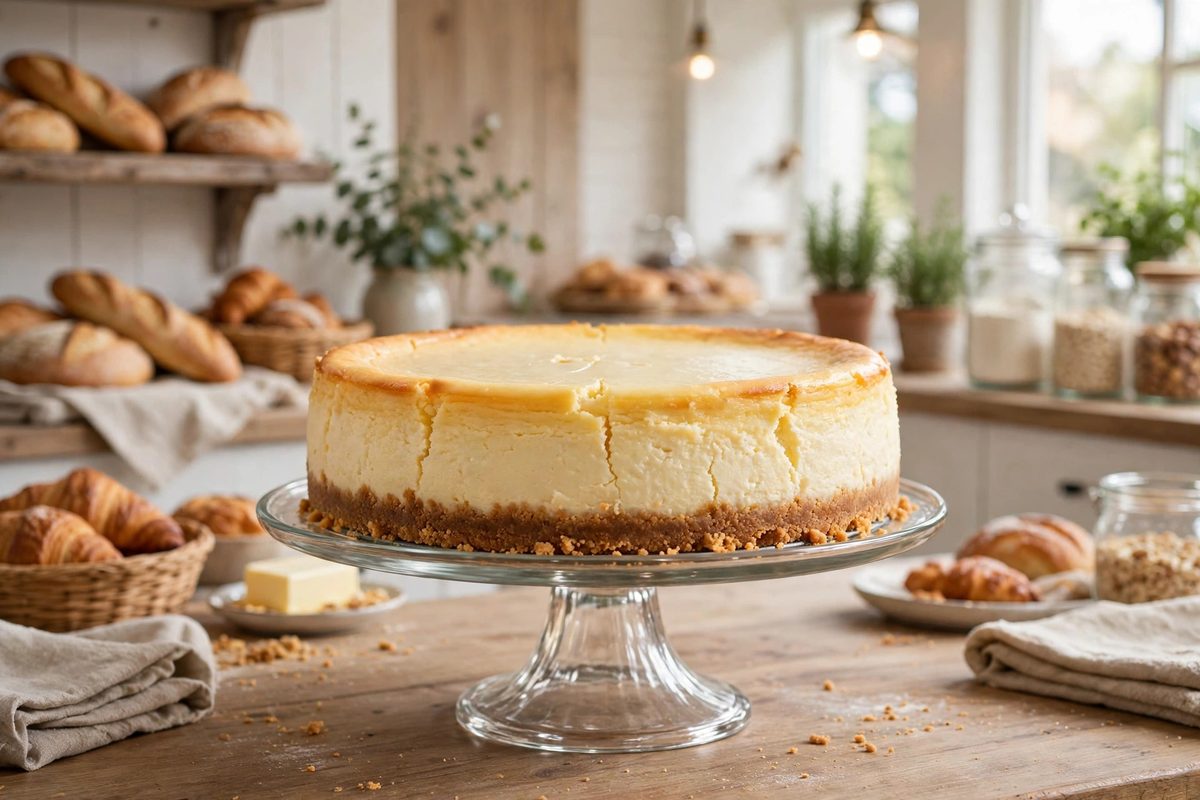
Toppings are the second cost after portion size, and they stack fast. Fresh berries are the cheapest topping at about 25 to 50 calories per half cup, and they add volume and freshness that make a smaller slice feel generous. A strawberry glaze or canned cherry topping adds about 50 to 80 calories per serving. Chocolate ganache is much heavier: 2 tablespoons add about 100 to 120 calories, and a thick ganache layer across a slice can add 150 or more. Caramel sauce adds about 60 calories per tablespoon, and whipped cream adds about 25 to 50 per serving depending on whether it is canned or real cream. The crust matters too: a standard graham crust contributes roughly 70 to 100 calories per slice, an Oreo-style chocolate cookie crust roughly 100 to 130, and a crustless cheesecake — baked in a lined pan without any crust — saves the whole crust cost, dropping a plain slice to roughly 250 to 300 calories. Worked example: a plain home slice (350) with fresh berries (+35) and a dollop of whipped cream (+30) is 350 + 35 + 30 = 415 calories — still a reasonable dessert. The same slice with chocolate ganache (+120) and caramel (+60) is 350 + 120 + 60 = 530 calories, and a Factory Original (830) with ganache and caramel would pass 1,000. The topping choice, not the cake, decides whether dessert stays under 500 calories.
The lightest credible cheesecake experience is a crustless mini cheesecake made with light cream cheese and Greek yogurt: a 4 oz ramekin version runs about 180 to 220 calories with about 10 grams of protein, versus 320 to 400 for a standard slice — and because it is baked in its own dish, portion control is automatic. The second strategy is the half-slice: order or cut half a Factory slice and share the rest, turning 830 calories into about 415 — still a real dessert, now in line with a home slice. The third is topping discipline: fresh berries and a spoonful of whipped cream instead of ganache and caramel saves about 150 calories on the same slice. The fourth is the no-bake swap: a no-bake cheesecake set with gelatin and light cream cheese runs about 280 to 330 per slice, roughly 70 to 100 below a baked New York-style slice. And the simplest strategy is the one that works for every dessert on this site: eat it slowly, after a real meal, and stop at satisfied rather than stuffed — a 350-calorie slice enjoyed fully beats an 830-calorie slice eaten on autopilot every time.
Our calorie calculator shows where dessert fits your day.
Check My Daily TargetWritten by the Live Fitness Check editorial team · Reviewed against our calculator methodology · Last updated November 2026
Disclaimer: This guide is for educational purposes only and is not medical advice. Calorie figures are approximations based on USDA data and published restaurant nutrition; actual values vary by recipe, brand, and portion. Talk to your doctor or a registered dietitian before making significant changes to your diet.