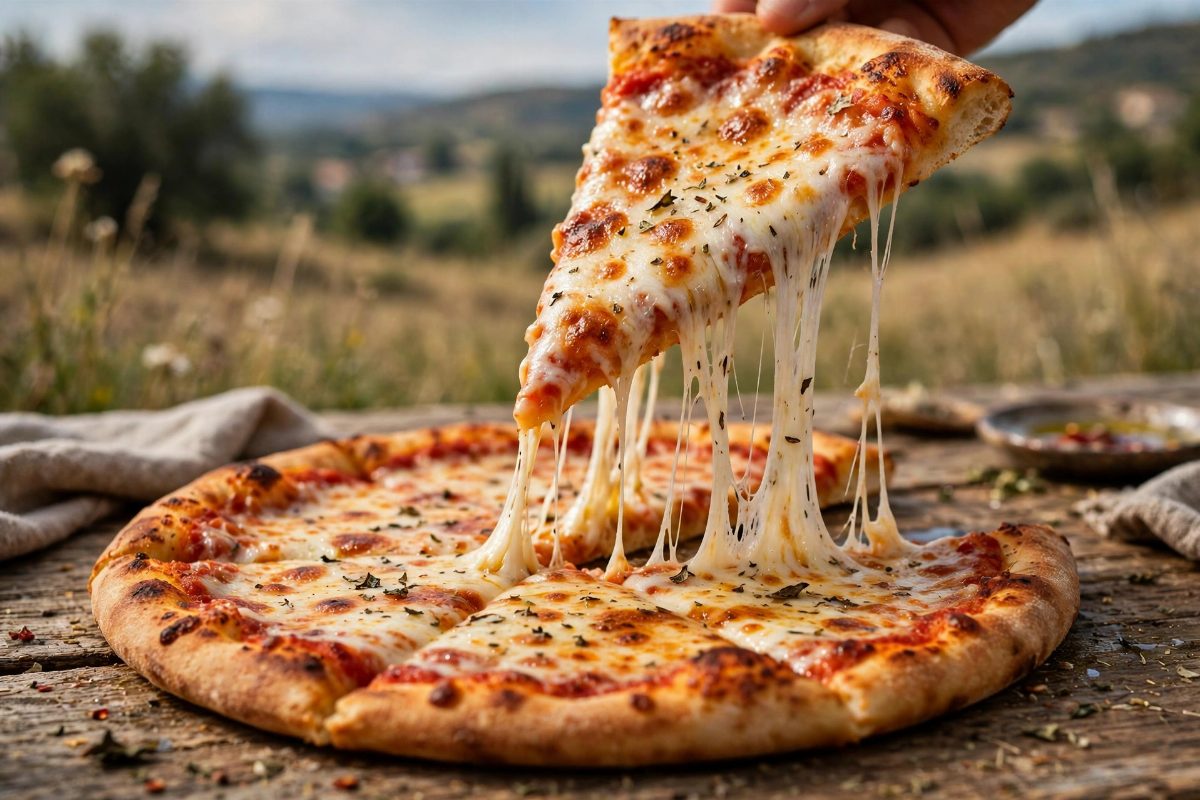
A slice of pizza is typically 250 to 300 calories for a regular-crust cheese slice from a large 14-inch pizza cut into 8 — but the real range runs from about 200 for thin crust to 450 or more for deep dish, and a single Costco food-court slice hits about 700. Crust decides the starting number, toppings add the rest, and slice size quietly multiplies both. In this guide you will see the crust-by-topping chart, how the big chains compare, and how to order pizza without blowing your day — or check any meal with our calorie calculator.
USDA FoodData Central puts a standard cheese pizza slice at about 285 calories, which is the safest single number for tracking. Thin crust drops to roughly 200–230, regular crust sits at 250–300, pan and thick crust at 300–350, and deep dish or stuffed crust at 350–450+. Pepperoni adds about 30–50 over cheese; meat-loaded slices push past 350. Two slices of regular cheese is about 570 calories — a full meal, not a snack. Try your own totals in our calorie calculator or macro calculator.
Calculate My MealCrust is dough, and dough is the bulk of a slice's weight — so crust style moves the number more than any topping swap. These ranges assume a standard slice from a large pizza cut into 8; a bigger slice from a pie cut into 6 scales up by about a third:
| Crust style | Cheese slice | What drives it |
|---|---|---|
| Thin crust | ~200–230 | Least dough, less oil |
| Regular / hand-tossed | ~250–300 | The baseline most chains serve |
| Pan / thick crust | ~300–350 | More dough plus pan oil |
| Deep dish / stuffed crust | ~350–450+ | Double dough, extra cheese, buttered edge |
| Cauliflower crust | ~180 | Less flour, but check the cheese load |
The practical takeaway is immediate: switching from regular to thin crust saves roughly 50 to 80 calories a slice, or 100 to 160 across two slices — about the same as skipping the breadsticks. Cauliflower crust looks like a bigger win than it is, because many cauliflower crusts carry extra cheese to hold together; always read the label rather than trusting the halo.
Once crust is fixed, toppings stack in a predictable order. Vegetables are nearly free, lean proteins are modest, and processed meats plus extra cheese are where slices balloon:
| Topping style (regular crust) | Per slice |
|---|---|
| Margherita (tomato, mozzarella, basil) | ~250 |
| Veggie (peppers, mushrooms, onions) | ~260 |
| Cheese | ~285 |
| Hawaiian (ham + pineapple) | ~290 |
| BBQ chicken | ~310 |
| Pepperoni | ~311 |
| Supreme / deluxe | ~325 |
| Meat lovers | ~350 |
The pepperoni lesson is worth internalizing: a single topping change from cheese to pepperoni adds only about 26 calories a slice on paper, but meat-lovers combinations with sausage, bacon, and extra cheese add 65 or more — and most people eat the difference in a second slice, not the first. The highest-leverage topping move is not choosing veggie over pepperoni; it is declining extra cheese, which alone can add 50 to 100 calories a slice depending on how heavy-handed the kitchen is.
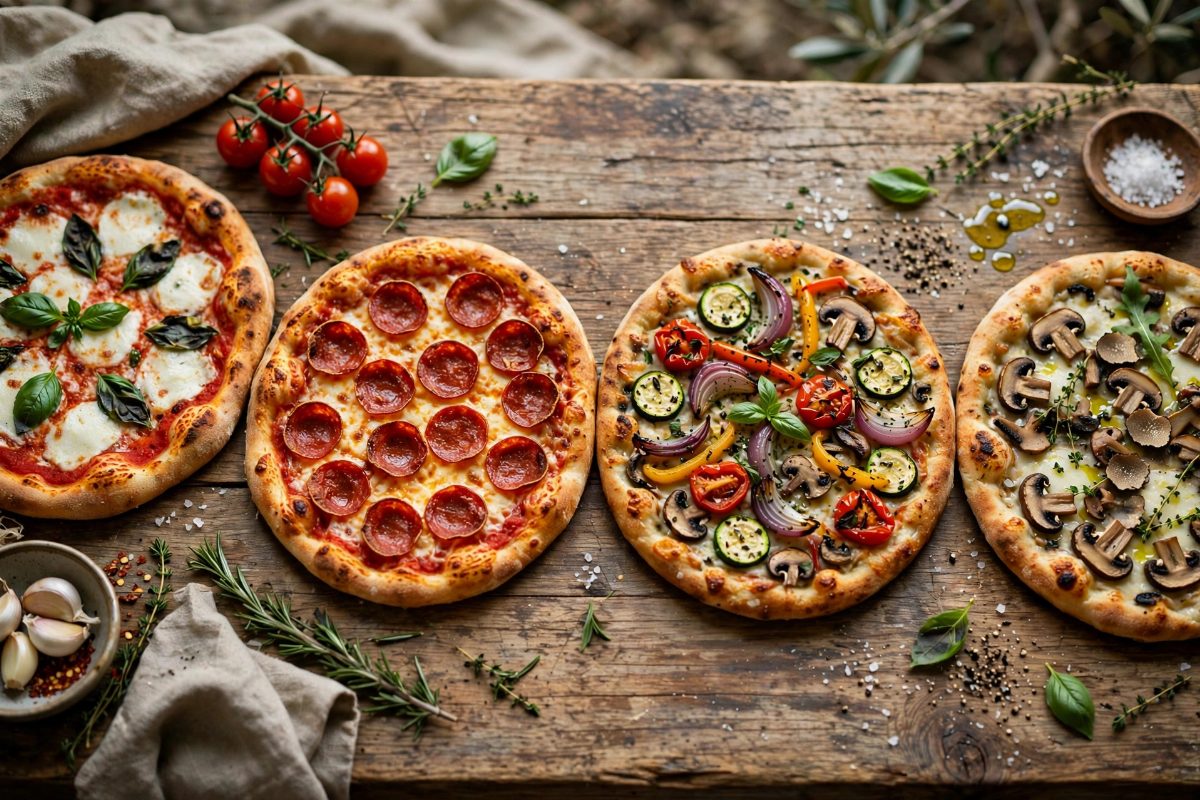
Chain nutrition pages let us compare like with like — one large cheese slice, regular crust. The chains cluster tightly, which is reassuring for tracking: Domino's hand-tossed cheese is about 290 calories a slice, Pizza Hut hand-tossed about 300, Papa John's original about 280, and Little Caesars about 280. The outliers teach the portion lesson: a New York-style 18-inch slice runs about 450 calories because the slice itself is far bigger, and a Costco food-court cheese slice hits about 700 — it is roughly twice the size of a standard slice, so it is really two slices wearing one crust. A whole large pizza, 8 slices at 285, totals about 2,280 calories — an entire day's food for many adults in one box, which is why "just one more slice" is the decision that matters, not the topping.
Pizza fits a weight-loss plan easily if you plan the plate rather than the slice. Start with a big salad or vegetables — volume first, pizza second — and decide your slice count before the box opens: two slices of thin-crust veggie with salad lands around 450 to 500 calories, while three slices of regular pepperoni with breadsticks passes 1,100 before drinks. Blotting visible grease with a napkin saves roughly 20 to 50 calories a slice, which is small but free. Skip the stuffed crust and the extra cheese, choose thin crust when it is offered, and treat deep dish as the occasional event it is: one deep-dish slice at 400-plus calories is fine; three of them is a day. Pair the meal honestly with your calorie deficit — pizza is not the enemy of a deficit, an uncounted third slice is. For the same build-your-own logic applied to a smaller package, see our taco guide.
Cold pizza the next morning is a beloved ritual, and the calorie count does not change overnight — a slice is still about 285 calories cold, reheated, or eaten standing at the fridge. What changes is food safety: pizza left at room temperature for more than 2 hours should be refrigerated, and refrigerated slices keep 3 to 4 days. Reheat in a dry skillet over medium-low heat with a lid for 2 to 3 minutes and the crust crisps better than any microwave can manage, which matters because a soggy slice invites a second slice out of disappointment rather than hunger. If you regularly eat leftover pizza for breakfast, pair it with fruit and water rather than a sugary drink, and count it exactly like fresh pizza — the fridge adds nothing, and it removes nothing either.
Our calorie calculator checks any pizza night in seconds.
Calculate My MealWritten by the Live Fitness Check editorial team · Reviewed against our calculator methodology · Last updated October 2026
Disclaimer: This guide is for educational purposes only and is not medical advice. Calorie figures are estimates from USDA FoodData Central and chain nutrition pages; actual slices vary with size, dough, cheese load, and toppings. If you have dietary medical conditions, follow your clinician's guidance.