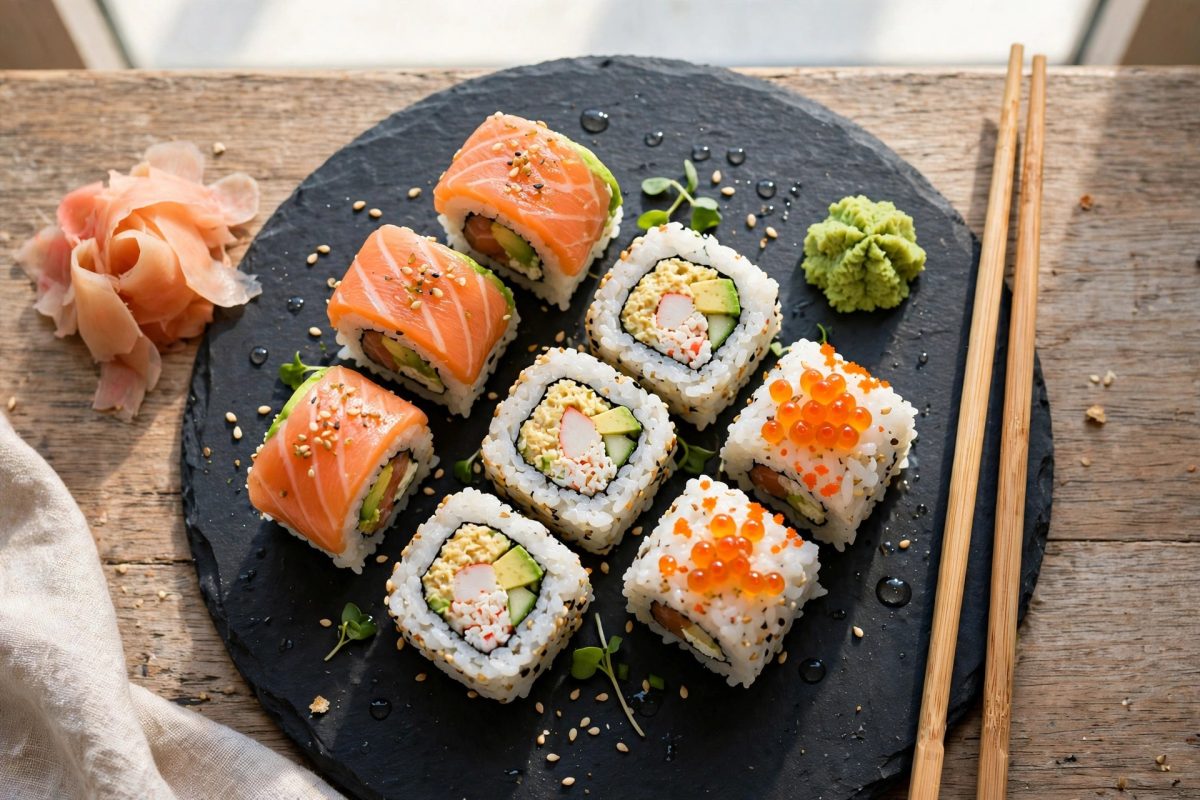
A standard sushi roll runs 136 to 508 calories for the whole roll — a cucumber roll is about 136, a California roll is about 255, and a shrimp tempura roll is about 508. The rice, sauces, and fried bits decide the number, not the fish. Use our calorie calculator to see what a two-roll sushi dinner means against your daily target — this guide lists the popular rolls by calories, does the rice math, and shows the lightest way to order.
A plain tuna roll is about 184 calories for 8 pieces, a California roll about 255, and a spicy tuna roll about 290. Specialty rolls climb fast — a dragon roll is about 380 to 430 and a shrimp tempura roll about 508. Sashimi, with no rice at all, is the lightest option at roughly 30 to 40 calories a piece.
Check My Daily TargetSushi looks light because the pieces are small, but a roll is mostly seasoned rice — about 150 to 200 calories of rice per roll, or roughly 60% of the total — with fish, vegetables, and sauces on top. That is why two rolls with the same name can differ by 100 calories between restaurants: the rice portion, the amount of spicy mayo, and whether anything is fried all move the number. The table below uses typical 8-piece restaurant rolls, with values drawn from USDA FoodData Central and published restaurant nutrition data.
| Roll (8 pieces) | Calories | Per piece | Protein |
|---|---|---|---|
| Cucumber roll | ~136 | ~17 | ~4 g |
| Avocado roll | ~140 | ~18 | ~2 g |
| Tuna roll | ~184 | ~23 | ~13 g |
| Salmon roll | ~232 | ~29 | ~18 g |
| California roll | ~255 | ~32 | ~9 g |
| Spicy tuna roll | ~290 | ~36 | ~13 g |
| Philadelphia roll | ~320 | ~40 | ~11 g |
| Dragon roll | ~380–430 | ~48–54 | ~15 g |
| Rainbow roll | ~476 | ~60 | ~33 g |
| Shrimp tempura roll | ~508 | ~64 | ~20 g |
The spread tells the story. The lightest rolls are the ones with the least in them: cucumber and avocado rolls are mostly rice and vegetables, at 136 to 140 calories. Plain fish rolls — tuna at 184, salmon at 232 — add lean protein for very few extra calories. The California roll lands at 255 because imitation crab and avocado add fat, and the spicy tuna roll jumps to 290 because the spicy mayo alone adds roughly 90 to 100 calories a roll — about 2 tablespoons of a mayonnaise-based sauce. Cream cheese pushes the Philadelphia roll to about 320. Then the specialty rolls take off: the dragon roll's eel, avocado, and sweet eel sauce put it at 380 to 430, the rainbow roll's fish topping and avocado at about 476, and the shrimp tempura roll at about 508, because the shrimp is battered and deep-fried before it is rolled, adding roughly 21 g of fat and 64 g of carbs.
Three ingredients do almost all the damage, and two of them are invisible on the plate. First, the rice: a standard roll uses about 3 to 4 ounces (85 to 115 g) of seasoned sushi rice, which is roughly 140 to 190 calories before any filling — and the seasoning is sugar and rice vinegar, so it is not just the rice. Second, the sauces: spicy mayo is the biggest single add-on at roughly 90 to 100 calories per roll, eel sauce is mostly sugar at about 50 to 100 calories per roll depending on how freely it is drizzled, and a tablespoon of soy sauce is only about 10 calories but carries about 920 mg of sodium. Third, frying: tempura batter, tempura crunch, and deep-fried rolls add 150 to 200 calories a roll over the plain version — a shrimp tempura roll at 508 is more than double a plain tuna roll at 184, for the same number of pieces.
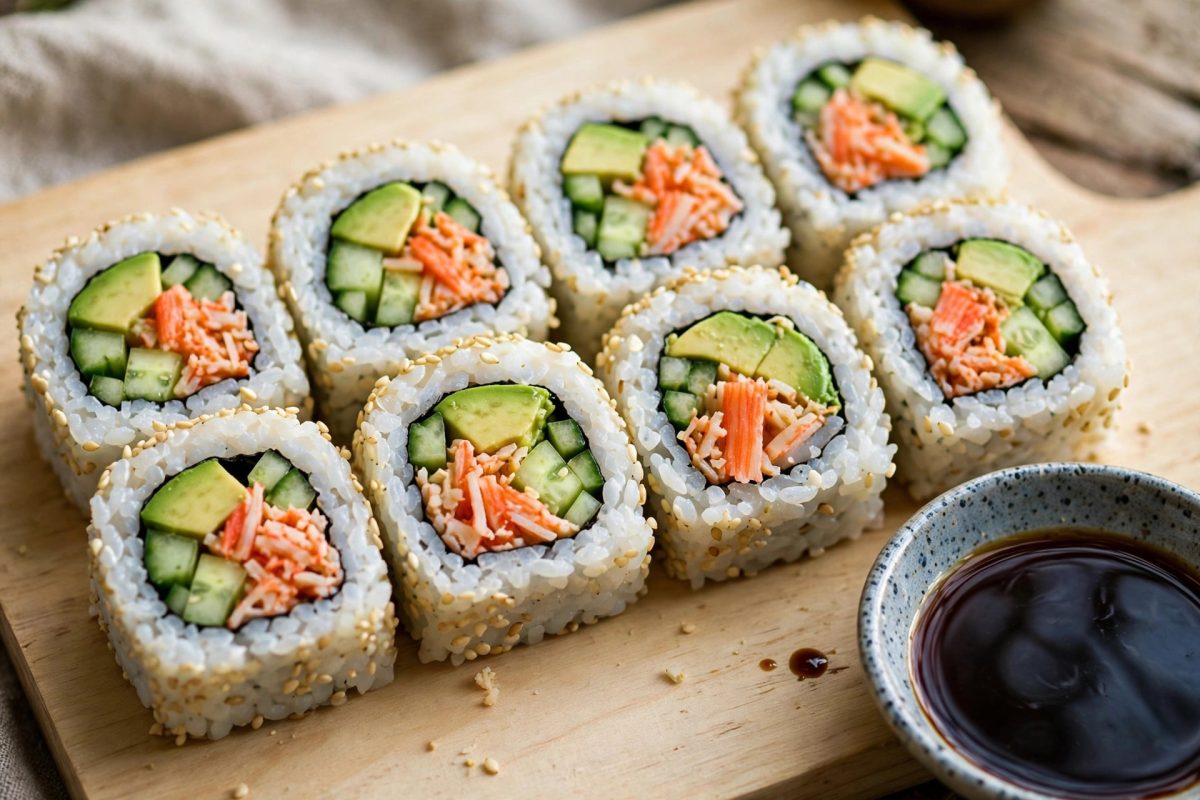
Most people order two rolls plus a few extras, and that is where the total lands. Two plain rolls — say a tuna roll (184) and a California roll (255) — come to 439 calories, plus a small miso soup at about 70 and a cup of green tea at zero, for a dinner of about 510 calories. Swap in a shrimp tempura roll (508) and a dragon roll (430) and the same two rolls are 938 calories, before soup or drinks. Add a spicy mayo-heavy roll, a fried appetizer like gyoza (about 300 for 6 pieces), and two tablespoons of soy sauce, and a sushi dinner can pass 1,200 calories without feeling like a big meal — because nothing on the table looks fried or heavy. The practical fix is not to skip sushi but to pick the roll mix: one plain fish roll and one specialty roll lands around 600 to 700 calories, which fits most dinners, and ordering sashimi alongside a single roll gives you the fish and protein for very few calories.
The lowest-calorie order is sashimi plus a simple roll: six pieces of tuna sashimi are about 180 calories with about 25 g of protein and no carbs, and a cucumber or tuna roll alongside it keeps the meal under 400 calories. If you want rolls only, pick the plain fish and vegetable rolls — tuna, salmon, cucumber, avocado — and skip anything described as tempura, crunchy, spicy, or special. Ask for light spicy mayo, or the sauce on the side, and you save roughly 50 to 90 calories a roll. Brown-rice rolls are about the same calories as white-rice rolls but add a little fiber, so they are a wash on calories and a small win on fullness. And skip the second roll if you had an appetizer: edamame is about 120 calories a cup with 11 g of protein and is the best starter on the menu, while a fried appetizer can cost as much as a whole roll.
Our calorie calculator sets your daily target — then you can see whether 440 or 940 calories of sushi fits, or crowds out the rest of the day.
Calculate My Daily TargetWritten by the Live Fitness Check editorial team · Reviewed against our calculator methodology · Last updated November 2026
Disclaimer: This guide is for general information only and is not medical advice. Calorie figures are standard averages and published restaurant values, and vary by restaurant, recipe, and serving size. Talk to your doctor or a registered dietitian before starting a weight-loss or restricted diet.