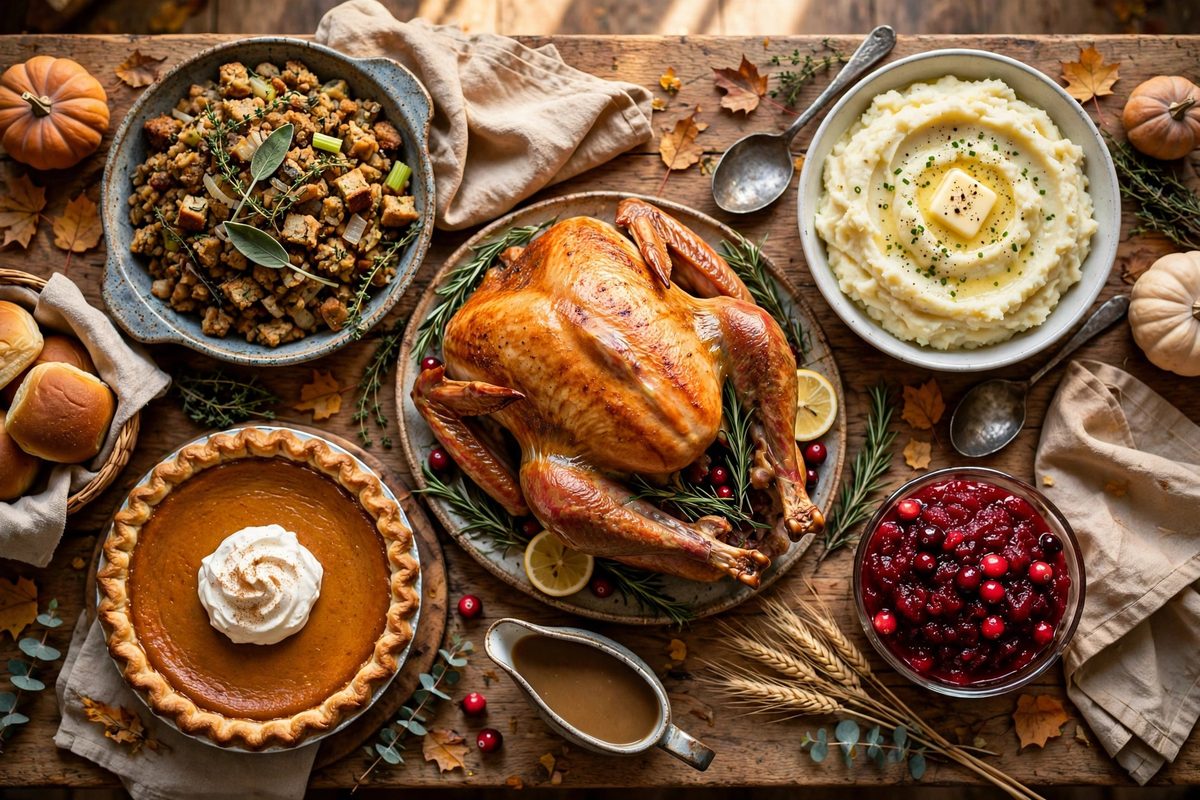
A typical Thanksgiving dinner is about 1,900 calories for one full plate with dessert and a glass of wine — and the famous 4,500-calorie figure counts the whole day of grazing, not the meal. The plate itself is built from a dozen modest servings that stack up fast: turkey, stuffing, mashed potatoes, gravy, cranberry sauce, a roll, and pie. Use our calorie calculator to see what 1,900 calories means against your daily target — this guide does the dish-by-dish math, tests the 4,500-calorie claim, and shows the swaps that cut the plate by a third without skipping anything.
A single generous plate — turkey, stuffing, mashed potatoes, gravy, green bean casserole, cranberry sauce, a roll with butter, pumpkin pie with whipped cream, and a glass of wine — adds up to roughly 1,960 calories. Go back for seconds of stuffing and mashed potatoes and it passes 2,500. The often-quoted 4,500 figure from the Calorie Control Council counts the entire day, snacks and drinks included, and even dietitians call it inflated.
Check My Daily TargetEvery dish on the Thanksgiving table is reasonable on its own — the total is what surprises people, because a holiday plate holds ten or eleven servings at once. The turkey is the lightest thing on the plate: 6 ounces of white meat without the skin is about 260 calories, and even with the skin it is roughly 350. The sides do the damage. A cup of stuffing is about 350 calories, a cup of mashed potatoes with butter is 237, and a cup of green bean casserole is about 250. None of those numbers looks alarming until they are all on the same plate, which is exactly how Thanksgiving works.
| Dish | Serving | Calories |
|---|---|---|
| Roast turkey, white meat, no skin | 6 oz | ~260 |
| Stuffing (bread) | 1 cup | ~350 |
| Mashed potatoes (milk and butter) | 1 cup | ~237 |
| Gravy | 1/4 cup | ~40 |
| Green bean casserole | 1 cup | ~250 |
| Cranberry sauce | 1/4 cup | ~110 |
| Dinner roll with butter | 1 roll + 1 tbsp butter | ~220 |
| Pumpkin pie with whipped cream | 1 slice + cream | ~370 |
| Wine | 5 oz glass | ~125 |
| One full plate, total | All of the above | ~1,960 |
Add it up yourself: 260 + 350 + 237 + 40 + 250 + 110 + 220 + 370 + 125 = 1,962. That is the whole meal, dessert and drink included, in one sitting — just under a full day's calories for most adults, and about 98% of a 2,000-calorie day. The two numbers that do the most work are the stuffing and the pie, at 350 and 370: together they are more than the turkey, the gravy, and the cranberry sauce combined. And seconds are where the plate really grows — another scoop of stuffing (350) and another scoop of mashed potatoes (237) add 587 calories, pushing the meal past 2,500 before a second slice of pie is even considered.
The 4,500-calorie figure is real, but it is widely misunderstood — and probably inflated. It comes from the Calorie Control Council, which estimates about 3,000 calories at the meal itself plus another 1,500 from appetizers, drinks, and picking at leftovers through the day. Dietitians have pushed back on it for years: when a New York Times reporter built the most calorie-heavy Thanksgiving dinner she possibly could in 2012, she only reached 2,486 calories. A Levity survey put the average American's Thanksgiving dinner at 2,092 calories for the meal itself. Consumer Reports built a traditional menu with sensible portions — ten servings including a glass of wine and a modest slice of pie — and counted 1,753 calories. The honest range for one big plate with dessert is about 1,500 to 2,000 calories, and a full day of grazing, drinks, and seconds can climb toward 3,000. The 4,500 number is what happens when every snack, cocktail, and leftover sandwich in a 16-hour day gets added to the biggest possible plate — possible, but not typical, and not a reason to skip the meal.
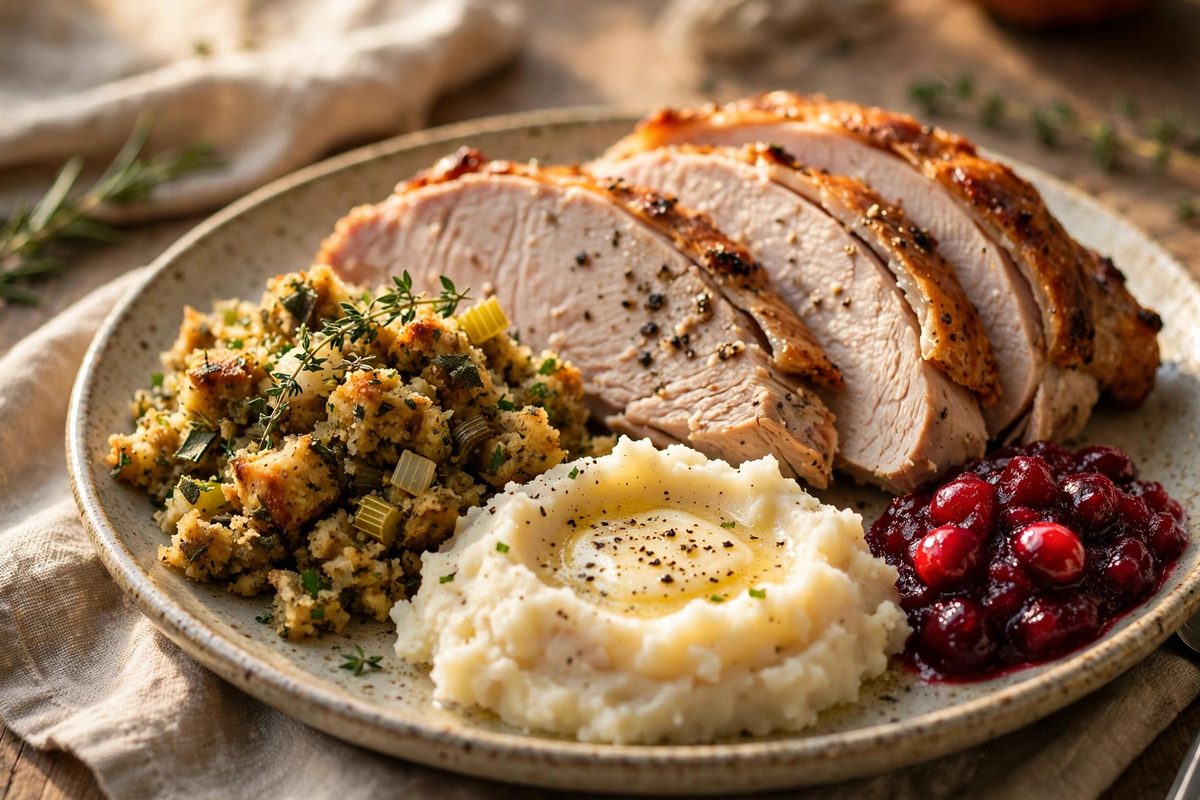
A 180 lb person burns about 95 calories per mile of walking, using the rule of roughly 0.53 calories per pound per mile. At that rate, a 1,960-calorie dinner takes about 20 miles of walking to burn off — nearly 7 hours at a 3 mph pace. That is the wrong way to think about one meal, but it is a useful sense of scale: the dinner is not undone by a walk around the block, and it does not need to be. A better frame is the week, not the day. Research published in the New England Journal of Medicine found that the average American gains about a pound over the holiday season — and that the gain tends to stick around into the new year, year after year. One dinner does not cause that; six weeks of slightly-too-much does. The fix is not a punishment workout on Friday but a normal week after it: regular meals, regular movement, and the leftovers portioned instead of grazed.
You do not need a different Thanksgiving — you need a slightly smaller scoop of the two heaviest dishes and one lighter choice at each end of the meal. Take a half-cup of stuffing instead of a full cup and you save about 175 calories; the same half-cup move on mashed potatoes saves about 120. Choose white meat without the skin over dark meat with it and you save roughly 90 calories per 6-ounce serving. Skip the whipped cream on the pie and save about 50, and take a thin slice instead of a thick one and save another 100. Drink water or sparkling water between glasses of wine instead of a second glass and save 125. Together those five moves cut the plate from about 1,960 to about 1,320 — a third lighter — and nothing is missing from the table. Eat slowly, put the fork down between bites, and wait ten minutes before deciding on seconds: most second helpings happen because the first plate was eaten faster than the fullness signal could arrive, not because anyone was still hungry.
Our calorie calculator sets your daily target — then you can see whether a 1,900-calorie dinner fits or crowds out the rest of the day.
Calculate My Daily TargetWritten by the Live Fitness Check editorial team · Reviewed against our calculator methodology · Last updated November 2026
Disclaimer: This guide is for general information only and is not medical advice. Calorie figures are standard averages and published estimates, and vary by brand, recipe, and serving size. Talk to your doctor or a registered dietitian before starting a weight-loss or restricted diet.