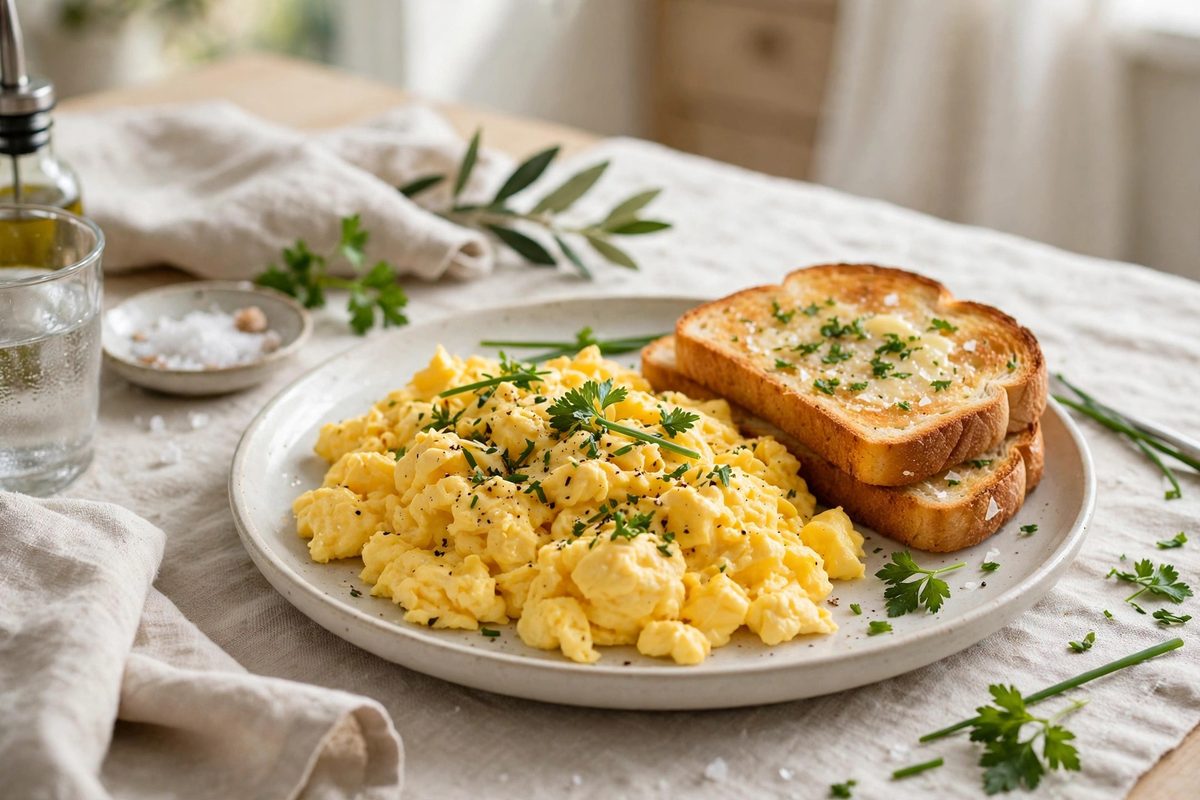
Two large scrambled eggs are about 182 calories when cooked the standard USDA way, with milk and a little fat — but the same two eggs can be 144 calories plain in a nonstick pan or nearly 300 calories with a tablespoon of butter and a handful of cheese. Scrambled eggs are one of the most variable breakfast foods in existence, because the eggs themselves are only half the recipe: the fat you cook them in and the extras you stir in do most of the damage. This guide breaks down the exact math by egg size, cooking fat, and add-ins, so you can count your actual plate — or see where it fits your day with our calorie calculator.
Two large eggs on their own are 144 calories (72 each). The USDA cooked scrambled-egg figure is 91 calories per egg, or 182 for two, because the standard recipe includes milk and fat. Add a tablespoon of butter (102 calories) and two eggs jump to about 256 calories; add an ounce of cheddar (about 114) and you are near 300. The eggs are the cheap part — the cooking fat is where the calories hide. See the full build chart below.
Check My Daily TargetAll scrambled-egg math starts with the raw egg, and egg size matters more than most people think. The USDA lists a large egg at about 72 calories with 6 grams of protein and 5 grams of fat; a medium egg is about 63 calories, an extra-large about 80, and a jumbo about 90. So two medium eggs are 126 calories before cooking, two large are 144, and two jumbo are 180 — a 54-calorie spread from size alone, before a single pat of butter enters the pan. Egg whites are a different food nutritionally: one large egg white is about 17 calories with about 3.5 grams of protein and almost no fat, so two whole eggs plus two whites gives you the volume of four eggs (about 178 calories: 144 + 34) with about 19 grams of protein for barely more calories than two whole eggs alone. That is the standard bodybuilder swap, and it works because the yolk carries nearly all the fat. The USDA FoodData Central database, at USDA FoodData Central, is the anchor for every figure in this guide: raw whole egg at 143 calories per 100 grams, and the cooked scrambled-egg entry at about 91 calories per large egg.
| Egg size (raw) | Per egg | Two eggs | Protein (2 eggs) |
|---|---|---|---|
| Medium (44 g) | 63 | 126 | ~11 g |
| Large (50 g) | 72 | 144 | ~12 g |
| Extra-large (56 g) | 80 | 160 | ~13 g |
| Jumbo (63 g) | 90 | 180 | ~14 g |
| Egg white only, large | 17 | 34 | ~7 g |
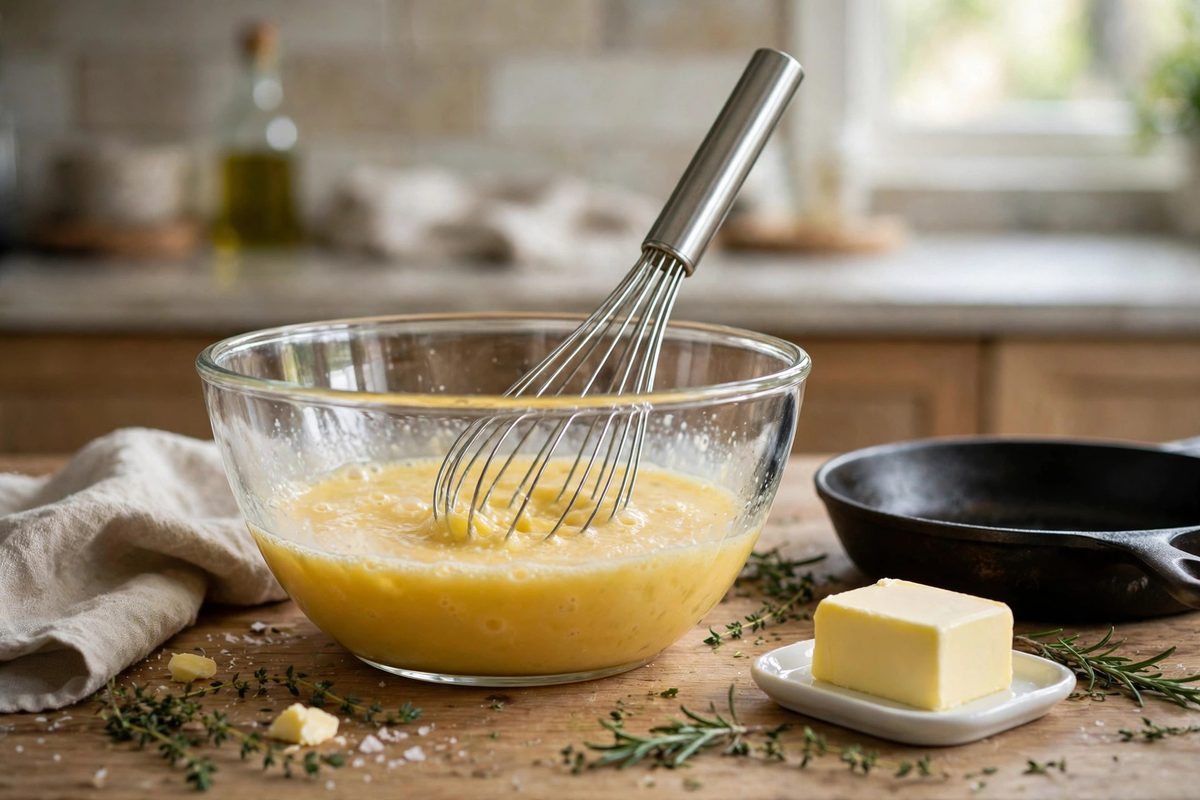
Cooking fat is the single biggest variable in scrambled eggs, and it is the one people undercount most. Two large eggs scrambled in a nonstick pan with cooking spray stay close to the raw figure — about 150 to 160 calories, since a short spray adds only a few calories. The USDA standard scrambled recipe, which includes milk and fat, lands at about 182 calories for two eggs. Add a teaspoon of butter (about 34 calories) and you are at about 188; a tablespoon of butter (about 102 calories) pushes two eggs to about 256 calories — nearly double the plain figure. A tablespoon of olive oil is similar at about 120 calories, and a generous pour of oil from a bottle, unmeasured, can easily be 2 tablespoons or 240 calories of fat alone. The practical lesson: measure the fat. A teaspoon of butter in a good nonstick pan gives you nearly all the flavor and nonstick benefit of a tablespoon for a third of the calories, and cooking spray gives you the nonstick with almost none. Restaurants are the extreme case: diner and hotel scrambled eggs are commonly made with generous butter, cream, and sometimes extra yolks, which is why a restaurant 2-egg portion typically runs 250 to 380 calories — double the home nonstick version — before toast, bacon, or potatoes join the plate.
| Two large eggs, cooked as | Calories | Math |
|---|---|---|
| Nonstick pan, cooking spray | ~150–160 | 144 + spray ~10 = ~154 |
| USDA standard (milk + fat) | ~182 | 91 per egg × 2 = 182 |
| With 1 teaspoon butter | ~188 | 144 + 34 + splash milk ~10 = 188 |
| With 1 tablespoon butter | ~256 | 144 + 102 + splash milk ~10 = 256 |
| With 1 tablespoon olive oil | ~274 | 144 + 120 + splash milk ~10 = 274 |
| Restaurant / diner portion | ~250–380 | Extra butter, cream, sometimes extra yolk |
Note the ranges: a home cook using a tablespoon of butter lands anywhere from about 250 to 285 calories depending on how much milk they add and how much butter stays in the pan versus on the plate. Ranges, not false precision, are the right way to count scrambled eggs.
Add-ins are the second variable, and cheese is the biggest one. An ounce of shredded cheddar (about a small handful, or a quarter cup) adds about 114 calories and 7 grams of protein; two ounces — the amount many cafes use — adds about 228 calories, which alone can double a plain 2-egg scramble. Feta is a little lighter at about 75 calories per ounce, and cottage cheese is lighter still at about 25 calories per ounce, which is why cottage-cheese scrambles are a favorite diet swap. Milk barely moves the number: a splash (2 tablespoons) of whole milk adds about 18 calories, and even a quarter cup adds only about 37. Cream is heavier — 2 tablespoons of heavy cream adds about 100 calories — which is why creamy restaurant scrambles taste richer and cost so much more. Vegetables are nearly free: spinach, mushrooms, tomatoes, onions, and peppers add 5 to 25 calories per handful and add volume that makes the plate feel bigger. Meat is the expensive add-in: two slices of crumbled bacon add about 90 calories, and a quarter cup of diced sausage adds about 100 to 130. A full diner plate tells the story: 2 eggs scrambled in butter (about 250), 2 slices of bacon (about 90), toast with butter (about 200), and hash browns (about 200) totals roughly 740 calories — and the eggs are the lightest item on the plate.
The lightest credible scramble is 2 large eggs plus 2 whites, cooked in a nonstick pan with cooking spray and a handful of spinach: about 178 calories for the eggs and whites, plus about 10 for the spinach, for roughly 188 calories with about 19 grams of protein — more protein than 2 plain eggs (12 grams) for barely more calories. The second-best swap is keeping whole eggs but switching the fat: a teaspoon of butter instead of a tablespoon saves about 68 calories, and cooking spray saves about 100. The third swap is cheese choice: cottage cheese stirred in at the end (about 25 calories per ounce) instead of cheddar (114 per ounce) saves about 89 calories per ounce and adds creaminess. And if the goal is volume, add vegetables generously — a scramble with a full cup of spinach, mushrooms, and tomatoes is a visibly bigger plate for about 25 extra calories. For a complete lighter breakfast, pair the 2-egg scramble (about 182) with one slice of whole wheat toast (about 80) and a piece of fruit (about 80 to 100) for a roughly 350-calorie breakfast with about 15 grams of protein — versus the 740-calorie diner plate above, a saving of nearly 400 calories for the same meal shape.
Our calorie calculator shows where your breakfast fits your day.
Check My Daily TargetWritten by the Live Fitness Check editorial team · Reviewed against our calculator methodology · Last updated November 2026
Disclaimer: This guide is for educational purposes only and is not medical advice. Calorie figures are approximations based on USDA data; actual values vary by egg size, brand, and preparation. Talk to your doctor or a registered dietitian before making significant changes to your diet.