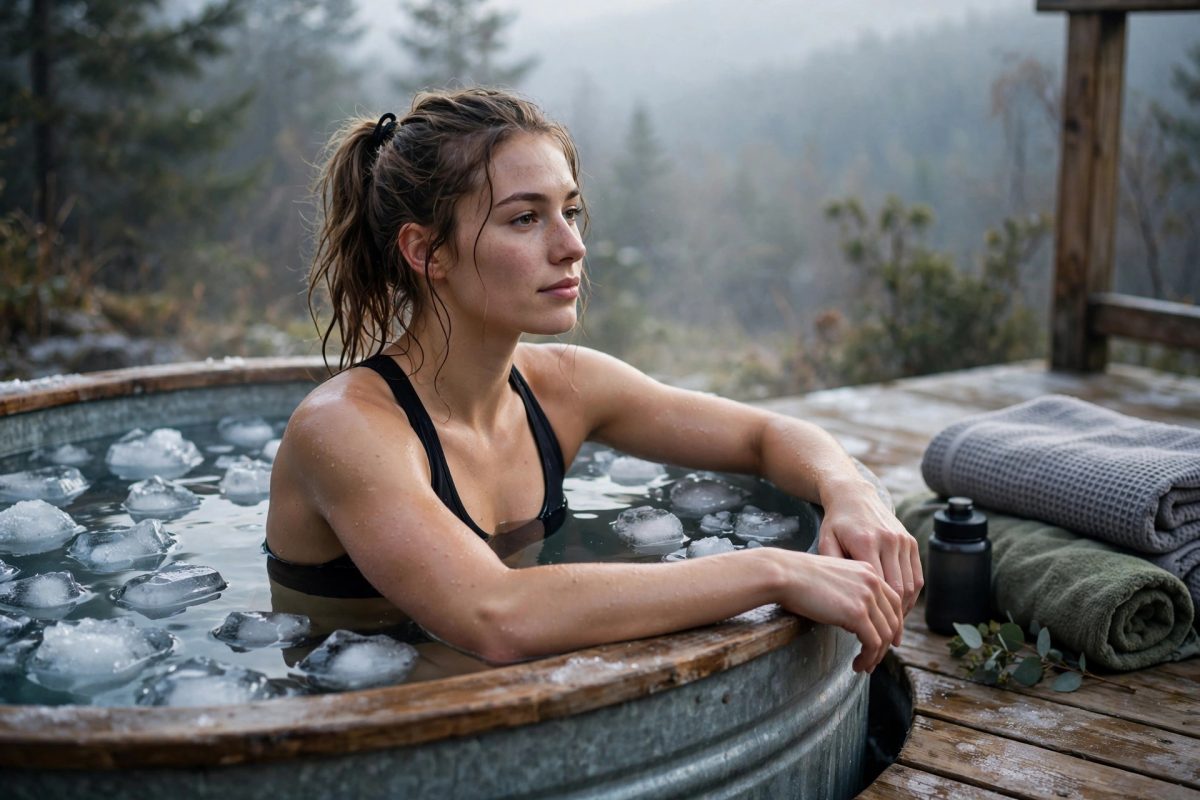
For most people, a cold plunge session of 2 to 3 minutes in water between about 50°F and 59°F (10°C and 15°C) is plenty — and beginners should start far shorter, at 30 seconds to 1 minute, and build up gradually over weeks. Colder water means a shorter stay, warmer water allows a little longer, but longer is not better: the goal is a controlled cold exposure, not an endurance contest. Plan your session with our cold plunge calculator, and read the safety section below before your first plunge.
The ranges in this guide are conservative planning ranges, not medical prescriptions: beginners 30 seconds to 1 minute, regular plungers 2 to 3 minutes, and experienced plungers up to 5 minutes only in milder water (around 55°F to 59°F / 13°C to 15°C). Never plunge alone, never force yourself to stay in, and get out immediately if you feel dizzy, numb, confused, or short of breath. Use our cold plunge calculator to plan time by temperature.
Plan My PlungeWater temperature is the single biggest factor in how long you should stay in, because cold water pulls heat from your body roughly 25 times faster than cold air at the same temperature. That is why a 2-minute plunge at 50°F (10°C) feels far more intense than standing outside in 50°F weather, and why the same 2 minutes at 39°F (4°C) is a different experience entirely. As a planning rule, colder water always means a shorter session.
The table below gives conservative planning ranges used by many coaches and cold-exposure practitioners. These are not medical guidelines and they are not targets to hit — they are upper bounds to stay well inside, especially when you are starting out. If you are new, ignore the top of every range and start at the bottom. A comfortable 1-minute plunge you repeat three times a week beats a miserable 5-minute plunge you do once and never repeat.
| Water temperature | Beginner planning range | Experienced planning range |
|---|---|---|
| 59°F (15°C) — cool | 1–2 minutes | 3–5 minutes |
| 50–55°F (10–13°C) — cold | 30 seconds–1 minute | 2–3 minutes |
| 41–48°F (5–9°C) — very cold | 30 seconds max, supervised | 1–2 minutes |
| Below 41°F (5°C) — near freezing | Not recommended for beginners | Under 1 minute, supervised only |
Two practical notes on the table. First, home setups rarely hold an exact temperature: a backyard tub, a stock tank with ice, or a converted chest freezer will drift with the weather, so measure with a thermometer every session rather than guessing. Second, wind and air temperature after you get out matter too — stepping out into a cold wind extends the cooling, which is part of why rewarming properly (covered below) is as important as the plunge itself.
A sensible beginner progression takes four to six weeks, not one brave weekend. In week one, try 30 seconds in cool water around 59°F (15°C), focusing entirely on slow, controlled breathing. In week two, extend to 1 minute at the same temperature if week one felt manageable. In weeks three and four, hold 1 to 2 minutes, and only then consider colder water — dropping the temperature by a few degrees is a bigger jump than adding a minute, so change one variable at a time.
The breathing piece is not optional decoration. The cold-shock response — the involuntary gasp, rapid breathing, and spike in heart rate that hits in the first seconds of cold immersion — is the most dangerous part of a plunge, and it is exactly what controlled breathing counters. Research by Professor Mike Tipton and colleagues on the cold-shock response has shown that this gasp reflex, not hypothermia, is the main acute risk of sudden cold-water immersion, because gasping while your face is near water can lead to inhaling water. Enter slowly, keep your face out of the water, and breathe out slowly through pursed lips until the initial shock passes, usually within 30 to 60 seconds.
Experienced plungers are not people who ignore discomfort — they are people whose bodies have adapted to it. Regular cold exposure over weeks reduces the intensity of the cold-shock response, which is why a 3-minute plunge that feels brutal in week one can feel controlled in week six. That adaptation is also why experienced plungers should still respect the ranges above: adaptation reduces the shock, but it does not stop heat loss, and a body that feels fine can still be cooling dangerously.

Safe entry means slow, feet first, and never alone. Step in gradually rather than jumping in, keep your hands and face out of the water, and have someone nearby who knows what you are doing — especially for your first sessions or any plunge below about 50°F (10°C). Never plunge after drinking alcohol, which impairs judgment and accelerates heat loss, and never plunge if you are already cold, exhausted, or ill. A plunge is a stressor, and adding it on top of an already stressed body is how manageable sessions turn into bad ones.
Exit is not the end of the exposure. After you get out, your core temperature can keep dropping for a while — a phenomenon called afterdrop — because cold blood from your limbs circulates back to your core as you rewarm. That is why you may feel colder 10 to 15 minutes after getting out than you did in the water, and why shivering after a plunge is normal but prolonged, violent shivering is a signal to rewarm actively. Dry off immediately, put on warm dry clothes (including a hat, since a wet head loses heat fast), and move gently — a light walk, not a sprint. A warm drink helps; a hot shower right away is fine for most people, but ease into it rather than blasting yourself with the hottest water available, which can cause a sudden drop in blood pressure in some people.
Timing within your training week also matters. Cold plunges immediately after heavy strength training are debated in the research: some studies suggest cold-water immersion right after lifting can blunt muscle growth signals, while others find the effect small or limited to certain protocols. If muscle growth is your top priority, many coaches suggest separating plunges from lifting sessions by several hours, or plunging on rest days. If recovery and general resilience are your goals, a plunge after training is a reasonable choice. Either way, treat the plunge as one tool in a training week, not a daily obligation — 2 to 4 sessions per week is plenty for most people.
Cold plunging is not for everyone, and this section matters more than the timing table. Do not cold plunge if you have a heart condition, uncontrolled high blood pressure, a history of heart attack or stroke, or a condition that affects circulation such as Raynaud's disease, without first talking to your doctor. Cold immersion causes a rapid rise in blood pressure and heart rate, and for a healthy heart that spike is brief and manageable — for a compromised heart, it can be dangerous.
Pregnant women should not cold plunge, and neither should anyone with an open wound, a skin infection, or a condition that reduces sensation in the limbs (such as diabetic neuropathy), because you may not feel cold damage developing. Children should only plunge under adult supervision in mild water and for very short times, if at all. If you take medication for blood pressure, heart rhythm, or circulation, or you have any condition that affects how your body handles temperature, get medical clearance first and say so plainly to whoever supervises your sessions. This guide cannot assess your individual risk, and no timing table overrides a doctor's advice for your situation.
Watch for warning signs every single session, no matter how experienced you are: dizziness, chest pain or tightness, confusion, slurred speech, numbness that does not resolve quickly after exiting, or difficulty breathing that does not settle within a minute of getting out. Any of these means the session is over — get out, rewarm, and seek medical attention if symptoms do not resolve quickly. A plunge you cut short is a successful plunge; a plunge you push through warning signs is not.
The best cold plunge routine is the one you still enjoy in three months, and that means planning for consistency rather than heroics. Pick a fixed slot — many people in the US and UK plunge first thing in the morning, when the alertness boost doubles as a coffee alternative, or after an evening workout on rest days from lifting. Keep a simple log: date, water temperature, time in, and how you felt during and after. Our cold plunge calculator can turn your temperature and experience level into a suggested planning range for each session.
Set up for success before you get in: thermometer in the water, towel and warm clothes laid out, warm drink ready, phone nearby but not in the water, and someone aware you are plunging. Start the timer only once you are settled, not while you are still stepping in, and decide your exit time before you enter — deciding under cold stress is unreliable, and "just 30 more seconds" repeated three times is how a planned 2-minute plunge becomes an unplanned 4-minute one. Step out, dry off, dress warm, move gently, and note how you feel 20 minutes later, not just immediately after. That 20-minute check tells you more about whether the dose was right than the plunge itself did.
Our cold plunge calculator turns your water temperature and experience level into a suggested session range.
Plan My PlungeWritten by the Live Fitness Check editorial team · Reviewed against our calculator methodology · Last updated November 2026
Disclaimer: This guide is for educational purposes only and is NOT medical advice. Cold-water immersion carries real risks, including cold shock, cardiac strain, and hypothermia. The time and temperature ranges here are conservative planning ranges, not prescriptions for any individual. Do not cold plunge if you have a heart condition, circulation problem, or are pregnant, and talk to your doctor before starting if you have any medical condition or take medication affecting your heart or circulation. Never plunge alone.