On a GLP-1 medication, appetite drops — and protein is usually the first thing people under-eat. Find your daily protein target to protect muscle while you lose weight, plus a per-meal split you can actually follow.
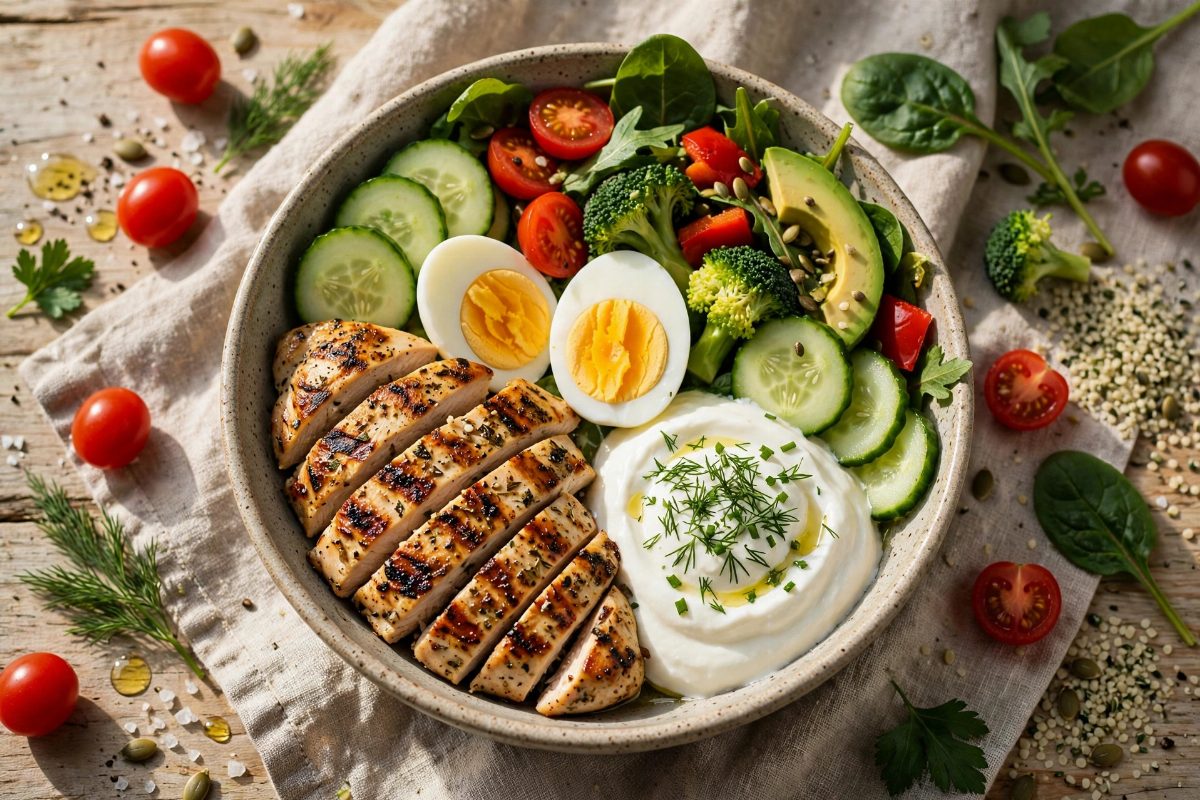
GLP-1 medications work largely by reducing appetite — which is the point, but it creates a quiet problem. When you eat much less, protein intake usually falls with everything else, and the body still needs amino acids every day to maintain muscle, bone, skin, and immune function. Studies of GLP-1 weight loss report that roughly 30–40% of the weight lost can be lean mass (mostly muscle) when protein is low and no resistance training is done. That matters because muscle is what keeps your metabolism, strength, and mobility up as the scale goes down: losing 40 lb with a third of it muscle leaves you lighter but weaker and more likely to regain fat later. Protein plus resistance training is the countermeasure, and it starts with knowing your number — which is what this calculator gives you.
Published sources disagree on the right protein range for people on GLP-1 medications: one popular calculator uses 1.6–2.2 grams per kilogram of body weight per day, while another uses 1.2–1.6 g/kg. We do not average them silently, because an averaged range would be nobody's recommendation. This calculator uses 1.6–2.2 g/kg/day — the higher range, drawn from the evidence on active adults preserving muscle during weight loss — because GLP-1 weight loss is fast, appetite is suppressed, and the cost of under-eating protein (muscle loss) is worse than the cost of overshooting it slightly for healthy adults. If you have kidney disease, or your clinician has given you a different target, follow your clinician's number, not this calculator's. If your clinician prefers the lower 1.2–1.6 g/kg range for you, the lower end of our range (1.6 g/kg) is the overlap point to discuss with them.
The calculator multiplies your weight in kilograms by 1.6 for the low end and 2.2 for the high end, then splits the result across your meals:
| Person | Weight in kg | Daily target | Across 4 meals |
|---|---|---|---|
| 200 lb, no training yet | 200 × 0.453592 = 90.7 kg | 90.7 × 1.6 = 145 g to 90.7 × 2.2 = 200 g | 36–50 g per meal |
| 150 lb, training 2x/week | 150 × 0.453592 = 68.0 kg | 68.0 × 1.6 = 109 g to 68.0 × 2.2 = 150 g | 27–38 g per meal |
A useful per-meal floor comes from muscle protein synthesis research: roughly 0.4 g/kg per meal, which for the 200 lb person is about 36 g per meal — exactly the bottom of the 4-meal split above. That is why four meals beat two for most people on GLP-1s: two meals would need 73–100 g each, which is a huge plate when your appetite is small. Smaller, protein-first meals are easier to finish, and finishing the protein is the whole game. See our guide on protein per meal for the full breakdown, and our protein shake guide for when a shake is the pragmatic way to close a gap.
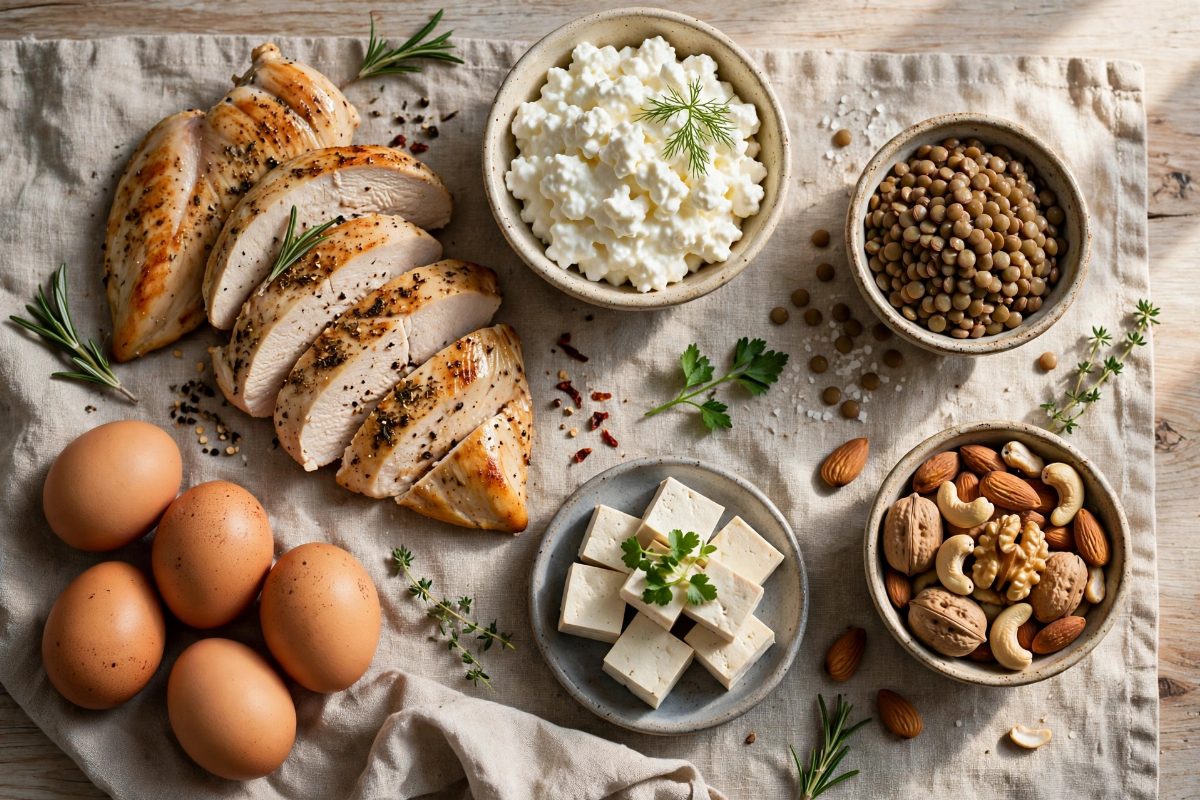
The most common failure mode on a GLP-1 is not willpower — it is arithmetic. A 200 lb person eating 1,400 calories a day needs 145–200 g of protein, which is 580–800 calories from protein alone, or roughly 41–57% of intake. That is achievable but it requires protein-first eating: start each meal with the protein, choose the highest-protein version of foods you already eat, and keep a shake or Greek yogurt for the days real food falls short. Practical swaps that add up: Greek yogurt instead of regular yogurt (+10 g per serving), chicken breast instead of rotisserie thigh meat (+8 g per 3.5 oz), cottage cheese instead of cream cheese (+12 g per half cup), and a scoop of whey in oatmeal (+24 g). If nausea or fullness stops you eating, tell your prescribing clinician — persistent under-eating is a medical issue to solve with them, not a target to white-knuckle through.
Protein without training preserves less muscle than protein with training — the training is what tells your body to keep muscle while it burns fat. Two full-body sessions a week is enough to start: squats or leg press, a push (bench or push-ups), a pull (rows or lat pulldowns), and a hinge (deadlift pattern), 2–3 sets of 8–12 reps each, leaving 1–2 reps in reserve. That is about 45 minutes, twice a week, and it changes the meaning of the calculator's output: with training, aim for the upper half of your range; without it, treat the lower end as your floor and add training as soon as you can. Walking counts for health and for your TDEE, but walking alone does not send the same muscle-preservation signal as resistance work.
Use the calculator above, then build the habit with our protein-per-day guide.
Calculate My TargetWritten by the Live Fitness Check editorial team · Reviewed against our calculator methodology · Last updated October 2026
Disclaimer: This calculator is for educational purposes only and is not medical advice. It gives protein targets only and never advises on medication, dosage, or treatment. Protein needs vary with kidney function, pregnancy, illness, and other conditions — if any of those apply, or if you cannot eat enough, talk to your prescribing clinician before following any target here.