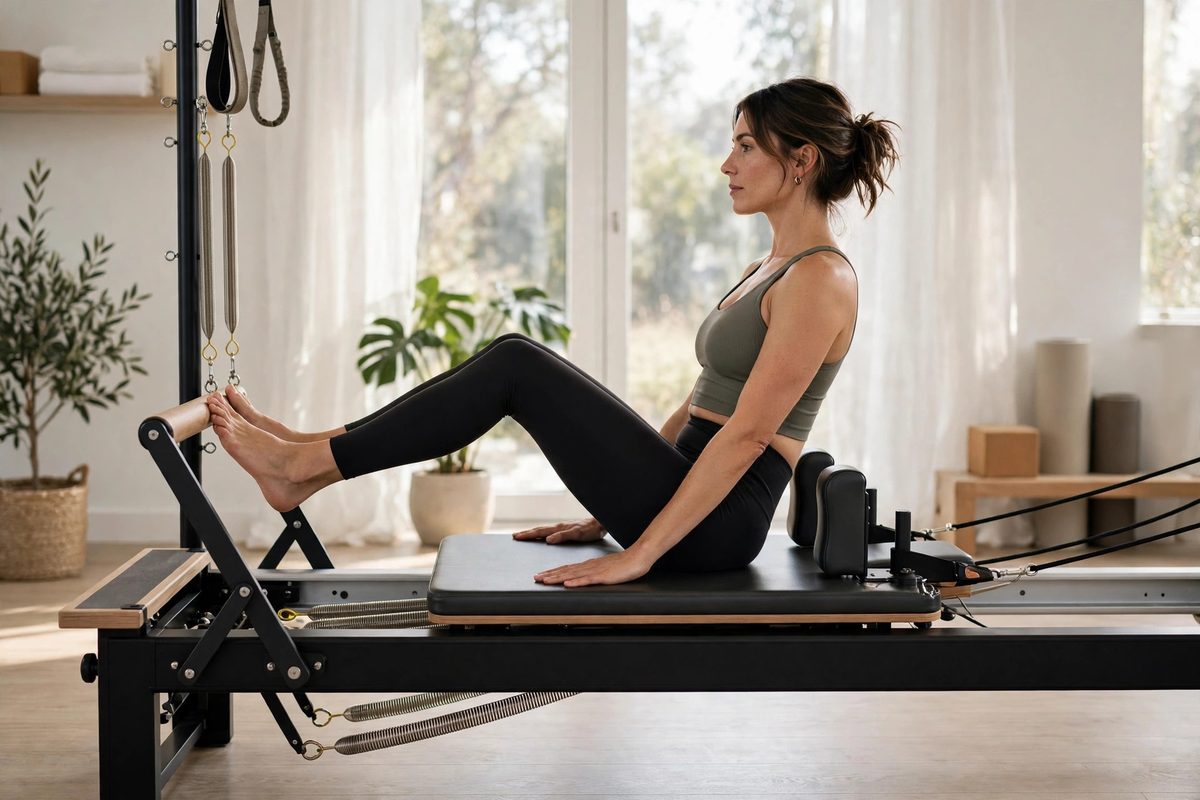
Here is the honest answer first: Pilates is not a big calorie burner, and any article that tells you otherwise is selling something. A 150 lb (68 kg) person burns roughly 170–340 calories in a 60-minute Pilates class — mat classes at the low end, reformer and advanced classes at the high end. That is about half what the same person burns running for an hour, and that is fine: Pilates was never meant to be cardio. In this guide you will see the mat-versus-reformer chart by body weight, why your fitness watch almost certainly undercounts Pilates, and how to fit it into a weight-loss plan honestly — or check your own numbers instantly with our calories burned calculator.
Pilates builds the core, posture, and control that make every other workout safer. Pair it with real cardio and a calorie target from our TDEE calculator and calories burned calculator.
Check My BurnExercise scientists measure activity intensity in METs — metabolic equivalents, where 1 MET is sitting still. Pilates styles land in a narrow band: gentle/beginner classes around 2.5 METs, standard mat classes around 3.0, reformer classes around 4.0–4.5, and advanced athletic classes up to 5.0. Calories = METs × body weight in kg × hours, so every number below follows one formula and you can check any of them yourself.
| Body weight | Gentle / beginner (2.5 METs) | Mat class (3.0 METs) | Reformer (4.0–4.5 METs) | Advanced (5.0 METs) |
|---|---|---|---|---|
| 130 lb (59 kg) | ~147 | ~177 | ~236–265 | ~295 |
| 150 lb (68 kg) | ~170 | ~204 | ~272–306 | ~340 |
| 180 lb (82 kg) | ~204 | ~245 | ~327–367 | ~408 |
| 200 lb (91 kg) | ~227 | ~272 | ~363–408 | ~454 |
Read the table as a range, not a promise. A slow, stretchy beginner class with long rests sits near the gentle column even if it is labeled "reformer," while a fast-paced athletic reformer class with minimal rest can push past the advanced column for short bursts. The class format matters less than how continuously you move.
The reformer is a sliding carriage with springs, and the springs are the whole difference. On a mat, gravity is your only resistance and it disappears at the top of many movements — your muscles get a free ride for part of every rep. On a reformer, the springs load the muscle through the full range of motion, including the return: you work eccentrically (lowering under control) on every rep, and eccentric work is metabolically expensive. That continuous tension is why reformer classes land roughly 30–50% higher than mat classes at the same effort level.
There is a second, subtler factor: reformer classes tend to flow. Mat classes pause between exercises to reposition; reformer classes transition on the machine with less dead time. More minutes under tension per hour means more calories per hour, even before the springs are counted. If calorie burn is your tiebreaker between the two formats, reformer wins — but the gap is ~70–100 calories an hour at 150 lb, not a different universe.
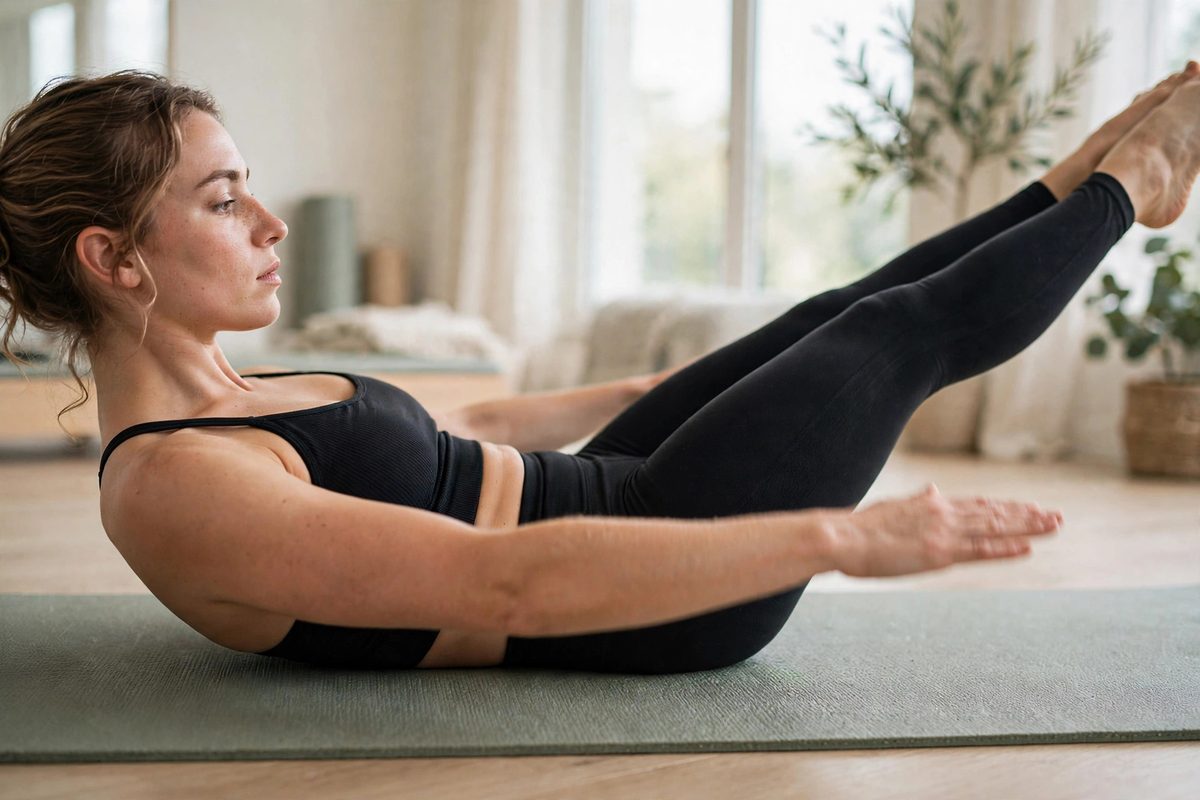
If you wear a fitness watch to Pilates, it will probably report a suspiciously low number — sometimes under 100 calories for an hour that felt hard. This is a known measurement problem, not a sign you did nothing. Watches estimate calories mostly from heart rate, and Pilates keeps heart rate low while demanding a lot from muscles: long isometric holds, slow controlled eccentrics, and deep core engagement barely move the pulse but cost real energy. The watch sees a resting heart rate and assumes you are resting.
The same problem runs in reverse for other activities (watches overcount weightlifting for similar reasons), but for Pilates the practical fix is simple: trust the MET table above over the watch, and judge the class by how your muscles feel the next day, not by the number on your wrist. If you log workouts for weight loss, use the table value — it is closer to the truth than the watch's guess.
Three Pilates classes a week at 150 lb burn roughly 600–1,000 calories total — about a quarter of a pound of fat per week if everything else stays equal. That is real but small, and anyone promising "Pilates melts fat" is ignoring the arithmetic. Where Pilates genuinely helps weight loss is indirect: a stronger core and better posture make running, lifting, and daily movement easier and less injury-prone, and people who enjoy their exercise stick with it. The best role for Pilates in a weight-loss plan is as the complement — 2–3 classes a week for strength, posture, and consistency, plus walking or another cardio for the calorie deficit itself. Pair that with a target from our calorie calculator and you have a plan that survives contact with reality.
One more honest note: Pilates will not spot-reduce belly fat, tone your arms in two weeks, or "lengthen" your muscles (muscles do not lengthen — they get stronger and your posture improves, which looks longer). What it reliably delivers is a stronger trunk, better balance, fewer aches, and a workout you will actually keep doing. For many people, that last one is worth more than any calorie number.
Many studios run 50-minute classes rather than 60. Scale the table by five-sixths: at 150 lb, a 50-minute mat class burns ~170, a reformer class ~227, and an advanced class ~283. A 30-minute express class halves the 60-minute numbers. And a 20-minute at-home YouTube session? Roughly a third — ~70 calories of mat work at 150 lb. Small sessions still count for strength and habit; they just do not move the calorie needle much, and knowing that keeps expectations honest.
Our calories burned calculator puts your Pilates sessions next to your cardio in seconds.
Calculate My BurnWritten by the Live Fitness Check editorial team · Reviewed against our calculator methodology · Last updated October 2026
Disclaimer: This guide is for educational purposes only and is not medical advice. Calorie figures are estimates based on MET values; actual burn varies by class intensity, rest time, and individual factors. If you have an injury or medical condition, talk to your doctor or a qualified instructor before starting Pilates.
