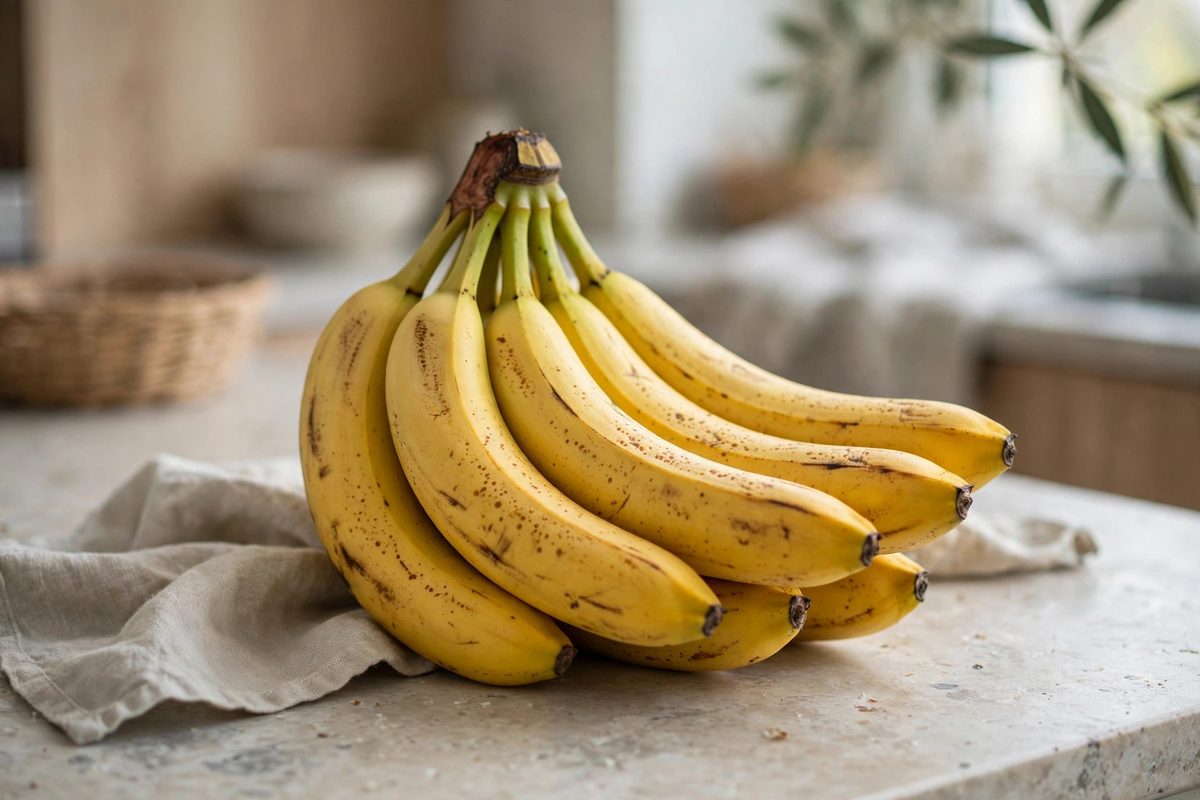
A medium banana is 105 calories, a small one 90, a large 121, and an extra-large 135 — and the only thing that decides which number applies is the size of the banana in your hand. Bananas run about 89 calories per 100 g, so every figure in this guide is just that rate times the weight. Ripeness barely changes the calories at all: a green banana and a spotty brown one hold nearly the same energy, because ripening converts starch to sugar without creating or destroying calories. In this guide you will price every size, bust the ripeness myth, and build the banana snacks people actually eat — or total yours with our calorie calculator.
At about 89 calories per 100 g, a small banana (101 g) is 90 calories, a medium (118 g) 105, a large (136 g) 121, and an extra-large (152 g) 135. Ripeness changes the sugar, not the calories. A banana with 2 tablespoons of peanut butter is about 295 calories — check any build with our calorie calculator or macro calculator.
Calculate My SnackDirect answer: a small banana (6–7 inches, 101 g) is 90 calories, a medium banana (7–8 inches, 118 g) is 105, a large banana (8–9 inches, 136 g) is 121, and an extra-large banana (9 inches or more, 152 g) is 135. Every figure is the same rate — about 89 calories per 100 g — multiplied by the weight, and the multiplication checks out exactly: 101 × 0.89 = 89.9 (90), 118 × 0.89 = 105.0 (105), 136 × 0.89 = 121.0 (121), and 152 × 0.89 = 135.3 (135). If your banana looks "average" at the store, it is probably a large, not a medium — supermarket bananas skew big, and the 16-calorie gap between medium and large is the most common banana counting error.
| Size | Length | Weight | Calories (× 0.89) | Potassium (approx.) |
|---|---|---|---|---|
| Small | 6–7 in (15–18 cm) | 101 g | ~90 | ~362 mg |
| Medium | 7–8 in (18–20 cm) | 118 g | ~105 | ~422 mg |
| Large | 8–9 in (20–23 cm) | 136 g | ~121 | ~487 mg |
| Extra-large | 9+ in (23+ cm) | 152 g | ~135 | ~544 mg |
| Per 100 g (reference) | — | 100 g | ~89 | ~358 mg |
Potassium scales with weight at the same rate (about 358 mg per 100 g), so a medium banana's famous 422 mg is simply 118 × 3.58 — and it is about 12% of the 3,400 mg daily adequate intake for adult men and about 16% of the 2,600 mg for adult women. That is a genuinely useful contribution, but it is not a miracle: potatoes, beans, yogurt, and spinach all beat bananas per calorie for potassium, and no single food fixes a low-potassium diet. Bananas also deliver about 3 g of fiber and 1.3 g of protein per medium fruit, plus vitamin B6 (about a quarter of the daily value) and vitamin C. For a fruit, that is a strong all-round profile at a modest calorie price — roughly the same as an apple, and far below the dried-fruit trap, where a small handful of banana chips can pass 150 calories because the water is gone. If you track precisely, weigh the peeled banana once and use 89 per 100 g; if you track casually, call it 105 and move on.
Direct answer: ripeness barely changes a banana's calories — a green banana and a fully ripe one differ by only a few calories, because ripening converts starch into sugar rather than adding energy. A green banana's carbohydrates are mostly resistant starch, which digests slowly and feeds gut bacteria; as the banana ripens, enzymes break that starch into simple sugars, which is why a spotty banana tastes sweeter and scores higher on the glycemic index. The total carbohydrate stays around 27 g for a medium banana throughout, and the calorie count stays around 105. What does change is how your body handles it: the greener banana is gentler on blood sugar and slightly more filling per calorie thanks to the resistant starch, while the ripe banana digests faster — better immediately before or after a workout, when quick energy is the point.
| Stage | Calories (medium) | What changes | Best use |
|---|---|---|---|
| Green (underripe) | ~105 | Mostly resistant starch; less sweet, firmer | Slow energy; gentler on blood sugar |
| Yellow, firm | ~105 | Starch converting; balanced sweetness | Everyday eating; lunchboxes |
| Yellow with brown spots | ~105 | Mostly sugars; sweetest, softest | Quick energy; smoothies; baking |
| Mostly brown (overripe) | ~105 | Sugars fully developed; very soft | Banana bread; freezing for smoothies |
The myth persists because ripe bananas taste like a different food — and taste is a reasonable proxy for sugar, just not for calories. The same confusion shows up with dried fruit, where removing water concentrates both sugar and calories per handful, but ripening removes nothing and adds nothing. So eat the banana at whatever stage you enjoy it, and choose green versus ripe for digestion and taste, not for weight loss. One genuine ripeness caution: a fully brown banana is not rotten, but a banana with mold, leaking liquid, or a fermented smell should be discarded. For baking, the brownest bananas are actually the best — their sugars and softness mean less added sugar in the recipe, which is where banana bread's calories are really decided.
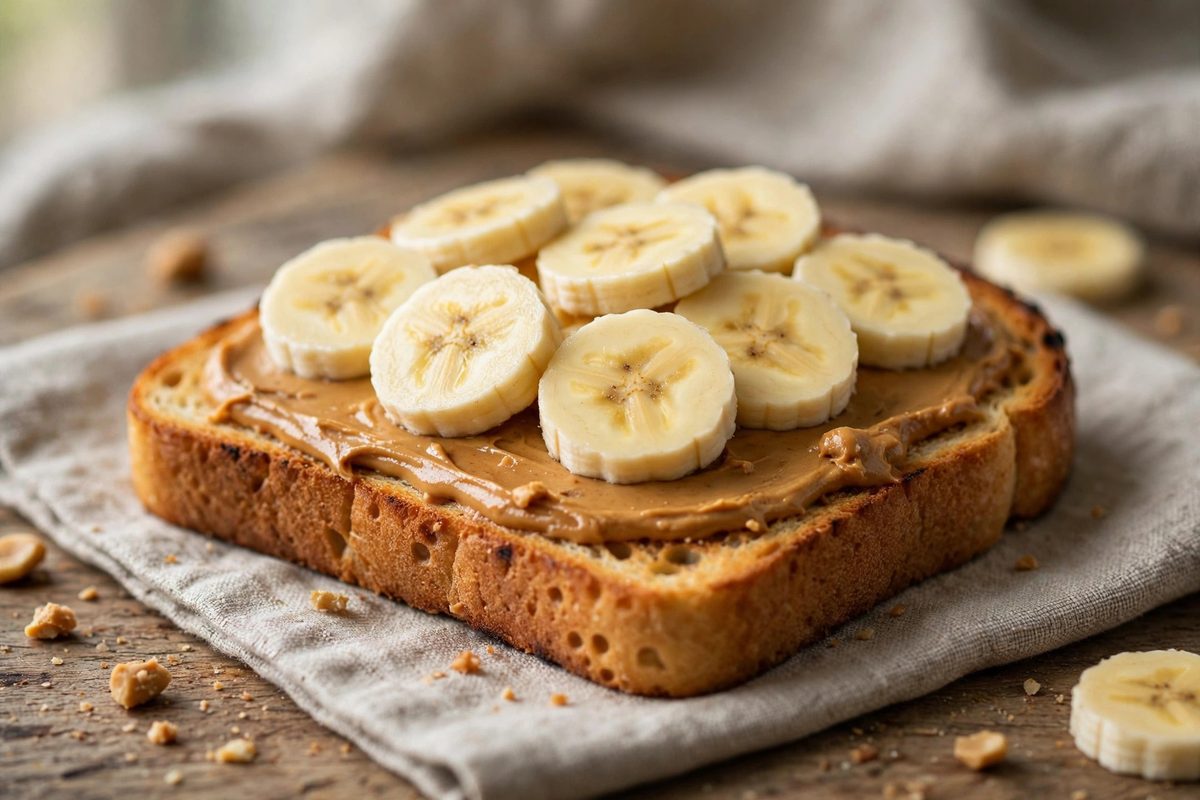
Direct answer: a medium banana with 2 tablespoons of peanut butter is about 295 calories, a banana smoothie can run 250–400 depending on the base, and a slice of banana bread is typically 200–250 calories. The banana itself is the smallest part of every one of these builds — the peanut butter, milk, and added sugar do the heavy lifting, which is why "banana snack" can mean anything from 105 to 600 calories. The table below prices the builds people actually make, starting from the 105-calorie medium banana.
| Build | Math | Total calories |
|---|---|---|
| Banana alone (medium) | 105 | ~105 |
| Banana + 1 tbsp peanut butter | 105 + 94 | ~199 |
| Banana + 2 tbsp peanut butter | 105 + 190 | ~295 |
| Banana smoothie (banana + 1 cup skim milk + ice) | 105 + 90 | ~195 |
| Banana smoothie (banana + whole milk + 2 tbsp peanut butter + honey) | 105 + 150 + 190 + 64 | ~509 |
| Banana bread, 1 slice (bakery) | — | ~200–250 |
| Banana bread, 1 slice + butter | ~225 + 102 | ~327 |
| Frozen banana "nice cream" (2 bananas, blended) | 2 × 10⁵ | ~210 |
Check the smoothie gap: the light version (195 calories) and the loaded version (509) differ by 314 calories while both being honestly described as "a banana smoothie" — the whole milk, peanut butter, and honey are the difference, not the banana. Banana bread follows the same logic: a homemade slice made with modest sugar and oil lands near 200 calories, while a bakery slice with butter on top reaches about 327, and a chocolate-chip bakery slice can pass 350. None of these are bad foods — the peanut-butter banana is an excellent pre-workout snack with quick carbs plus staying power, and nice cream (frozen bananas blended smooth) is a genuinely light dessert at about 210 calories for two bananas. The point, as ever in this series, is to count the build, not the headline ingredient. For more on smoothie math, see our smoothie guide, and for the fruit series, the Body & Nutrition hub.
Direct answer: bananas are a good weight-loss food at 105 calories for a medium fruit with 3 g of fiber, a good workout food because their fast sugars and potassium suit exercise, and a poor food to fear. At 105 calories, a banana costs less than a granola bar (typically 150–200) and fills more than a 100-calorie snack pack, thanks to its volume and fiber. Before a workout, eat a ripe banana 30–60 minutes out for quick energy; after a workout, pair it with protein (Greek yogurt or a protein shake) rather than eating it alone, since recovery needs protein the banana cannot supply — our protein calculator can size that pairing. Two bananas a day is perfectly reasonable for most adults; the old warnings about "too much sugar" confuse a whole fruit with added sugar, and a banana's fiber slows its sugars in a way juice never does. Check any day's total against your target with our fiber calculator and TDEE calculator.
Our calorie calculator totals any snack in seconds.
Calculate My SnackWritten by the Live Fitness Check editorial team · Reviewed against our calculator methodology · Last updated October 2026
Disclaimer: This guide is for educational purposes only and is not medical advice. Calorie figures are USDA-based estimates; actual values vary by size, brand, and preparation. If you follow a prescribed diet, talk to your doctor or dietitian.