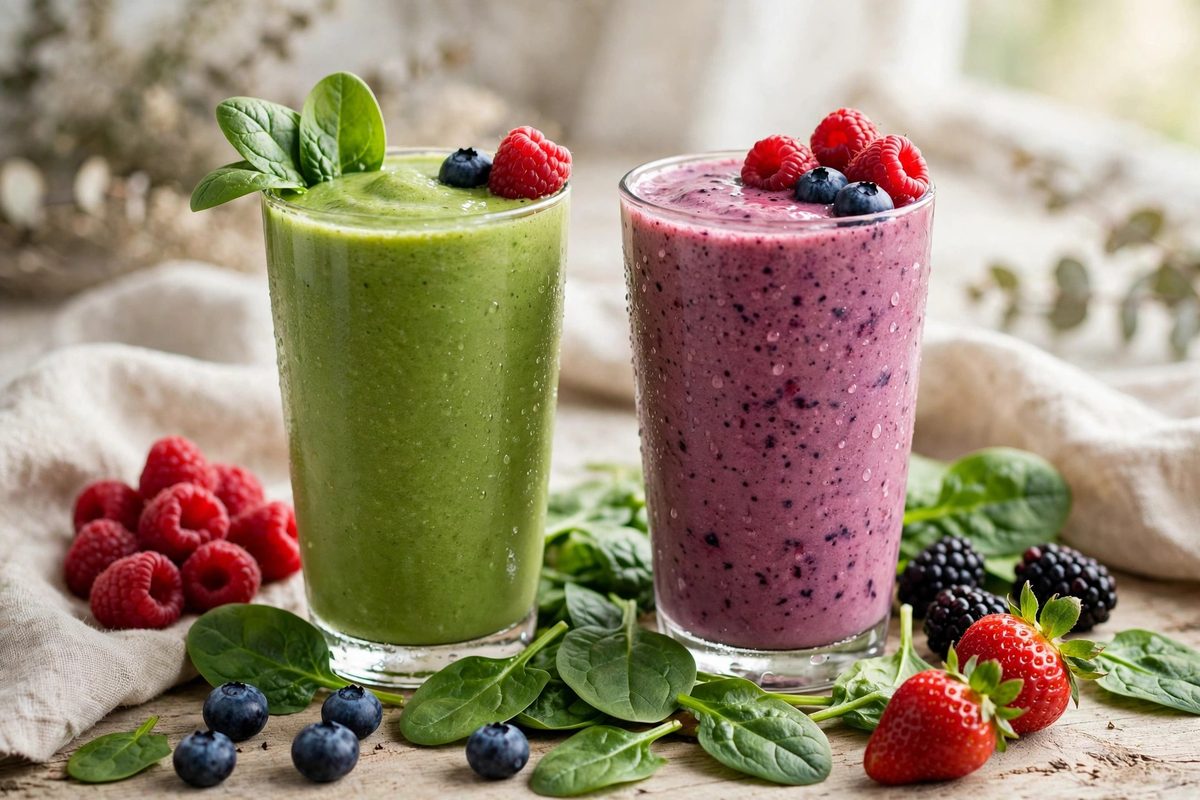
Here is the short answer: a smoothie has roughly 150 to 700+ calories — and anyone who gives you a single number is selling you something. A smoothie is not a food; it is a container. What you put in it decides whether it is a light snack or a milkshake with a health halo. In this guide you will see the build chart ingredient by ingredient, the chain snapshot, the smoothie-bowl trap, and the formula for a smoothie that actually supports weight loss — or check any blend instantly with our calorie calculator.
Smoothies, juice, shakes — log any of them with our calorie calculator and check your protein target with the protein calculator.
Check My SmoothieMost smoothie calories hide in the ingredients people think of as "healthy." Nut butter, honey, and juice bases are the big three — each adds as much as a small meal's worth of calories while feeling virtuous.
| Ingredient (typical amount) | Approx. calories | Notes |
|---|---|---|
| Banana, 1 medium | ~105 | The standard base; sweetness + thickness |
| Mixed berries, 1 cup | ~50–80 | The best calorie-to-flavor ratio in the chart |
| Spinach or kale, 1–2 handfuls | ~10–20 | Nearly free — the one ingredient to be generous with |
| Mango or pineapple, 1 cup | ~90–100 | Sweet and dense; easy to over-pour |
| Milk, 1 cup (skim / 2% / whole) | ~90 / ~120 / ~150 | The base liquid sets the floor |
| Orange juice base, 1 cup | ~110–120 | Doubles the fruit sugar — see our orange juice guide |
| Greek yogurt, 3/4 cup plain nonfat | ~90–100 | Protein + thickness for modest calories |
| Protein powder, 1 scoop | ~120–150 | ~20–25 g protein; check the label, some blends add sugar |
| Peanut/almond butter, 2 tbsp | ~190 | The biggest hidden cost — a "spoonful" is rarely 1 tbsp |
| Honey or agave, 1 tbsp | ~60 | Pure sugar with a natural label |
| Oats, 1/4 cup | ~75 | Fiber and staying power, but it adds up |
Now build three smoothies from the same chart and watch the range explode:
| Smoothie | Build | Approx. calories |
|---|---|---|
| Light berry-green | Berries 70 + spinach 15 + skim milk 90 + Greek yogurt 95 | ~270 |
| Standard banana-protein | Banana 105 + berries 70 + skim milk 90 + protein powder 130 | ~395 |
| Loaded "healthy" blend | Banana 105 + mango 95 + juice base 115 + peanut butter 190 + honey 60 + protein powder 130 | ~695 |
The loaded blend has more calories than a cheeseburger — and because it is blended, it takes about four minutes to drink. Blending removes the chewing that slows eating, so a 700-calorie smoothie feels like a 200-calorie snack. That is the health halo in action.
Chain menus confirm the range. A small (16 oz) Jamba Juice fruit smoothie runs roughly 200–450 calories depending on the blend, while larger sizes and peanut-butter or chocolate builds climb past 500. Smoothie King builds run roughly 300–700 calories, with the "fitness" blends at the lower end only when they skip added sugar and nut butter. The pattern is consistent: chains list the small size in marketing and sell the large at the counter, and every "add peanut butter" or "add honey" upsell is 60–190 calories the menu does not headline.
The honest way to read a chain menu: find the calories for your size with your add-ins, not the smallest size of the simplest blend. If the menu does not publish numbers, build your own estimate from the chart above.
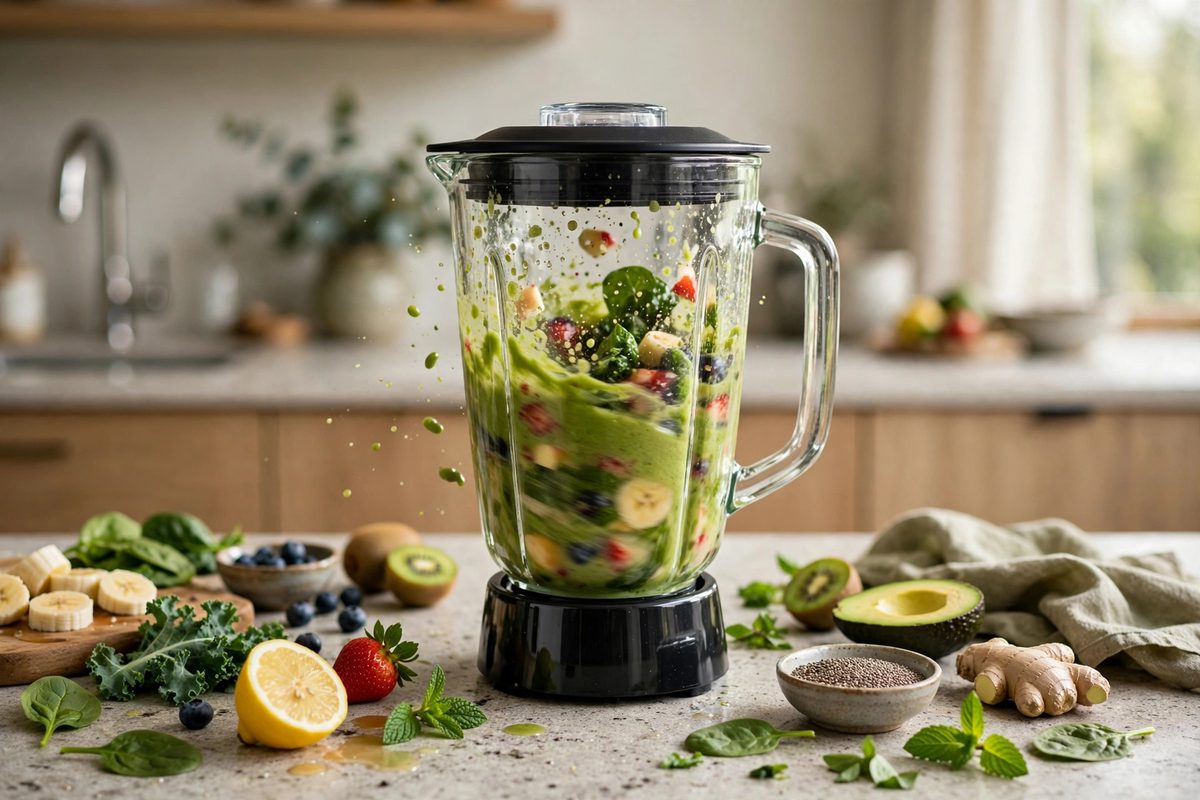
Smoothie bowls are the most expensive version of the trap. The bowl itself is a thick smoothie (~300–400 calories), and then the toppings arrive: granola (~150–200 per 1/4 cup), sliced banana (~50), coconut flakes (~100 per 1/4 cup), honey drizzle (~60), and nut butter (~95 per tbsp). A fully topped bowl routinely passes 600–800 calories — more than most breakfasts — while being marketed as the lightest thing on the menu. If you love bowls, treat toppings as the meal and the smoothie as the base: half the granola, skip the honey, and the bowl drops by 200+ calories without losing its appeal.
A smoothie that supports weight loss follows four rules:
1. Protein first (20–30 g). Greek yogurt or a scoop of protein powder turns a sugar drink into a meal. Without protein, a smoothie is dessert that leaves you hungry in an hour. Our protein calculator sets your daily target.
2. Fiber that survives blending. Whole fruit, greens, and oats keep fiber in the blend — unlike juice, which strips it out (see our orange juice guide). Fiber is what makes a smoothie filling.
3. No added sugar, no juice base. Use water, milk, or unsweetened almond milk as the liquid. Honey, agave, and juice bases add 60–120 calories of pure sugar with no satiety.
4. One fat, measured. Either nut butter or avocado or seeds — one, measured with a tablespoon, not free-poured. Two fats is where a 300-calorie smoothie becomes a 500-calorie one.
A formula smoothie — berries 70 + spinach 15 + Greek yogurt 95 + protein powder 130 + water/ice — lands around 310 calories with ~30 g of protein: a genuine meal replacement, not a sugar bomb. For the full fiber picture, see our fiber guide.
Our calorie calculator keeps every blend honest in seconds.
Calculate My SmoothieWritten by the Live Fitness Check editorial team · Reviewed against our calculator methodology · Last updated October 2026
Disclaimer: This guide is for educational purposes only and is not medical advice. Calorie figures are estimates; actual values vary by ingredient, brand, and portion. If you are managing diabetes or another condition affected by sugar intake, talk to your doctor.