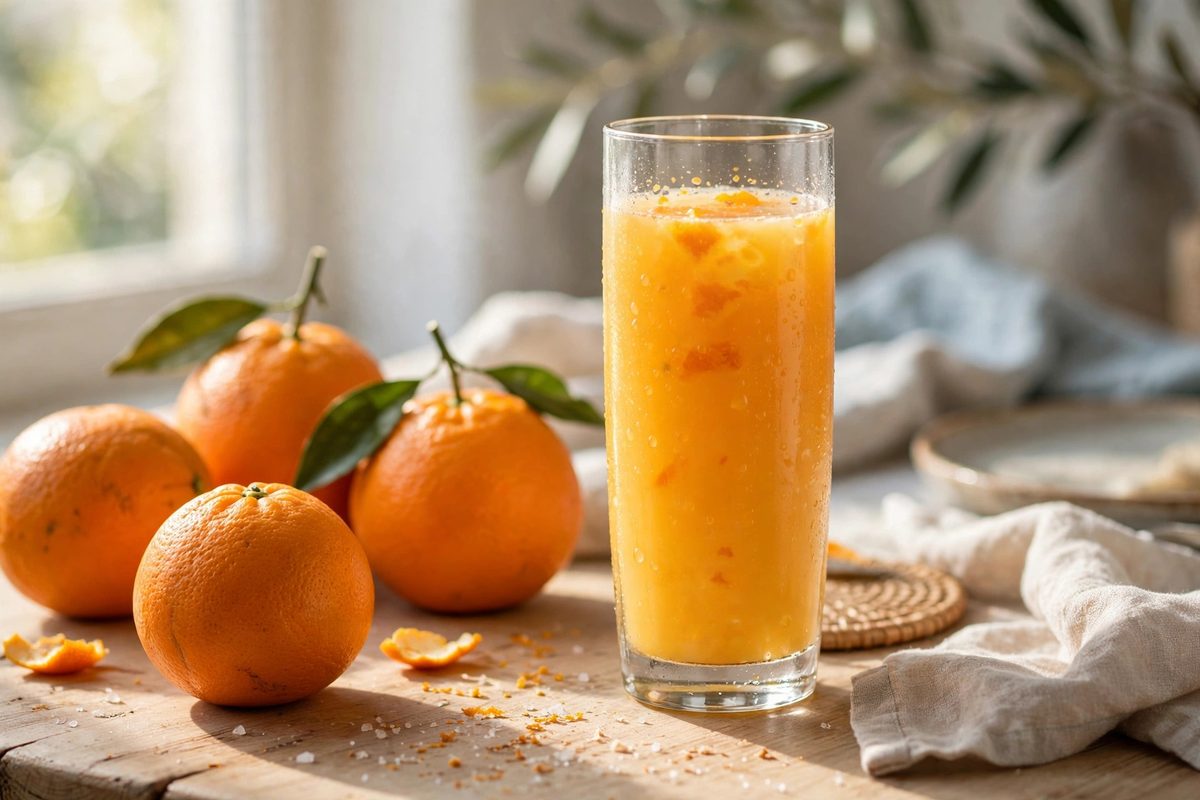
Here is the short answer: an 8 oz (240 ml) glass of orange juice has roughly 110–120 calories — while the whole orange it came from has only about 62. The juice keeps the sugar and the vitamin C, but it throws away the fiber, and that is the entire story of orange juice. It is not soda, but it is not fruit either. In this guide you will see the juice-versus-fruit math, why "fresh-squeezed" and "from concentrate" are nutritionally almost identical, and the few situations where a glass of juice genuinely earns its calories — or check any drink instantly with our calorie calculator.
Juice, soda, coffee drinks — log any of them with our calorie calculator and see the macro split with the macro calculator.
Check My DrinkOrange juice is one of the few drinks where the serving size on the carton and the glass you actually pour are wildly different. The carton serving is 8 oz. Most drinking glasses hold 12–16 oz, and a restaurant glass can be larger still.
| Serving | Approx. calories | Sugar | What it looks like |
|---|---|---|---|
| 4 oz (120 ml) — small juice glass | ~55–60 | ~11–13 g | The old-fashioned juice glass your grandparents used |
| 8 oz (240 ml) — carton serving | ~110–120 | ~22–26 g | One standard cup; the label number |
| 12 oz (350 ml) — typical drinking glass | ~165–175 | ~33–39 g | What most people actually pour at breakfast |
| 16 oz (475 ml) — large glass / pint | ~220–240 | ~44–52 g | Restaurant and brunch pours |
| 1 whole medium orange | ~62 | ~12 g | Plus ~3 g of fiber the juice lost |
The math behind the table is simple: orange juice has about 45–50 calories per 100 ml, so every extra ounce adds roughly 14 calories. A 12 oz glass is not "a little more" than the label serving — it is 50% more, and the sugar scales with it.
One medium orange contains about 62 calories, 12 g of sugar, and 3 g of fiber. It takes roughly 3–4 oranges to make one 8 oz glass of juice. So the glass concentrates the sugar of 3–4 oranges (~22–26 g) while discarding nearly all of their fiber — and fiber is what slows sugar absorption and tells your brain you have eaten something.
This is the core difference between eating fruit and drinking it:
| 8 oz orange juice | 1 whole orange | |
|---|---|---|
| Calories | ~110–120 | ~62 |
| Sugar | ~22–26 g | ~12 g |
| Fiber | ~0.5 g | ~3 g |
| Vitamin C | ~120% of daily value | ~90% of daily value |
| Time to consume | ~30 seconds | ~2–3 minutes of chewing |
| Satiety | Low — you could drink another glass | High — you would stop at one or two |
Nobody eats 4 oranges in 30 seconds, but everybody drinks the juice of 4 oranges in 30 seconds. That speed is the problem: liquid calories barely register as food, so the same sugar that would fill you up as fruit slides past your fullness signals entirely. Our guide to soda calories shows the same mechanism at work — an 8 oz glass of juice has only slightly less sugar than an 8 oz serving of Coke, though juice at least brings vitamin C, potassium, and folate with it.
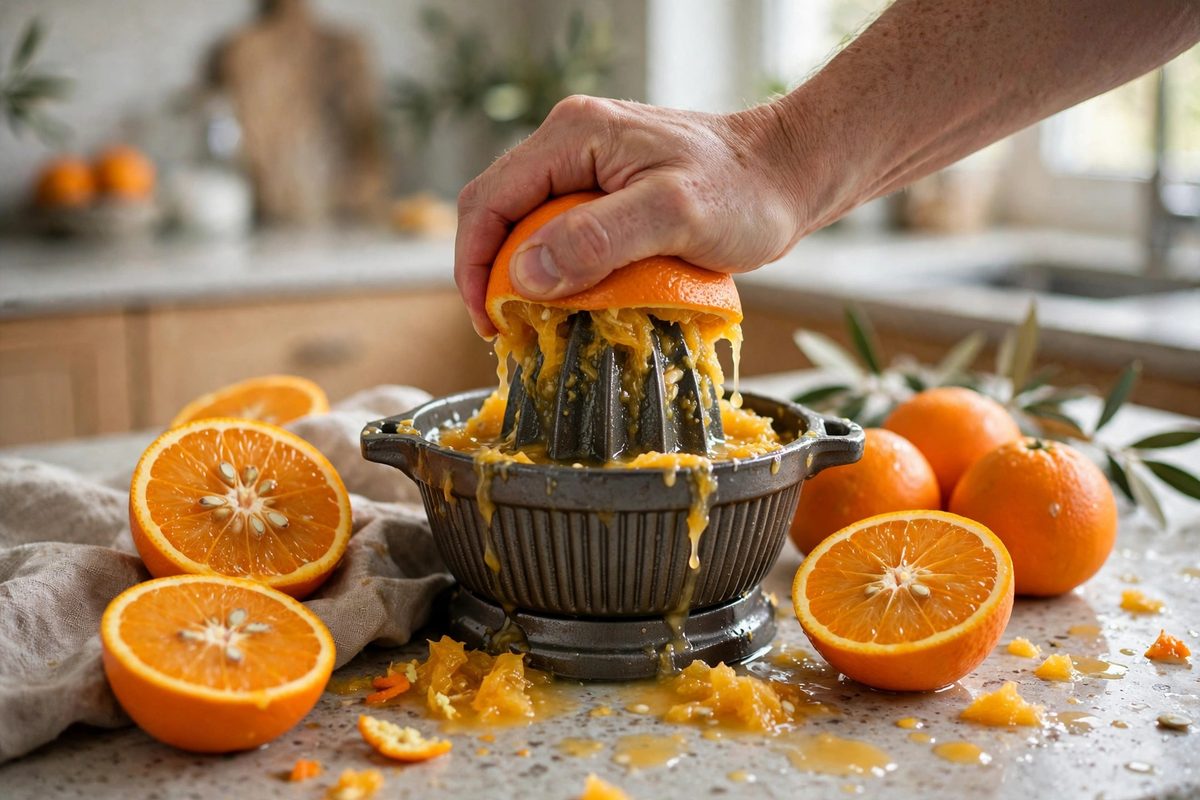
Shoppers assume fresh-squeezed is the healthy option and from-concentrate is the processed one. Nutritionally, the three are nearly identical — the difference is flavor and price, not calories:
| Type | Calories per 8 oz | What it actually is |
|---|---|---|
| Fresh-squeezed | ~110–120 | Juice pressed and sold quickly; brightest flavor, shortest shelf life, highest price |
| Not-from-concentrate | ~110–120 | Pasteurized juice stored in oxygen-depleted tanks, flavor packs added back — the standard premium carton |
| From concentrate | ~110–120 | Water removed for shipping, then added back; the budget carton, same sugar |
| With pulp | ~110–120 | Slightly more fiber (~0.5–1 g) — a rounding error, not a health upgrade |
| "Light" / 50% less sugar | ~50–60 | Watered down and sweetened — the only version with meaningfully fewer calories |
The "100% juice" label means no added sugar — it does not mean low sugar. All of the sugar in orange juice is naturally occurring, and your body processes it much like added sugar when the fiber is gone. The honest read: orange juice is a concentrated fruit product, not a fruit serving.
Orange juice is not a villain — it is a tool with a narrow job. It earns its calories in a few specific situations:
After hard training. A post-workout glass delivers fast carbs (~26 g per cup) plus potassium and fluids, which is genuinely useful after a long run or a heavy session. Pair it with protein — our protein calculator will set your target — and it becomes a reasonable recovery drink.
As a small glass, not a big one. A 4 oz juice glass (~55–60 calories) with breakfast gives you the flavor and vitamin C without the sugar load of a 16 oz pour. The old-fashioned small juice glass existed for a reason.
As a cooking ingredient. A splash in a marinade or a vinaigrette adds brightness for a fraction of the calories of drinking a glass.
Where juice does not make sense: as a thirst quencher, as a "healthy" breakfast drink for kids every morning, or as a vitamin delivery system — you would get more vitamin C and far more fiber from eating the orange. If you want the full picture on how much fiber you actually need, see our fiber guide.
A daily 12 oz glass (~170 calories) adds up to about 62,000 calories a year — the equivalent of roughly 17–18 lb of body fat if nothing else changes (using the standard 3,500-calorie-per-pound approximation, which overstates short-term fat gain but illustrates the scale). Swap that daily glass for a whole orange and you save ~100 calories a day while gaining fiber and satiety. Swap it for water and you save the full 170. Small daily drinks are where calorie budgets quietly leak — the same lesson as our soda guide.
Our calorie calculator keeps breakfast drinks honest in seconds.
Calculate My DrinkWritten by the Live Fitness Check editorial team · Reviewed against our calculator methodology · Last updated October 2026
Disclaimer: This guide is for educational purposes only and is not medical advice. Calorie figures are estimates; actual values vary by brand and serving size. If you are managing diabetes or another condition affected by sugar intake, talk to your doctor.