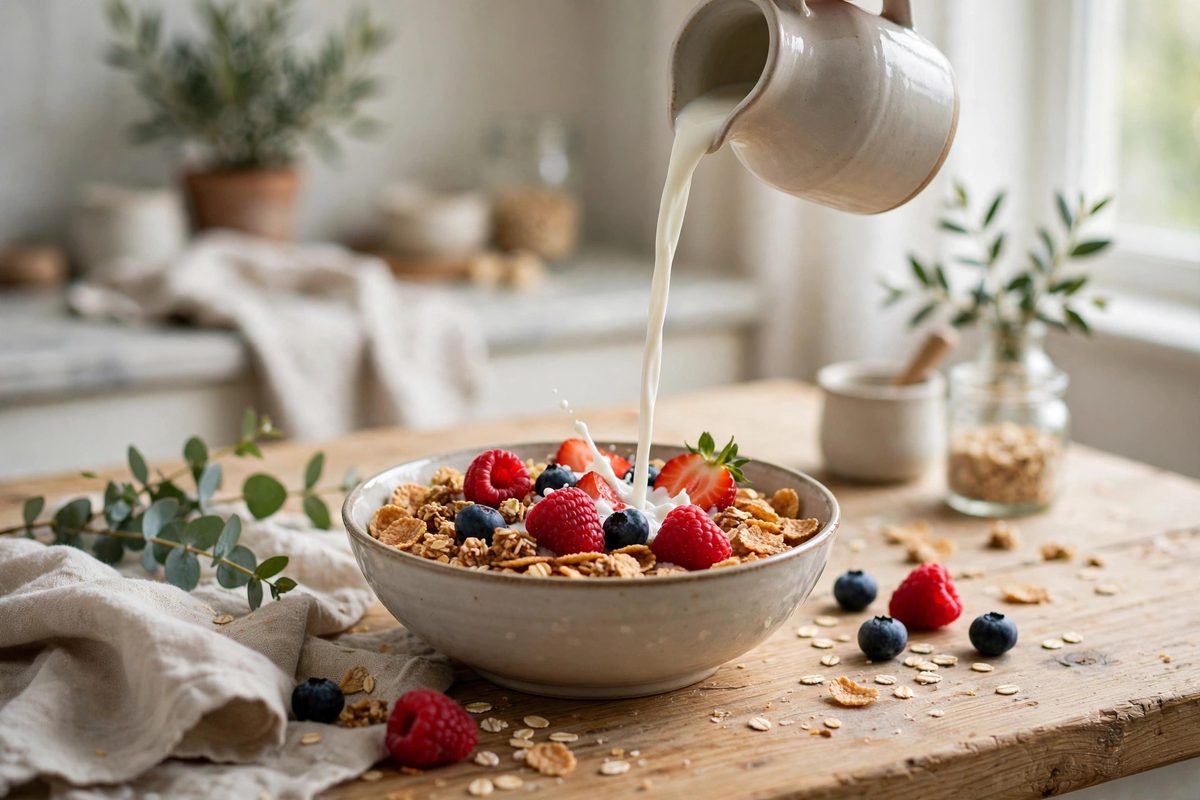
Here is the trap in one sentence: the cereal box says a serving is about 110–120 calories, but the bowl you actually pour is usually double that — before the milk. The label serving is roughly 30 g (about 1 oz), a small handful of flakes. The average poured bowl is 60–80 g, and nobody weighs it. In this guide you will see the cereal-by-type chart, the milk ladder, the toppings math, and the granola trap — or check your breakfast instantly with our calorie calculator.
One morning with a kitchen scale ends the cereal guessing game for good. Until then, use our calorie calculator and fiber calculator to see what your bowl really costs.
Check My BreakfastThe table below shows two numbers for each cereal type: the label serving (what the box promises) and the typical poured bowl (what actually lands in your bowl). The gap between them is the whole article — and the reason so many people who "eat a light breakfast" still gain weight.
| Cereal type (dry, before milk) | Label serving (~30 g) | Typical poured bowl (60–80 g) |
|---|---|---|
| Plain flakes (corn/wheat flakes) | ~110–120 | ~220–300 |
| Toasted oat rings (Cheerios-style) | ~110–140 | ~220–350 |
| Shredded wheat / bran flakes | ~120–160 | ~240–400 |
| Frosted / sweetened flakes | ~140–180 | ~280–450 |
| Chocolate / cocoa cereals | ~140–170 | ~280–420 |
| Muesli (no added sugar) | ~130–160 | ~260–400 |
| Granola (per 1/4 cup — the label serving!) | ~130–150 | ~400–600 per cup poured |
Note the granola row carefully: its label serving is a quarter-cup, not 30 g — and a poured "bowl" of granola is usually a full cup or more. Granola is the densest cereal in the aisle because it is oats glued together with oil and sugar. A granola bowl can quietly pass 600 calories before milk, which is why it gets its own section below.
Milk is the second half of the bowl, and it is not free. Per cup (8 oz / 240 ml): skim milk adds ~90 calories, 2% (semi-skimmed) adds ~120, and whole milk adds ~150. Most poured bowls take about 1/2 to 3/4 cup of milk rather than a full cup, so the realistic milk addition is ~45–115 depending on fat level and how much you pour. But the milk-plus-cereal total is what matters: a typical poured bowl of frosted flakes (~350) with 2% milk (~90) is ~440 calories — nearly four times the box's headline number of ~120. Nobody eats the headline number; everybody eats the bowl.
The fix is embarrassingly simple: weigh your cereal once. Pour your normal bowl onto a kitchen scale tomorrow morning and read the number. Most people find they pour 65–75 g. From then on, you know your bowl costs roughly double the label — and you can decide whether that bowl is worth it, or whether a measured 40 g plus fruit is the better breakfast. Our orange juice guide shows the same label-versus-glass illusion in drinks.
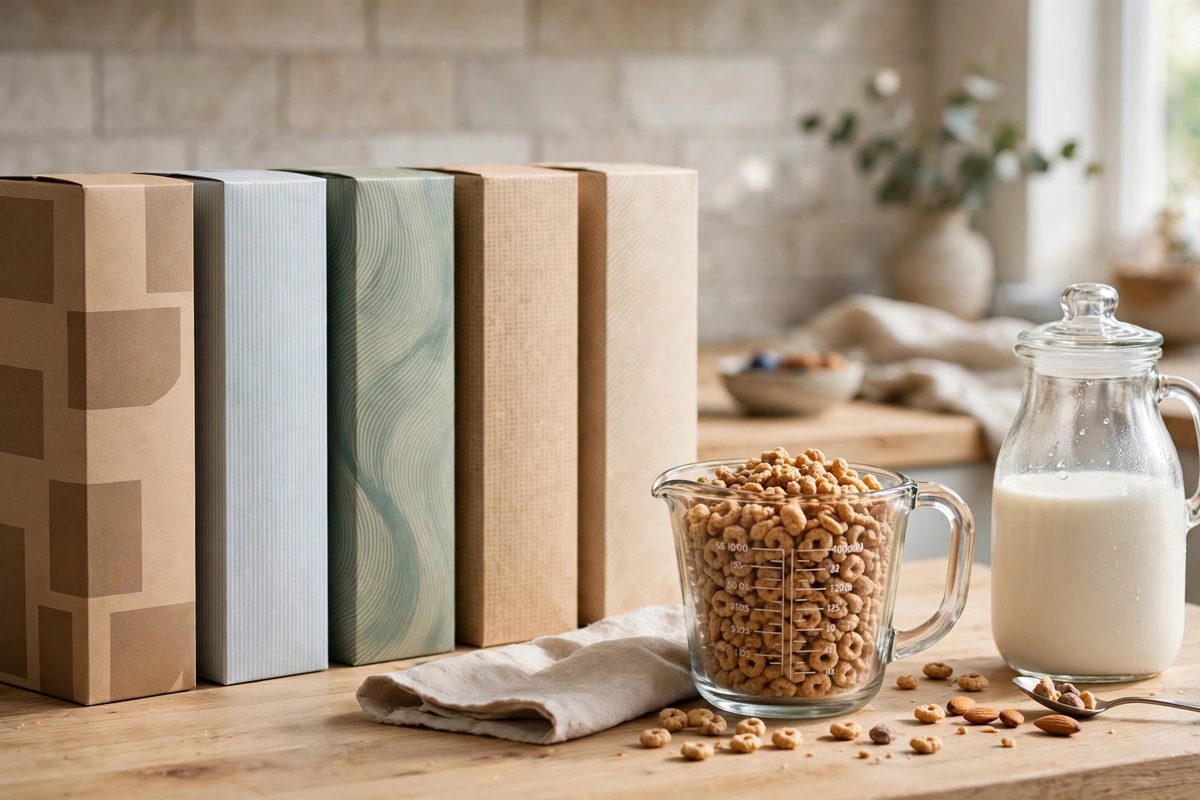
Toppings are the third layer of the bowl, and they split into good and expensive. A handful of berries adds ~50 calories and real fiber and vitamins — the best topping in the aisle. Half a sliced banana adds ~55. A small handful of nuts adds ~100–200 (nuts are nutritious but calorie-dense — a "sprinkle" that is actually a handful is a meal). A tablespoon of honey adds ~60, and honey is sugar with better marketing: it does not behave differently in your body from any other added sugar. A spoonful of peanut butter adds ~95 and turns the bowl into a genuinely filling breakfast — the one expensive topping that earns its calories through protein and staying power.
Granola is marketed as the healthy cereal — natural, outdoorsy, full of nuts and oats — and its nutrition label seems to agree, showing ~130–150 calories. But that label serving is 1/4 cup, about 4 tablespoons. Nobody eats a quarter-cup of granola as a bowl; a normal granola bowl is 3/4 to 1 cup, or ~400–600 calories dry, plus milk. Add yogurt (often full-fat Greek, ~100–150 per 3/4 cup) and honey and a café granola bowl can pass 700 calories — a dessert wearing hiking boots.
Granola is not "bad" — oats, nuts, and seeds are genuinely nutritious. It is just dense, and density is the thing to manage. The smart way to use it: as a topping, not a base. Two tablespoons of granola (~65–75 calories) over yogurt or berries gives you the crunch and flavor for a tenth of the bowl's cost. That is the difference between a health halo and a health habit.
How does boxed cereal stack up against its hot cousin? A measured serving of plain oatmeal (40 g dry, cooked with water) is ~150 calories with far more fiber and staying power than most boxed cereals at the same weight — and it is much harder to accidentally double, because you measure the dry oats before cooking. Boxed cereal's problem is not the cereal itself; it is the pour. If you love cold cereal, the measured bowl plus fruit is a perfectly good breakfast. If you keep finding the box empty by Thursday, plain oatmeal — measured dry before cooking, so the portion is exact — may be the easier habit. The best breakfast is the one whose calories you actually know.
Our calorie calculator checks your real bowl in seconds.
Calculate My BreakfastWritten by the Live Fitness Check editorial team · Reviewed against our calculator methodology · Last updated October 2026
Disclaimer: This guide is for educational purposes only and is not medical advice. Calorie figures are estimates; actual values vary by brand, pour size, and milk. If you are managing diabetes or another condition affected by sugar intake, talk to your doctor.
