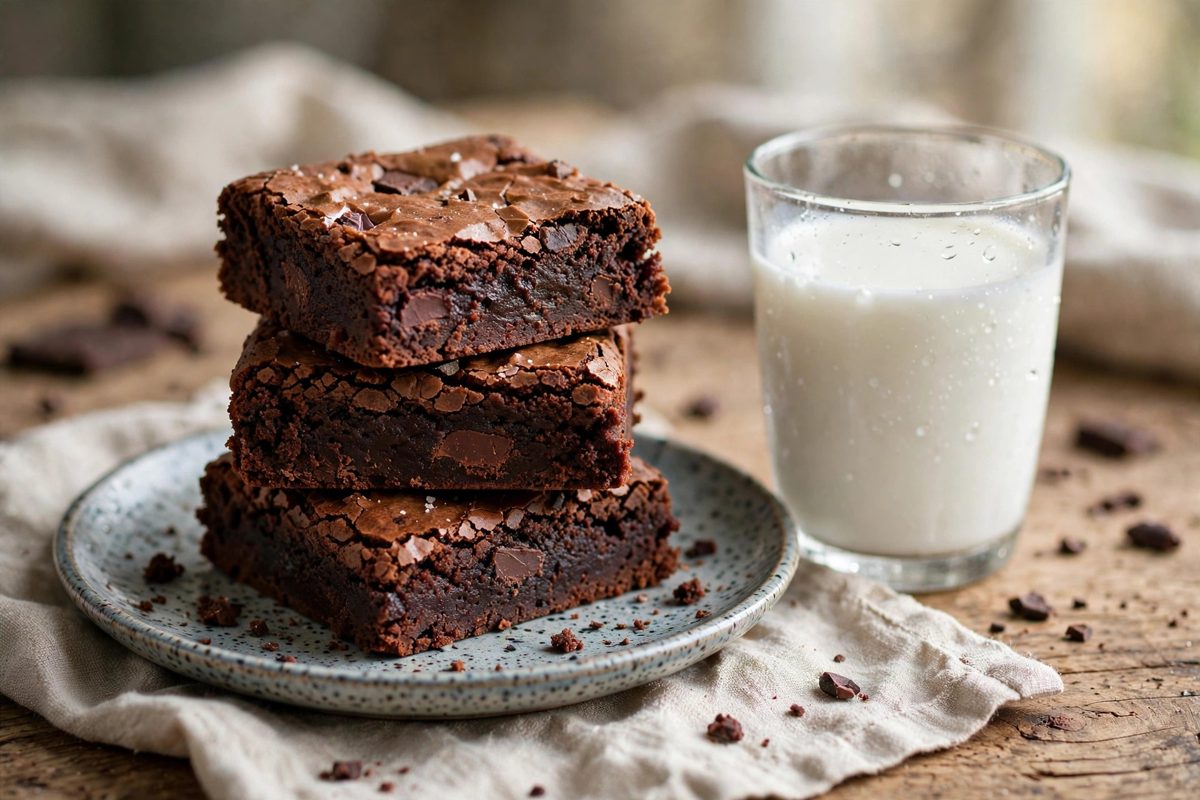
A standard 2x2-inch (5 cm) brownie has about 150-170 calories, while a small 2-inch fudge square has about 140 calories and a large bakery brownie can run 250-350 calories. That wide range is almost entirely about size, recipe, and toppings — not about brownies being mysteriously high in calories. Use the charts below to find your exact brownie, or see how it fits your day with our calorie deficit calculator.
A plain, standard-size brownie is a moderate treat at roughly 150-170 calories. Walnuts add about 20-30 calories, frosting adds about 50, and a scoop of vanilla ice cream adds about 140 — so a fully loaded brownie dessert can easily pass 350 calories. The brownie itself is rarely the problem; the build around it is. Check the full picture with our calorie deficit calculator or macro calculator.
Check My Daily BudgetA standard brownie is the number to memorize: about 150-170 calories for a plain 2x2-inch (5 cm) square. Smaller and larger brownies scale roughly with their size, while different styles shift the number up or down by a smaller amount. The figures below are USDA-style approximations for typical US recipes, not laboratory measurements of one specific brand.
| Brownie | Typical size | Calories (approx.) |
|---|---|---|
| Small fudge brownie | About 2 inches square | ~140 |
| Standard fudge brownie | 2x2 inches (5 cm) | 150-170 |
| Cake-style brownie | 2x2 inches (5 cm) | ~130 |
| Blondie | 2x2 inches (5 cm) | 150-180 |
| Large bakery brownie | About 3x3 inches (7.6 cm) or thicker-cut | 250-350 |
Why does the bakery brownie jump so much? It is three changes stacked together: a bigger square, a thicker cut, and often a richer batter with more butter and chocolate. A 3-inch square has more than twice the surface area of a 2-inch square, so its calories climb fast even before frosting. When a package or bakery case gives you a nutrition label, trust that label over any chart, because portion weight is the real driver.
Fudge brownies are denser and richer, so a standard 2x2-inch fudge brownie runs about 150-170 calories, while the same-size cake-style brownie runs about 130 calories. The gap of roughly 20-40 calories comes from the recipe, not the size: fudge brownies pack in more butter and chocolate and less flour, while cake-style brownies use more flour and leavening for a lighter crumb.
Think of it as a spectrum. Fudge batter is heavy on melted chocolate and butter, with just enough flour to hold it together and little leavening, so the center stays moist and dense. Cake-style batter is beaten longer, includes baking powder, and uses proportionally more flour, which lets air in — and air has no calories, which is why the cake-style square weighs less per square inch.
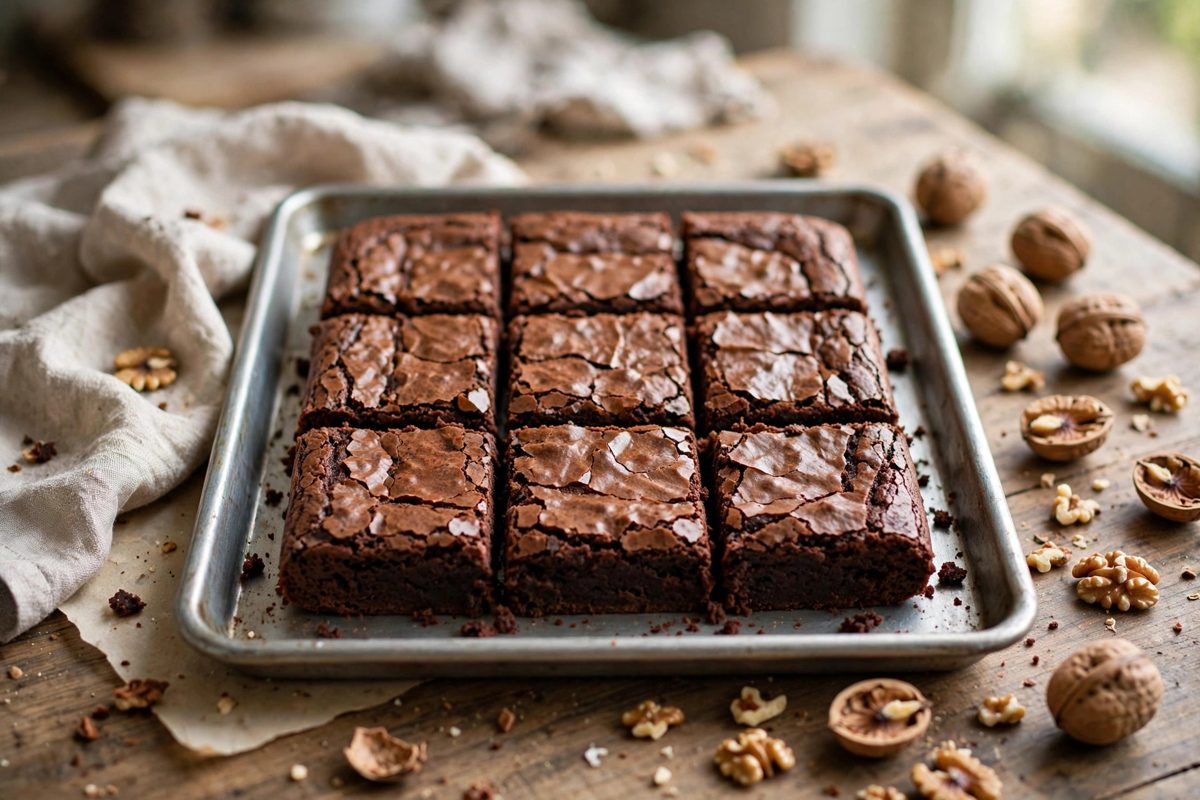
Toppings are where a 160-calorie treat becomes a 360-calorie dessert. Starting from a standard brownie at 150-170 calories, walnuts add about 20-30 calories, frosting adds about 50, and a scoop of vanilla ice cream adds about 140 — and those additions stack, so combining them multiplies the total quickly.
| Build (from a standard 150-170 calorie brownie) | Total calories (approx.) |
|---|---|
| Plain standard brownie | 150-170 |
| With walnuts (+20-30) | 170-200 |
| With frosting (+50) | 200-220 |
| With walnuts and frosting (+20-30, +50) | 220-250 |
| Brownie a la mode (+140 for one scoop of vanilla ice cream) | 290-310 |
| Fully loaded: walnuts, frosting, and ice cream | 360-390 |
Each step in the table is simple addition. Low end: 150 + 20 for walnuts + 50 for frosting + 140 for ice cream = 360 calories. High end: 170 + 30 + 50 + 140 = 390 calories. Likewise, a la mode is 150 + 140 = 290 at the low end and 170 + 140 = 310 at the high end. None of these toppings is a problem alone, but together they more than double the starting brownie.
Two standard brownies plus ice cream total 440 calories when you use the low end of the standard range. That is 2 x 150 = 300 calories for the brownies, plus 140 calories for one scoop of vanilla ice cream, giving 300 + 140 = 440 calories in total — a useful anchor for a shared dessert or a second helping.
Example two starts from the bakery end. Take a large bakery brownie at 300 calories — the middle of the 250-350 range — and add frosting at 50 calories: 300 + 50 = 350 calories. Serve it a la mode and the total becomes 350 + 140 = 490 calories, roughly a quarter of a 2,000-calorie day in a single dessert. Example three looks at the week: one standard brownie a day on weekdays, at the 160 midpoint, totals 160 x 5 = 800 calories across the week — and skipping it on just two of those five days saves 320 calories.
The midpoint trick is worth adopting for your own estimates. A standard brownie at the 160 midpoint, plus walnuts at their 25-calorie midpoint, plus 50 for frosting, plus 140 for ice cream, totals 160 + 25 + 50 + 140 = 375 calories. Compare that with a plain cake-style brownie at 130 calories and the saving is 375 - 130 = 245 calories — achieved by choosing the lighter style and skipping the extras, not by giving up brownies entirely.
The best lighter swap is the simplest one: choose a cake-style brownie at about 130 calories instead of a standard fudge brownie at 150-170 calories, saving roughly 20-40 calories without changing the occasion at all. From there, the biggest wins come from the extras — skipping frosting saves 50 calories and skipping the ice cream saves 140 — rather than from exotic ingredient substitutions.
For toppings, keep the part you love and drop the part you barely notice. If ice cream is the point, have a plain brownie a la mode and skip the frosting — saving 50 calories while keeping the warm-and-cold contrast. If nuts are the point, keep the walnuts at 20-30 calories and skip the ice cream, saving 140. Fresh berries are the rare topping that adds flavor for very few calories: a handful of raspberries adds roughly 15-25 calories.
A standard brownie fits most calorie budgets easily: at 150-170 calories it is roughly 8% of a 2,000-calorie day, so the question is rarely "can I have one" but "what does the rest of the day look like around it." Put the number in context with our calorie deficit calculator, which shows your daily budget, and our macro calculator, which shows how its carbohydrates and fat sit next to your protein target.
The most useful habit is to log the brownie as you actually ate it, not as the plain version you wish you ate. If it had frosting and ice cream, log roughly 290-310 calories for a standard a la mode serving, not 160 — that 130-150 calorie gap, repeated a few times a week, is exactly the kind of quiet underestimate that stalls weight loss. A plain cake-style brownie at 130 calories needs no guilt. For the same size-and-topping logic applied to cake, see our guide to how many calories are in a slice of cake.
Our calorie deficit calculator shows where it fits in seconds.
Check My Daily BudgetWritten by the Live Fitness Check editorial team · Reviewed against our calculator methodology · Last updated November 2026
Disclaimer: This guide is for educational purposes only and is not medical advice. Calorie figures are USDA-style approximations for typical recipes; actual calories vary with recipe, portion weight, brand, and toppings. Check the nutrition label when one is available, and talk to your doctor or a registered dietitian about your individual calorie needs.