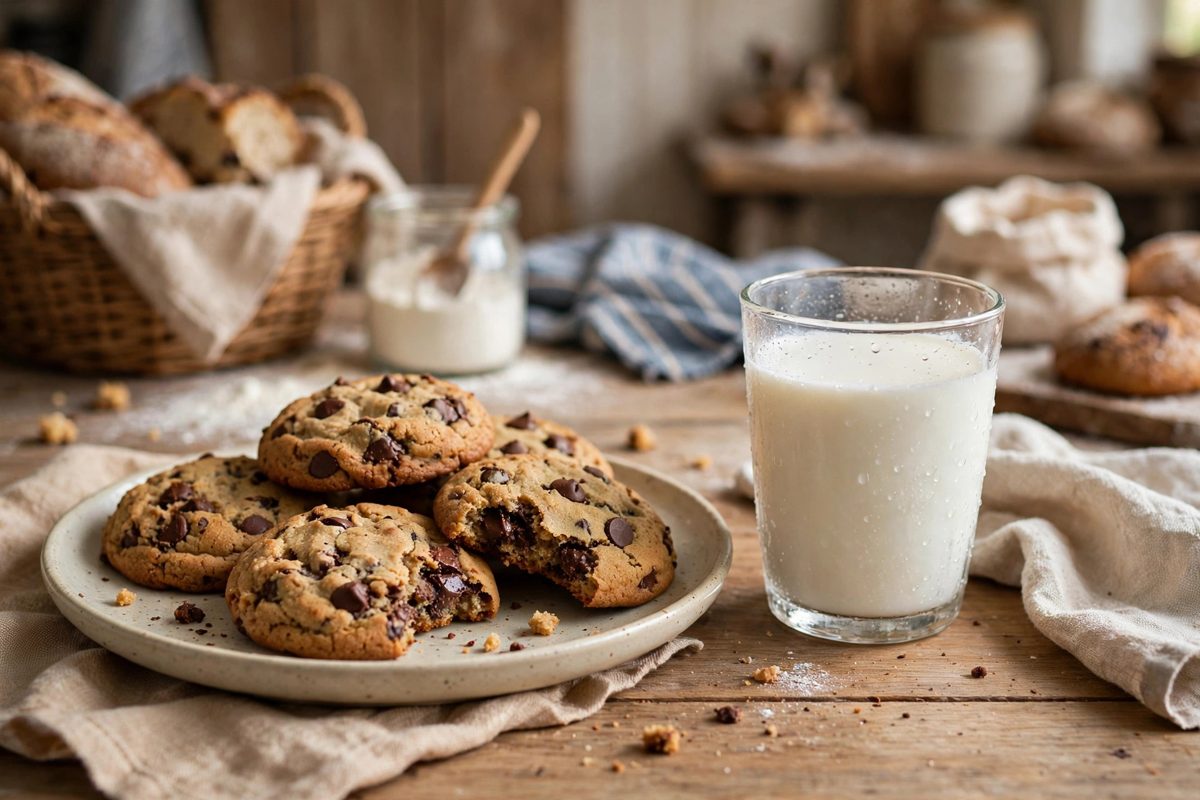
A chocolate chip cookie has about 140 calories if it is a small homemade one (about 1 oz or 28 g) and about 400 calories if it is a large bakery cookie (about 4 oz or 113 g) — nearly three times as much for what still counts as "one cookie." Size, not the recipe, is the biggest driver of the number, which is why the cookie aisle is so confusing. Below you will find the size ladder, homemade vs store-bought vs bakery numbers, what add-ins cost, and the snack math — or check how any cookie fits your day with our calorie deficit calculator.
A small homemade cookie (1 oz, 28 g) runs about 140 calories, a medium homemade cookie about 160, a packaged serving of Chips Ahoy Original (3 cookies, 33 g) about 160 calories — roughly 53 per cookie, and a large bakery cookie about 400. A single tablespoon of raw cookie dough is about 70 calories — and yes, the dough counts too. See where your cookie lands with our calorie deficit calculator or macro calculator.
Check My Cookie BudgetSize explains almost everything about a cookie's calorie count. A standard homemade chocolate chip cookie is mostly butter, sugar, flour, and chocolate chips, so it lands at roughly 5 calories per gram — and once you know the weight, you can estimate any cookie in seconds. These figures are USDA-style approximations for a classic butter-based recipe, not laboratory measurements of one specific brand:
| Size | Weight | Calories | What it looks like |
|---|---|---|---|
| Mini | About 0.5 oz (14 g) | ~70 | Bite-size, two-bite cookie |
| Small homemade | About 1 oz (28 g) | ~140 | Standard home-baked cookie |
| Medium homemade | About 1.4 oz (40 g) | ~160 | Slightly generous home-baked cookie |
| Packaged (Chips Ahoy Original, 3 cookies) | About 1.2 oz (33 g) | ~160 (about 53 each) | Three small cookies from the package |
| Large bakery | About 4 oz (113 g) | ~400 | Coffee-shop or grocery-bakery cookie |
| Cookie dough, raw | 1 tablespoon (about 15 g) | ~70 | One spoonful straight from the bowl |
Two consistency checks show the table hangs together. First, a small cookie made from about 2 tablespoons of dough should cost about 2 x 70 = 140 calories — exactly the small-cookie figure. Second, three small cookies (3 x 140 = 420) land within a rounding error of one large bakery cookie (about 400), which is the practical takeaway: three "small" cookies are not a light snack, they are a bakery cookie by another name. If you bake at home, weighing one cookie on a kitchen scale once will calibrate your eye for every batch after it.
Homemade, packaged, and bakery cookies differ less in recipe than in portion and fat. A homemade cookie is the most predictable at about 140 to 160 calories, because home recipes portion the dough by the tablespoon and the butter is the main fat. A packaged cookie like Chips Ahoy Original is engineered for shelf life: a 3-cookie serving (33 g) runs about 160 calories, or roughly 53 per cookie — the cookies are small, so a handful adds up fast. Bakery cookies are the outlier: at about 4 oz they simply contain four times the dough of a small homemade cookie, plus extra chocolate and often a softer, butter-rich center, landing near 400 calories. The practical ranking is simple: homemade small is the lightest everyday choice, packaged is lighter per cookie (about 53) but easy to overeat because the cookies are small and the bag is large, and bakery is effectively a dessert, not a snack. For the same reason a pancake can quietly out-eat a cookie, context matters more than the label: it is the portion, and how many portions, that decides the total.
Add-ins are where a 160-calorie cookie becomes a 260-calorie cookie without changing size. Nuts add healthy fats and crunch but they are calorie-dense, extra chocolate is the most expensive common addition per spoonful, and frosting turns a cookie into a cupcake in all but name. These are approximate additions to a medium homemade cookie:
| Add-in (per cookie) | Extra calories | Medium cookie total |
|---|---|---|
| Plain medium cookie | — | ~160 |
| + 1 tbsp chopped walnuts | ~50 | ~210 |
| + 1 tbsp extra chocolate chips | ~70 | ~230 |
| + 1 tbsp frosting | ~50 | ~210 |
| + nuts and frosting together | ~100 | ~260 |
The loaded-cookie math is worth doing once: 160 + 50 (nuts) + 50 (frosting) = 260 calories, a 62% jump over the plain cookie. None of these additions is "bad" — nuts in particular add fiber and protein that make the cookie more filling — but they should be counted, not treated as free. If you love a loaded cookie, the smarter move is usually one loaded cookie instead of two plain ones: one at 260 beats two at 320, and it tastes better too.
Cookie calories only matter against the day they sit in, and the classic after-school or after-dinner snack stacks up fast. Two medium cookies plus a glass of whole milk is 160 + 160 + 150 = 470 calories — nearly a quarter of a 2,000-calorie day and almost an entire 500-calorie daily deficit target, gone in one snack. The same pattern repeats everywhere: three small cookies are 3 x 140 = 420 calories, and one medium cookie eaten every day for a week is 7 x 160 = 1,120 calories a week, or roughly a third of a pound of body weight per week if nothing else changes (at the standard 3,500 calories per pound). This is not an argument against cookies — it is an argument for counting them honestly. Put the number in your tracker before you eat, not after, and decide the portion while you still have the choice: one large bakery cookie at 400, or two small homemade ones at 280, is a real decision with a 120-calorie difference. Check the trade-off against your own target with our macro calculator.
The best lighter cookie is still a cookie, not a rice cake wearing a costume. Swapping half the butter for unsweetened applesauce, using a smaller scoop, and loading up on oats and nuts for bulk can bring a medium cookie from about 160 down to about 110 calories — a saving of 50 calories per cookie, or 150 across three cookies. Other swaps that actually work: bake minis and eat two (2 x 70 = 140) instead of one medium (160) for the same cookie experience at a small saving; choose dark chocolate chips over milk chocolate for a slightly less sweet, more intense flavor that satisfies with fewer chips; and skip the frosting, which adds about 50 calories and almost no flavor that the cookie itself does not already have. The swap to avoid is the "fat-free" packaged cookie, which usually replaces fat with extra sugar and lands within 10 to 20 calories of the original while tasting worse. If a cookie is worth eating, eat a good one — just pick the size on purpose.
Our calorie deficit calculator shows how any cookie fits your day in seconds.
Check My Cookie BudgetWritten by the Live Fitness Check editorial team · Reviewed against our calculator methodology · Last updated November 2026
Disclaimer: This guide is for educational purposes only and is not medical advice. Calorie figures are USDA-style approximations that vary by recipe, brand, and portion size; check the package label or weigh your cookie for an exact number. Talk to your doctor or a registered dietitian before changing your diet, especially if you manage diabetes, food allergies, or another medical condition.