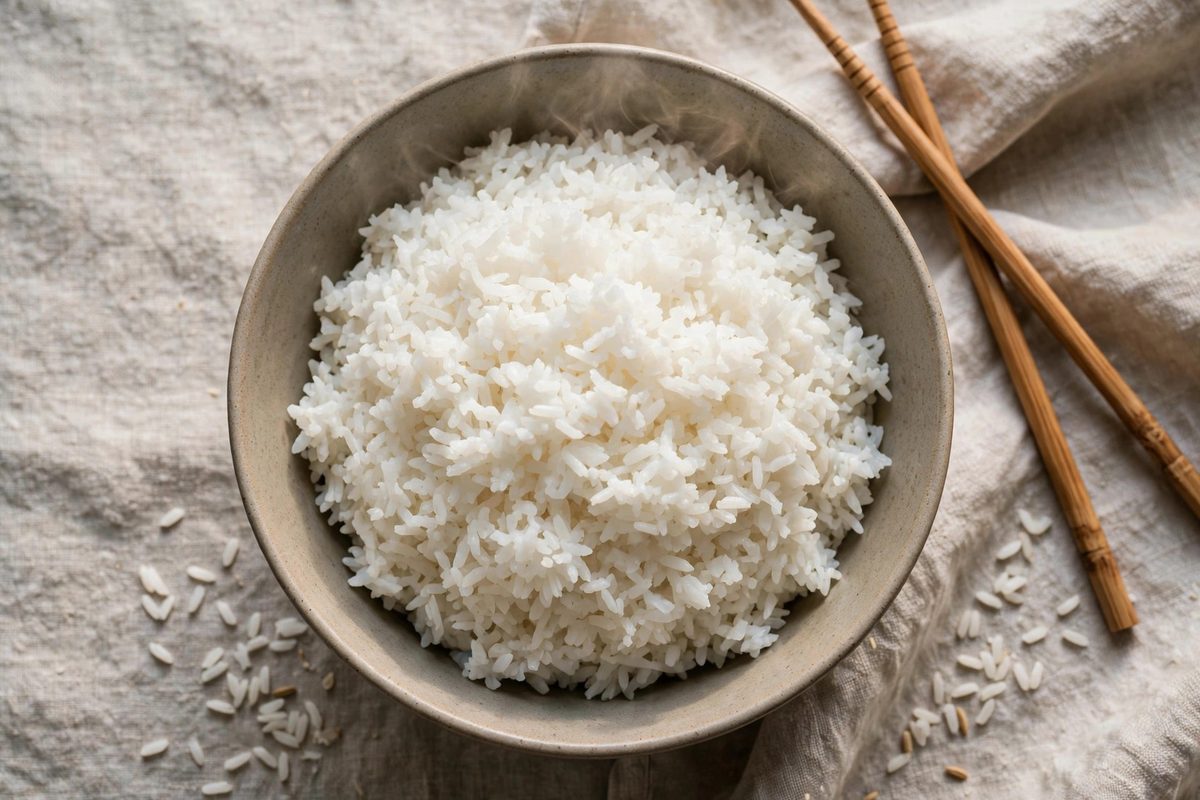
A cup of cooked white rice is about 204 calories, brown rice about 216, jasmine about 205, and basmati about 210 — so the variety you choose barely moves the number. What moves it is the portion: a restaurant serving is often 2 to 3 cups, not one, and fried rice can nearly double the calories of the same rice steamed. The other classic mistake is reading the dry number on the bag as if it were the cooked number on the plate. In this guide you will price every variety, master the dry-to-cooked conversion, and spot the two traps — or total your meal with our calorie calculator.
One cup of cooked white rice is about 204 calories, brown about 216, jasmine about 205, and basmati about 210. One cup of dry white rice (about 675 calories) cooks up into about 3 cups, so a cup of dry rice is really three servings, not one. A restaurant portion of 2–3 cups is 408–612 calories before sauce — check any plate with our calorie calculator or macro calculator.
Calculate My Rice PortionDirect answer: cooked white rice is about 204 calories per cup, brown rice about 216, jasmine about 205, and basmati about 210. The spread across all four is just 12 calories — smaller than a single bite — so choose rice for taste, texture, and fiber, not for calories. Brown rice wins on fiber (about 3.5 g per cup versus 0.6 g for white) and keeps you full longer, which matters more for weight control than its 12 extra calories. Jasmine is fragrant and slightly sticky; basmati is long-grained and fluffy, and both behave like white rice nutritionally. Wild rice, for comparison, is a different grain entirely at about 166 calories per cup with more protein and fiber.
| Rice (1 cup, cooked) | Calories | Carbs / fiber | Best for |
|---|---|---|---|
| White, long-grain | ~204 | ~45 g / 0.6 g | Everyday base; the reference number |
| Brown | ~216 | ~45 g / 3.5 g | Most filling; best fiber of the common rices |
| Jasmine | ~205 | ~45 g / 0.6 g | Thai dishes; fragrant, slightly sticky |
| Basmati | ~210 | ~46 g / 0.7 g | Indian and Middle Eastern dishes; fluffy grains |
| Wild rice | ~166 | ~35 g / 3.0 g | Lower-calorie, higher-protein alternative |
| Sticky (glutinous) rice | ~170 per 1/2 cup* | ~36 g / 0.5 g per 1/2 cup | Very dense — a "cup" here is easily 340 calories |
One footnote deserves emphasis: sticky rice is usually eaten in compressed balls and scoops, so its per-cup figure misleads twice over — the rice is denser per volume and the serving is harder to judge. If you eat sticky rice, weigh it or count it as roughly double the white-rice figure per scoop. For the everyday varieties, the honest summary is that rice choice is a health and taste decision, not a calorie decision. Brown rice's extra fiber is worth more than white rice's 12-calorie saving, and anyone choosing basmati over jasmine for calories is optimizing the wrong variable. The variables that actually matter are portion size and what the rice is cooked in, which is where this guide turns next.
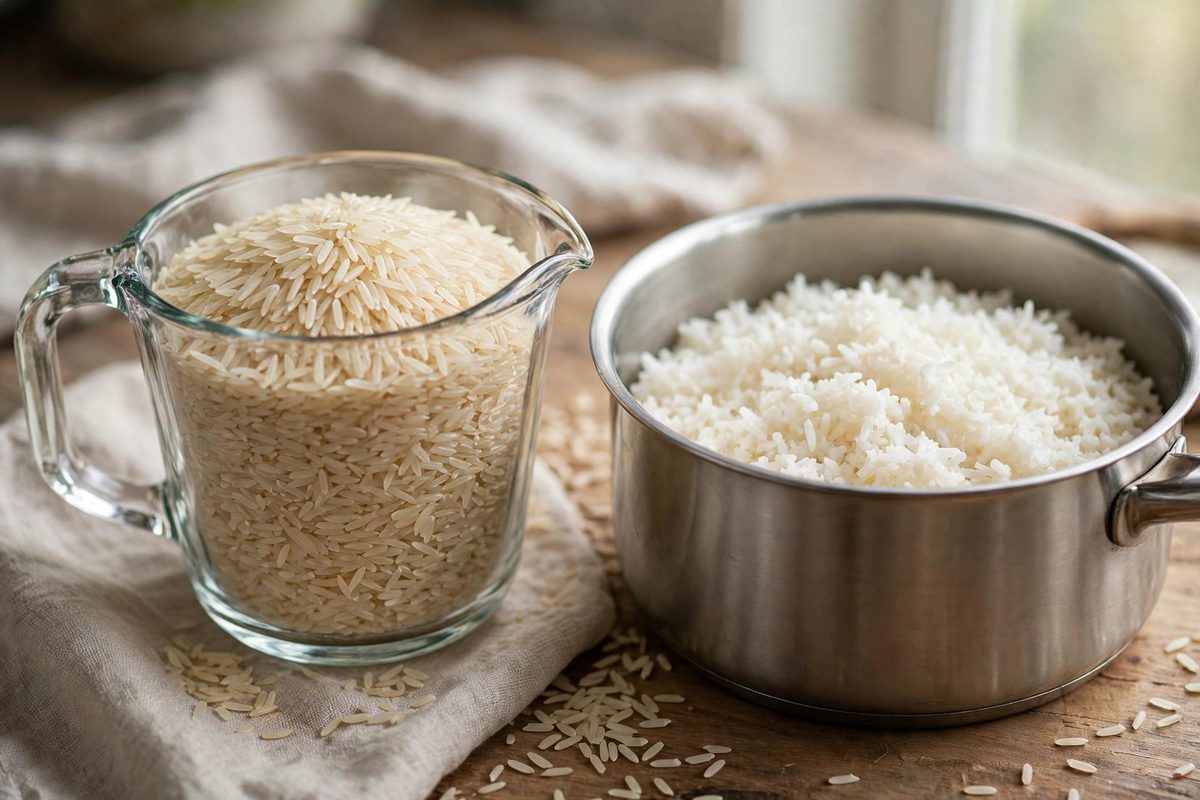
Direct answer: one cup of dry white rice (about 185 g, about 675 calories) absorbs water and cooks into about 3 cups of cooked rice (about 612 calories at 204 per cup). The small gap between 675 and 612 is measurement rounding and normal variation between brands and cooking methods — calories do not vanish in the pot; a cup of cooked rice is simply about one-third of the dry cup you started with. Brown rice expands a little less, roughly 1 cup dry to about 2.5 to 3 cups cooked, because its bran layer absorbs water more slowly and needs a longer cook. The rule of thumb that never fails: divide the dry calories by the cooked yield to get the cooked serving.
| Starting amount (dry) | Dry calories | Cooked yield | Cooked calories (at 204/cup) |
|---|---|---|---|
| 1/4 cup dry white | ~169 | ~3/4 cup | ~153 |
| 1/2 cup dry white | ~338 | ~1 1/2 cups | ~306 |
| 1 cup dry white | ~675 | ~3 cups | ~612 |
| 1 cup dry brown | ~685 | ~2 1/2–3 cups | ~540–648 |
| 1/2 cup dry, per person | ~338 | ~1 1/2 cups per person | ~306 per person |
The practical mistake this table prevents is the most common rice error in home cooking: reading "675 calories per cup" on the bag and believing one cooked cup costs 675. It does not — that figure is for the dry cup, which feeds about three people. The reverse mistake is just as common at the other end: cooking a cup of dry rice "for two" and discovering it made three servings, then eating the extra serving anyway because it is already cooked. Cook what you intend to eat — a half cup dry per person is a generous serving — and if you batch-cook, portion the leftovers into single-cup containers immediately. Cooked rice also keeps well for meal prep, but refrigerate it within an hour and reheat it thoroughly; our fiber calculator can show what swapping white for brown does to your day's fiber.
Direct answer: fried rice runs about 350–400 calories per cup, versus 204 for the same rice steamed, because the oil, egg, and sauces add roughly 150–200 calories per cup. A tablespoon of cooking oil alone is about 120 calories, and a restaurant wok can easily carry two or three tablespoons across a batch — plus soy sauce, egg, and fatty meats. A takeout container of fried rice (often 3 cups) can therefore reach 1,050–1,200 calories before you count the main dish it accompanies. The rice is not the problem; the frying medium is.
| Preparation (1 cup) | Calories | What adds it |
|---|---|---|
| Steamed white rice | ~204 | Nothing — just rice and water |
| Rice cooked in broth + butter | ~240–260 | A tablespoon of butter spread across the pot |
| Egg fried rice (homemade, light oil) | ~300–330 | One egg plus a teaspoon or two of oil per cup |
| Restaurant / takeout fried rice | ~350–400 | Generous oil, egg, sauces, and fatty meat |
| Rice pilaf (buttered) | ~280–320 | Butter-toasted grains before the liquid goes in |
Homemade fried rice is the fix, and it is a good one: day-old chilled rice fries better than fresh, a nonstick pan and a measured teaspoon or two of oil per batch keeps the calories near 300 per cup, and loading the pan with vegetables and a lean protein (chicken, shrimp, or tofu) makes a cup genuinely filling. The restaurant version is not forbidden — it is just a different food from steamed rice, and it should be counted as one. If you order takeout fried rice, eat one measured cup and save the rest; the container holds two or three servings, and finishing it absent-mindedly is a 700-calorie decision disguised as a side dish.
Direct answer: a restaurant or takeout rice portion is typically 2 to 3 cups, which is 408–612 calories of steamed white rice — or 700–1,200 calories if it is fried. The mound beside your curry or stir-fry looks like "a serving" because it arrives as one scoop, but a standard takeout container holds about 3 cups, and a restaurant side is rarely less than 2. Two cups of steamed rice (408 calories) is a reasonable part of a meal for many adults; three cups (612) is a meal in itself before the protein and sauce. The defense is the same as with our pancake stack guide: count the unit on the plate, not the unit on the label. At home, serve rice with a measuring cup the first few times until your eye learns what a cup looks like — most people overestimate a cup by half, and underestimating is how "one serving" quietly becomes two.
Direct answer: one cup of cooked rice plus a palm-sized protein and two cups of vegetables lands around 400–500 calories and keeps you full for hours. Rice alone is mostly carbohydrate, so it digests quickly on its own; the protein and fiber are what make it a meal rather than a snack that asks for seconds. A cup of brown rice (216) with 3 oz of grilled chicken (about 140) and a cup of mixed vegetables (about 50) totals about 406 calories, and swapping in tofu or beans keeps it in the same range with more fiber. For weight loss, the most reliable rice strategy is not to ban rice but to fix the ratio: half the plate vegetables, a quarter protein, a quarter rice — one measured cup, not the pot. Check the whole plate against your day with our TDEE calculator, and browse the rest of the food series on the Body & Nutrition hub.
Our calorie calculator totals any plate in seconds.
Calculate My PlateWritten by the Live Fitness Check editorial team · Reviewed against our calculator methodology · Last updated October 2026
Disclaimer: This guide is for educational purposes only and is not medical advice. Calorie figures are USDA-based estimates; actual values vary by brand, portion, and preparation. If you follow a prescribed diet, talk to your doctor or dietitian.