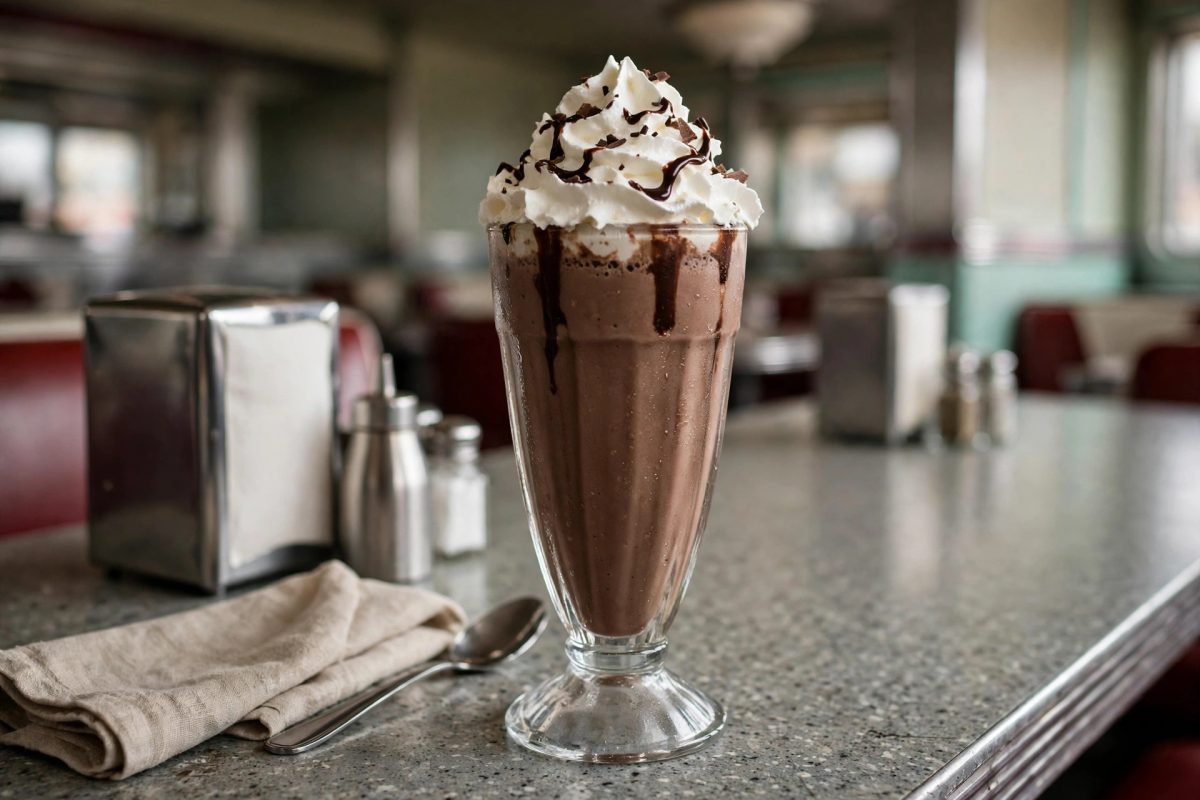
A medium fast-food milkshake has about 650 calories — more than a Big Mac (590). A large one can pass 800, which is 40% of a 2,000-calorie day in a single cup. Milkshakes hide their weight because they feel like a drink, not a meal, but they are built from ice cream, whole milk, and syrup — three of the most calorie-dense ingredients in any kitchen. In this guide you will see the size-by-size chart for the big chains, what a homemade shake really costs, and how to build one under 300 calories — or check any shake instantly with our calorie calculator.
Going from small to large at a fast-food chain adds roughly 280 calories — the difference between a treat and a meal. A small shake (~520) fits a balanced day; a large (~800) plus a burger and fries is a 1,800-calorie lunch before you count the drink. If you remember one rule, make it this: never order the large by default. Check the damage first with our calorie calculator.
Check My ShakeUS fast-food sizes are much bigger than UK ones, so the same brand can differ by hundreds of calories across the Atlantic. These are published chain figures for chocolate shakes unless noted; vanilla runs slightly lower and strawberry slightly higher at the large size:
| Chain / size | Volume | Approx. calories | Notes |
|---|---|---|---|
| McDonald's US small (chocolate) | 12 fl oz (355 ml) | ~520 | Soft-serve base + syrup + whipped cream |
| McDonald's US medium (chocolate) | 16 fl oz (473 ml) | ~650 | The default order — and the trap |
| McDonald's US large (chocolate) | 22 fl oz (651 ml) | ~800 | More than a Big Mac (590) |
| McDonald's US large (vanilla) | 22 fl oz (651 ml) | ~780 | Vanilla saves only ~20 at this size |
| McDonald's US large (strawberry) | 22 fl oz (651 ml) | ~850 | Strawberry syrup pushes it highest |
| McDonald's UK medium | 400 ml | ~364-366 | UK cups are far smaller than US ones |
| Shake Shack regular | ~16-20 fl oz | ~680-850 | Most flavors sit in this band |
| Shake Shack mini | ~10 fl oz | ~340-510 | The rare chain "small" that is actually small |
The comparison that shocks most people: a large chocolate shake (~800) beats a Big Mac (590), a Quarter Pounder with Cheese (520), and a Double Quarter Pounder with Cheese (740). Only the Big Breakfast with Hotcakes (1,340) tops it on the McDonald's menu. If you would never eat a second burger for dessert, the large shake deserves the same skepticism.
Homemade shakes feel virtuous because you made them — but the math is the same. Two scoops of vanilla ice cream (~280) blended with 1 cup (240 ml) of whole milk (~150) is already ~430 calories before anything sweet is added. From there:
| Homemade build (16 fl oz) | Approx. calories | What changed |
|---|---|---|
| Basic: 2 scoops vanilla + 1 cup whole milk | ~430 | The honest baseline |
| + 2 tbsp chocolate syrup | ~530 | Syrup adds ~100 |
| + whipped cream topping | ~600-630 | Cream adds ~70-100 |
| + cookie crumbles / candy pieces | ~700-800 | Mix-ins are the fastest climb |
| Light build: 1 scoop light ice cream + skim milk + frozen banana | ~250-300 | Banana replaces syrup; skim replaces whole milk |
Sugar is the other hidden number. A medium chocolate shake carries roughly 85 to 95 g of sugar — about 21 to 24 teaspoons, or more than double the American Heart Association's daily added-sugar guidance for women (25 g) and well above the men's guidance (36 g). That sugar load is why shakes spike and crash energy, and why they pair so badly with an already-sweet meal.
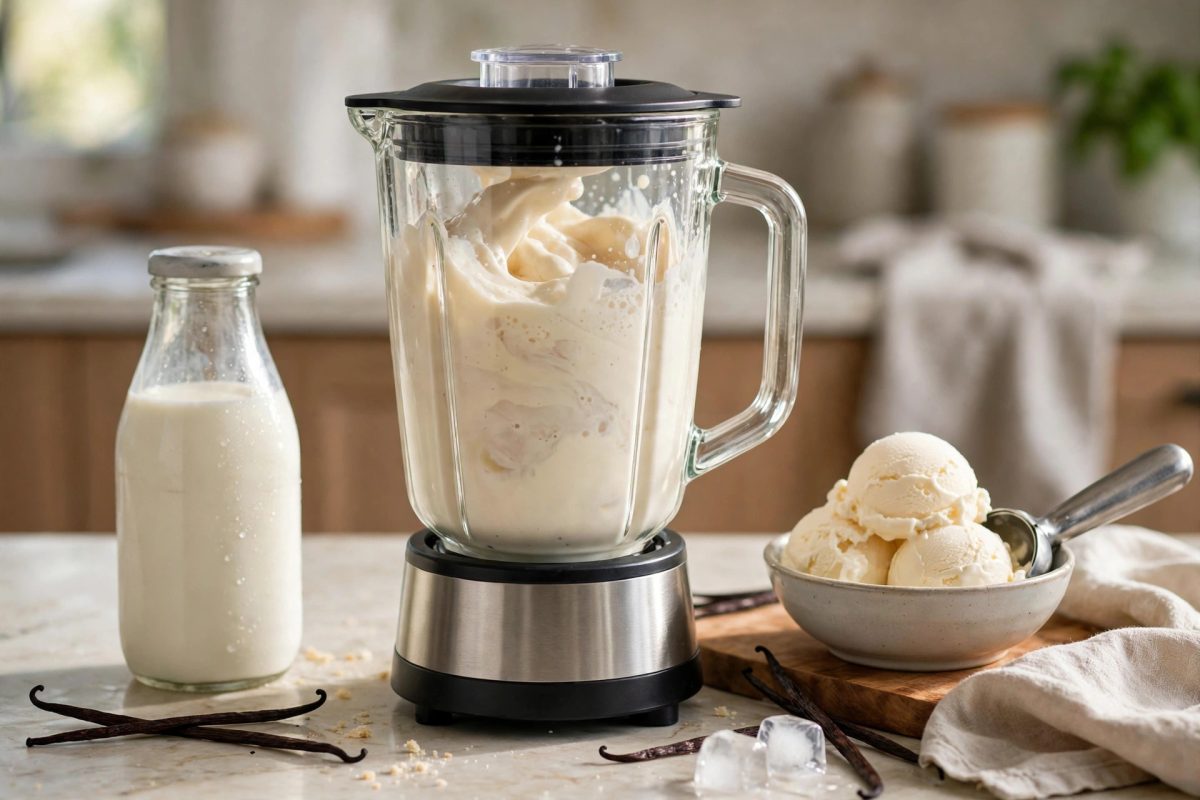
People often file milkshakes next to smoothies, but the two drinks are built differently. A fruit smoothie built on whole fruit, yogurt, and no added sugar can land at 270 to 400 calories with fiber and protein. A milkshake starts from ice cream and added sugar, so it starts at 430 and climbs — with almost no fiber and only modest protein (~12 to 15 g for a medium). If you want the cold, thick, sweet experience with a better profile, the smoothie build wins on every measure except pure indulgence. And if indulgence is the point, order the small shake and actually enjoy it, rather than the large one you drink on autopilot.
A medium shake every day adds ~650 calories a day, or ~4,550 a week. Since a pound of body fat stores roughly 3,500 calories, a daily shake habit — with nothing else changed — points at roughly 1 lb of gain per week, or over 60 lb across a year. Nobody drinks one daily, but even two a week adds ~1,300 calories weekly, enough to erase a careful 250-calorie daily deficit twice over. The lighter orders that actually work: order the small or the mini (saves ~130 to 300); skip whipped cream and mix-ins (saves ~150 to 250); split a large with someone (halves it instantly); or build the light homemade version (~250-300) with frozen banana, skim milk, and one scoop of light ice cream — thick, cold, sweet, and less than half the chain original.
A milkshake delivers a huge dose of fast sugar with almost no fiber to slow it down, so blood sugar spikes quickly and then falls — often below where it started. That crash is why a 650-calorie shake can leave you hungry within the hour, reaching for more food while the shake's calories still count. Protein and fiber blunt this effect, which is why a smoothie built on Greek yogurt and whole fruit (with its fiber intact) satisfies far longer than a shake of the same calories. If you do order a shake, eating it with or after something containing protein and fiber — a meal rather than on an empty stomach — softens the spike and the crash. And if you make one at home, blending in a tablespoon of peanut butter (~95 calories) or a scoop of protein powder (~120) raises the total slightly but changes the experience completely: slower energy, longer fullness, and no 4 p.m. vending-machine run.
Our calorie calculator checks any shake in seconds.
Calculate My ShakeWritten by the Live Fitness Check editorial team · Reviewed against our calculator methodology · Last updated October 2026
Disclaimer: This guide is for educational purposes only and is not medical advice. Calorie figures are estimates; actual values vary by chain, size, and recipe. If you are managing diabetes or another condition affected by sugar intake, talk to your doctor.