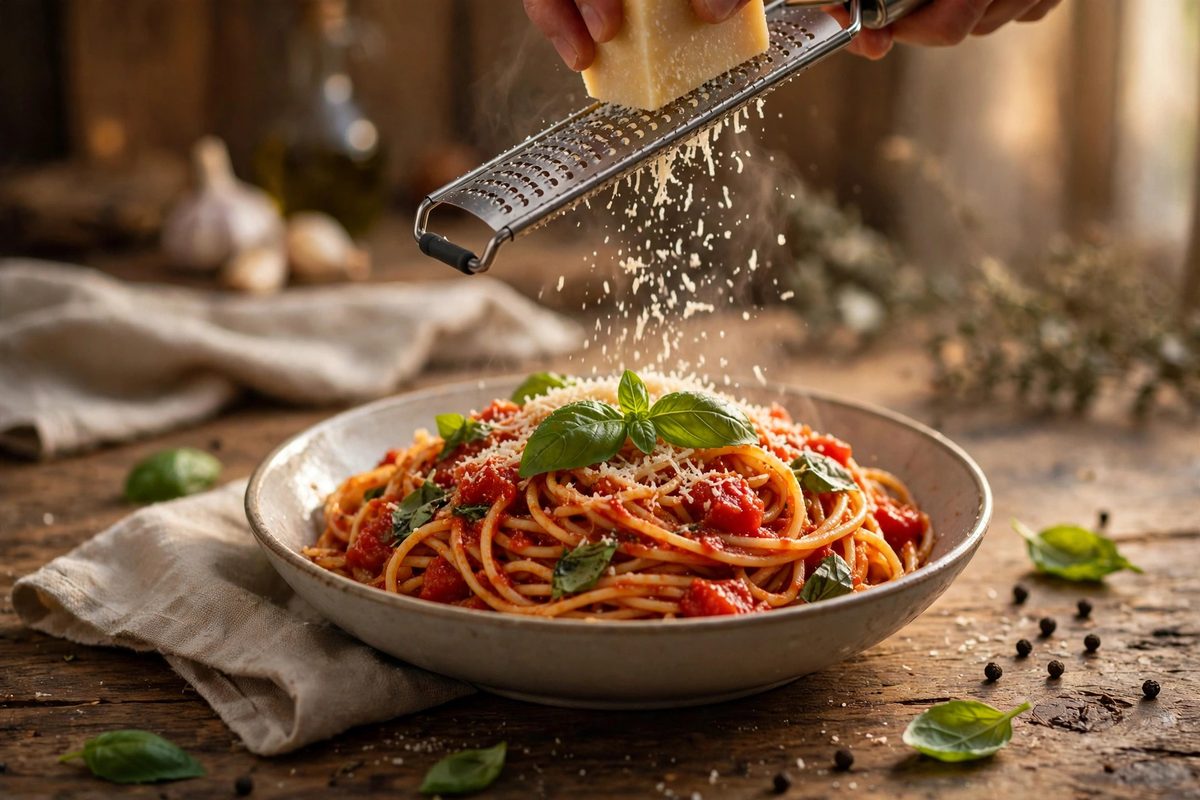
Here is the confusion that ruins spaghetti math: dry spaghetti has about 370 calories per 100 g, but cooked spaghetti has about 158 calories per 100 g — and both numbers describe the same pasta. The difference is water: spaghetti roughly doubles in weight when cooked, so the calories spread across twice the mass. If you weigh it wrong — and most people do — your count can be off by 2× in either direction. In this guide you will see the dry-versus-cooked chart, the sauce ladder (where the real calories hide), and the restaurant portion trap — or check any pasta dish instantly with our calorie calculator.
The single biggest pasta-tracking error is weighing cooked pasta against dry numbers. Pick one method and stick to it, or let our calorie calculator and macro calculator do the conversion for you.
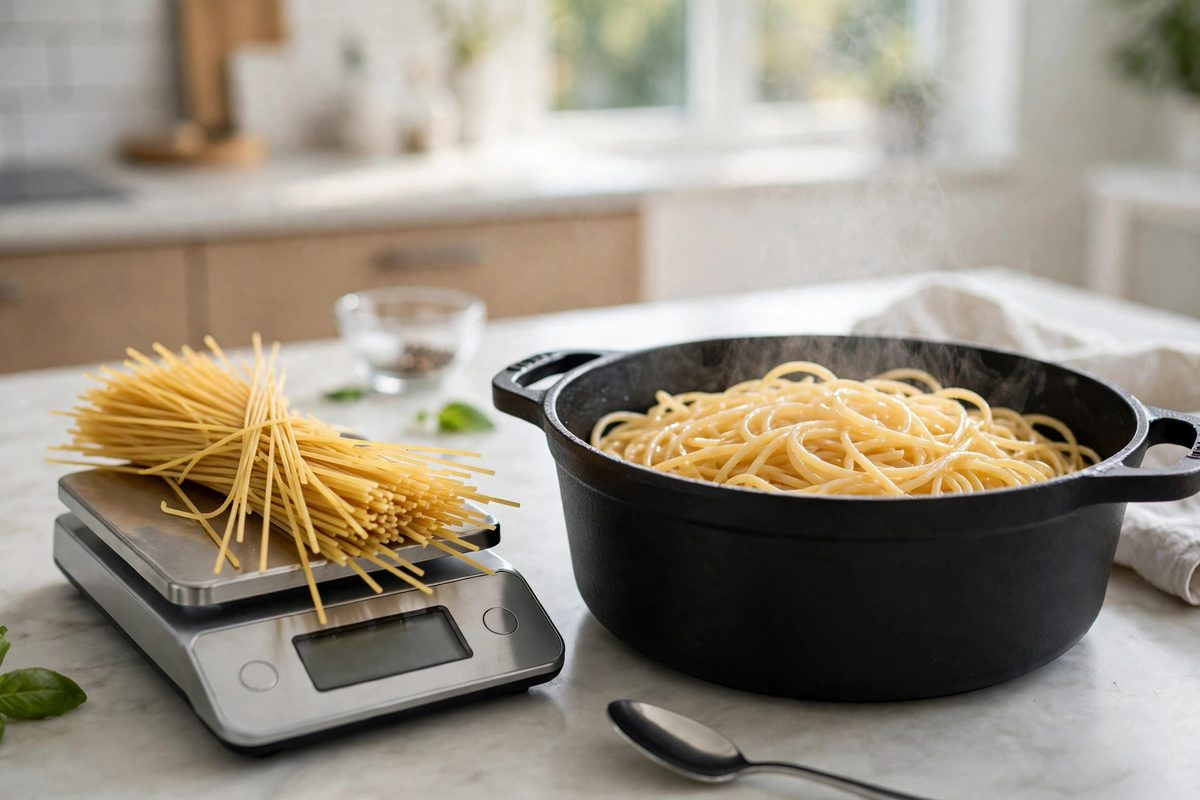
Check My PastaUSDA figures make the relationship precise. Enriched dry spaghetti: ~370 calories per 100 g. The same spaghetti cooked: ~158 calories per 100 g. The calories do not change in cooking — water adds weight, not energy — so 100 g of dry pasta (~370 calories) becomes roughly 220–240 g of cooked pasta (~350–380 calories, the small gap being cooking losses). The practical numbers everyone actually needs:
| Portion | Dry weight | Cooked amount | Approx. calories |
|---|---|---|---|
| Standard single serving | 2 oz (57 g) | ~1 cup (140 g) | ~200 |
| Small appetite / side portion | 1.5 oz (43 g) | ~3/4 cup (105 g) | ~160 |
| Generous home portion | 3 oz (85 g) | ~1.5 cups (210 g) | ~300 |
| Hearty home portion | 4 oz (113 g) | ~2 cups (280 g) | ~410 |
| Restaurant portion | 6–8 oz (170–227 g) | ~3–4 cups (420–560 g) | ~630–840 (pasta alone) |
The classic mistake runs both ways. Weighing 200 g of cooked pasta and logging it as dry gives you ~740 calories for a ~315-calorie portion — an overcount that makes pasta look like a diet disaster. Weighing 200 g of dry pasta and logging it as cooked gives you ~315 for a ~740-calorie mountain — an undercount that quietly breaks a deficit. The fix: weigh dry before cooking (it is more accurate and you only do it once), or weigh cooked and use the cooked number (~158 per 100 g). Never cross the streams.
Plain spaghetti is not the problem in most pasta dishes — the sauce is. A cup of sauce can cost more than the pasta underneath it, and the range is enormous:
| Sauce (per cup / 240 ml) | Approx. calories | What drives it |
|---|---|---|
| Simple marinara (tomato, garlic, herbs) | ~70–100 | Mostly tomato — the lightest real sauce |
| Arrabbiata (spicy tomato) | ~80–110 | Chili adds heat, not calories |
| Puttanesca (olives, capers, anchovy) | ~120–160 | Olives and oil push it up modestly |
| Meat sauce / Bolognese | ~150–250 | Ground meat fat level decides the range |
| Pesto | ~250–350 | Oil, pine nuts, and cheese — dense by design |
| Alfredo / cream sauce | ~300–400 | Butter, cream, and cheese — the heaviest common sauce |
| Butter + parmesan (aglio e olio style) | ~200–300 | Oil and butter, no tomato to dilute them |
Put it together: a standard 2 oz serving of spaghetti (~200) with marinara (~85) is ~285 calories — a genuinely light dinner. The same pasta with alfredo (~350) is ~550. And a restaurant portion (~700 pasta) with alfredo (~350) plus bread is a 1,200-calorie meal before dessert. The pasta did not change; the sauce and the portion did. This is the same weighing error our burrito guide found with tortillas — the vehicle looks innocent while the filling does the damage.
Whole-wheat spaghetti is often sold as the low-calorie option. It is not: whole-wheat pasta has nearly identical calories to white pasta (~174 vs ~158 per 100 g cooked — slightly higher, in fact, because of the bran). What whole wheat genuinely offers is fiber — roughly 3× the fiber of white pasta — which means better fullness and steadier blood sugar, plus a nuttier flavor many people prefer. If you switch to whole wheat, do it for the fiber and the fullness, not for a calorie saving that does not exist. The same logic applies to chickpea and lentil pastas: similar calories, more protein and fiber, better staying power.
Restaurants serve 3–4 times the standard 2 oz portion — 6–8 oz dry, or 3–4 cups cooked — because a generous-looking plate feels like value. A restaurant spaghetti marinara is therefore ~700–850 calories for the pasta plus ~150–200 for the (generous) sauce: ~850–1,050 total, before bread, salad dressing, or wine. The strategies that work: ask for a lunch portion or a half portion (most Italian restaurants will do it), eat half and take half home (tomorrow's lunch is already made), or order the pasta as a first course (primi) rather than a main. And if you cook at home, the 2 oz measure is your friend: a kitchen scale, once, ends the guessing forever.
The best spaghetti dinner is not a sad one. Keep the 2 oz portion, choose marinara or arrabbiata, and load the other half of the plate with vegetables — roasted zucchini, mushrooms, and spinach add volume and nutrients for ~50 calories. Add a palm-sized portion of lean protein (chicken breast, shrimp, or white beans) for ~150–200 calories and real staying power. Finish with a tablespoon of parmesan (~22 calories) rather than a snowdrift. Total: roughly 500–550 calories for a full, satisfying plate — versus 1,000+ for the restaurant version. Same food, same satisfaction, half the calories, and the difference is entirely portion and sauce.
Our calorie calculator checks any pasta dish in seconds.
Calculate My PastaWritten by the Live Fitness Check editorial team · Reviewed against our calculator methodology · Last updated October 2026
Disclaimer: This guide is for educational purposes only and is not medical advice. Calorie figures are estimates; actual values vary by brand, cooking time, and sauce recipe. If you are managing diabetes or another condition affected by carbohydrate intake, talk to your doctor.