
Your sleep chronotype is your body's natural preference for when to sleep and wake, and it falls into one of four patterns: Lions rise early and peak in the morning, Bears follow the sun and peak midday, Wolves come alive in the evening, and Dolphins sleep lightly and irregularly. Knowing your type will not change your job's start time, but it can change when you schedule hard work, workouts, and wind-down — and it explains why a 6 a.m. alarm feels easy for your coworker and brutal for you. Find your type in minutes with our sleep chronotype calculator, then read on for each type's ideal schedule.
About half of all people are Bears, roughly 15 to 20% are Lions, roughly 15 to 20% are Wolves, and about 10% are Dolphins. Your type is shaped by genetics, age, and light exposure, and it shifts across your life — teenagers skew Wolf, older adults skew Lion. Take the quiz-style check in our sleep chronotype calculator to find your type, then use the schedules below to work with it, not against it.
Find My ChronotypeA chronotype is your circadian rhythm's timing preference: whether your body's internal clock runs slightly early, on time, late, or irregularly relative to the sun. The science underneath is real — the human circadian clock runs on a cycle of about 24.2 hours on average, and genes such as PER3 influence whether you lean early or late — but the four-animal labels come from sleep specialist Dr. Michael Breus's popular framework, not from a medical diagnosis. That distinction matters: your chronotype describes tendencies, it does not diagnose a sleep disorder, and it should never be used to dismiss real symptoms such as loud snoring, long sleep onset, or daytime sleepiness that deserves a doctor's attention.
Two facts keep the framework honest. First, chronotypes exist on a spectrum: most people are not pure Lions or pure Wolves, and many sit between Bear and one of the other types. Second, the US Centers for Disease Control and Prevention (CDC) recommends 7 or more hours of sleep per night for adults regardless of type, and the American Academy of Sleep Medicine warns that chronic social jetlag — the gap between your body's preferred schedule and your work schedule — is linked to poorer metabolic and mental health. The goal of knowing your type is to shrink that gap where you can, not to justify a 4-hour sleep schedule because you are a Wolf.
Bears are the majority at roughly 50% of people, Lions and Wolves each account for roughly 15 to 20%, and Dolphins make up about 10%. The table below is the quick-reference version of the whole guide: find your row, and you have your sleep window, your peak productivity window, and your biggest trap.
| Type | Share of people | Ideal sleep window | Peak focus window |
|---|---|---|---|
| Lion (early riser) | ~15–20% | 9 p.m. – 5:30 a.m. | 8 a.m. – 12 p.m. |
| Bear (sun follower) | ~50% | 10 p.m. – 7 a.m. | 10 a.m. – 2 p.m. |
| Wolf (night owl) | ~15–20% | 12 a.m. – 9 a.m. | 5 p.m. – 9 p.m. |
| Dolphin (light sleeper) | ~10% | 11:30 p.m. – 6:30 a.m. | 10 a.m. – 2 p.m. |
If you are unsure which row is yours, ask one question: left entirely alone for a week, with no alarm and no obligations, when would you naturally fall asleep and wake up? Lions drift toward 9 or 10 p.m. and wake before 6 a.m. without an alarm; Bears settle near 11 p.m. to 7 a.m.; Wolves slide past midnight toward 8 or 9 a.m.; Dolphins never quite settle, waking often and feeling unrefreshed even after 8 hours in bed. That free-running answer is more informative than any single quiz question.
Lions wake naturally around 5:30 to 6 a.m., feel sharpest from about 8 a.m. to noon, and fade noticeably by early evening, with an ideal bedtime around 9 to 10 p.m. If this is you, your superpower is the quiet morning: schedule deep work, important decisions, and hard workouts before lunch, because your focus and energy genuinely decline after about 2 p.m. Lions are the people who love sunrise runs and find 8 p.m. dinners exhausting rather than relaxing.
The Lion trap is evening social pressure. Staying out until midnight costs a Lion far more than it costs a Wolf, because the Lion's clock still wakes them at dawn regardless. Protect the morning by protecting the evening: dim lights after 8 p.m., keep caffeine before noon, and treat a 9:30 p.m. bedtime as a performance decision, not a personality flaw. Lions also do best with morning light exposure within an hour of waking, which anchors their already-early clock.
Bears sleep about 10 p.m. to 7 a.m., peak between 10 a.m. and 2 p.m., and hit a real afternoon dip around 2 to 4 p.m. — which is why the standard 9-to-5 workday fits Bears better than anyone else. If this is you, you are built for the conventional schedule: mornings are for warming up, midday is for your hardest work, and the afternoon dip is the right time for meetings, errands, or a short walk rather than deep creative work.
The Bear trap is the afternoon slump, and the fix is not more coffee. A 20-minute walk outside, bright light, and a protein-rich lunch do more for a Bear's afternoon than a third cup of coffee, which then pushes bedtime later and starts the cycle again. Bears also benefit most from the classic sleep hygiene rules — consistent wake time, morning sunlight, and screens off an hour before bed — because their clocks are the most responsive to light cues.
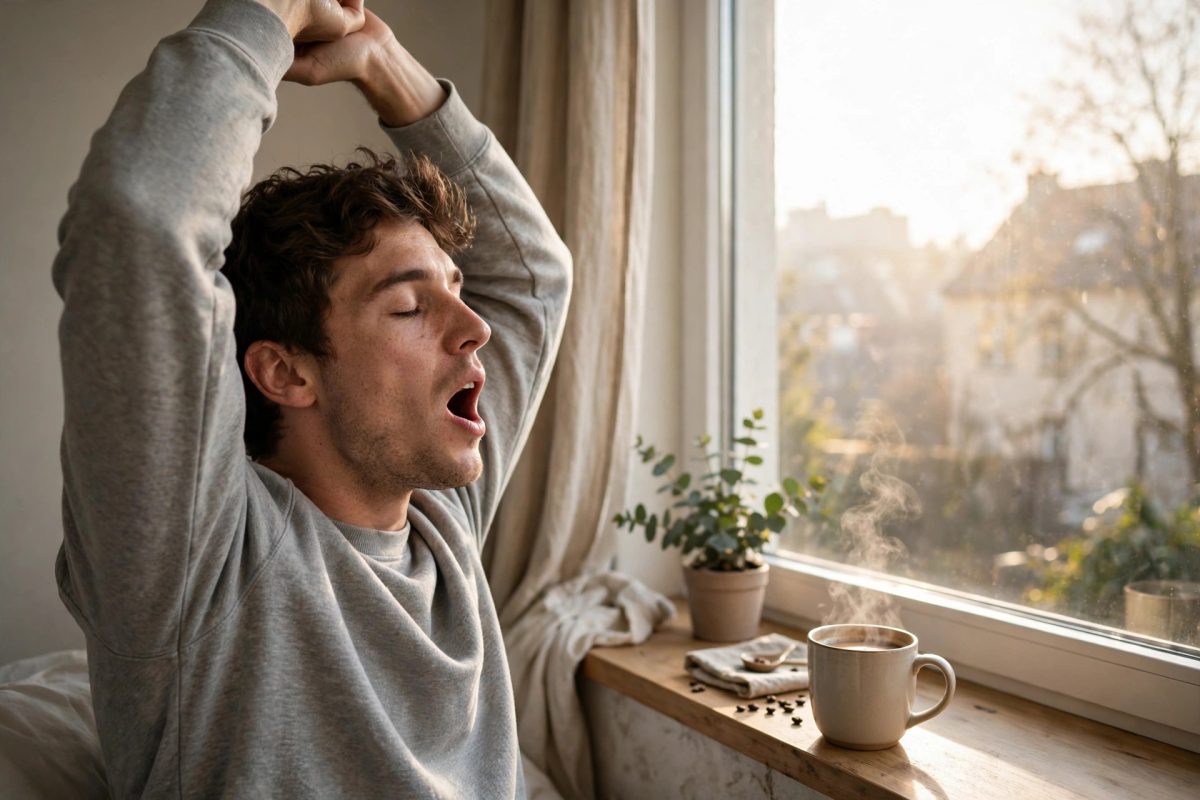
Wolves fall asleep around midnight to 1 a.m., wake naturally around 8:30 to 9 a.m., and do their best work between about 5 p.m. and 9 p.m., when Lions are fading. If this is you, your evening focus is real, not laziness: studies of circadian preference consistently find that evening types perform better on cognitive tests later in the day, while morning types peak early. Wolves are also the most punished by standard schedules, because a 7 a.m. alarm can cut a Wolf's sleep short by 2 hours every single workday — a weekly sleep debt of about 10 hours.
The Wolf strategy is damage control plus leverage. Where possible, shift deep work, creative projects, and workouts to the late afternoon and evening, when your brain is actually online. Protect sleep with blackout curtains, a cool dark room, and a firm rule against screens after midnight, and use bright light in the late morning to nudge your clock slightly earlier without fighting it. If you consistently cannot fall asleep before 2 or 3 a.m. and cannot function in the morning, that may be delayed sleep-wake phase disorder rather than a chronotype — worth raising with a doctor.
Dolphins sleep lightly, wake often during the night, and often feel unrefreshed even after a full night in bed, with a rough ideal window around 11:30 p.m. to 6:30 a.m. If this is you, your problem is usually sleep quality more than sleep timing: Dolphins tend toward anxiety-driven wakefulness, lying awake rehearsing the day or worrying about tomorrow. Their peak focus window, roughly 10 a.m. to 2 p.m., is similar to Bears, but their mornings start groggier.
The Dolphin playbook is therefore about calming the nervous system, not just scheduling. A strict wind-down routine — same time, same steps, no news or work email in the last hour — matters more for Dolphins than for any other type. So do a cool bedroom (around 65°F / 18°C), white noise to mask small sounds, and cognitive tricks such as writing tomorrow's worries on paper before bed so the brain can let go of them. Dolphins should be the most careful with caffeine, keeping it before noon, and the quickest to seek help if poor sleep persists for weeks.
The most practical way to use your chronotype is to match task type to energy, not just hours to tasks: schedule deep work in your peak window, exercise in your high-energy window, and admin or social time in your dip. Lions train best in the morning, Bears around midday or late afternoon, Wolves in the evening, and Dolphins in the late morning after they have fully woken up. Caffeine follows the same logic: Lions should front-load it before noon, Bears should stop by early afternoon, and Wolves and Dolphins should treat late-afternoon coffee as borrowed sleep that gets repaid with interest.
Finally, remember that chronotypes shift with age and season. Teenagers are famously Wolf-like because puberty delays the circadian clock by 1 to 3 hours, and older adults drift Lion-ward as the clock advances. If your type seems to have changed over the years, it probably has — retake our sleep chronotype calculator every year or two, and adjust your schedule to the person you are now rather than the person you were at 20.
Our sleep chronotype calculator matches you to Lion, Bear, Wolf, or Dolphin.
Find My ChronotypeWritten by the Live Fitness Check editorial team · Reviewed against our calculator methodology · Last updated November 2026
Disclaimer: This guide is for educational purposes only and is not medical advice. Chronotypes describe sleep timing tendencies, not diagnoses. If you have persistent trouble falling asleep, staying asleep, loud snoring, or excessive daytime sleepiness, talk to your doctor or a sleep specialist.