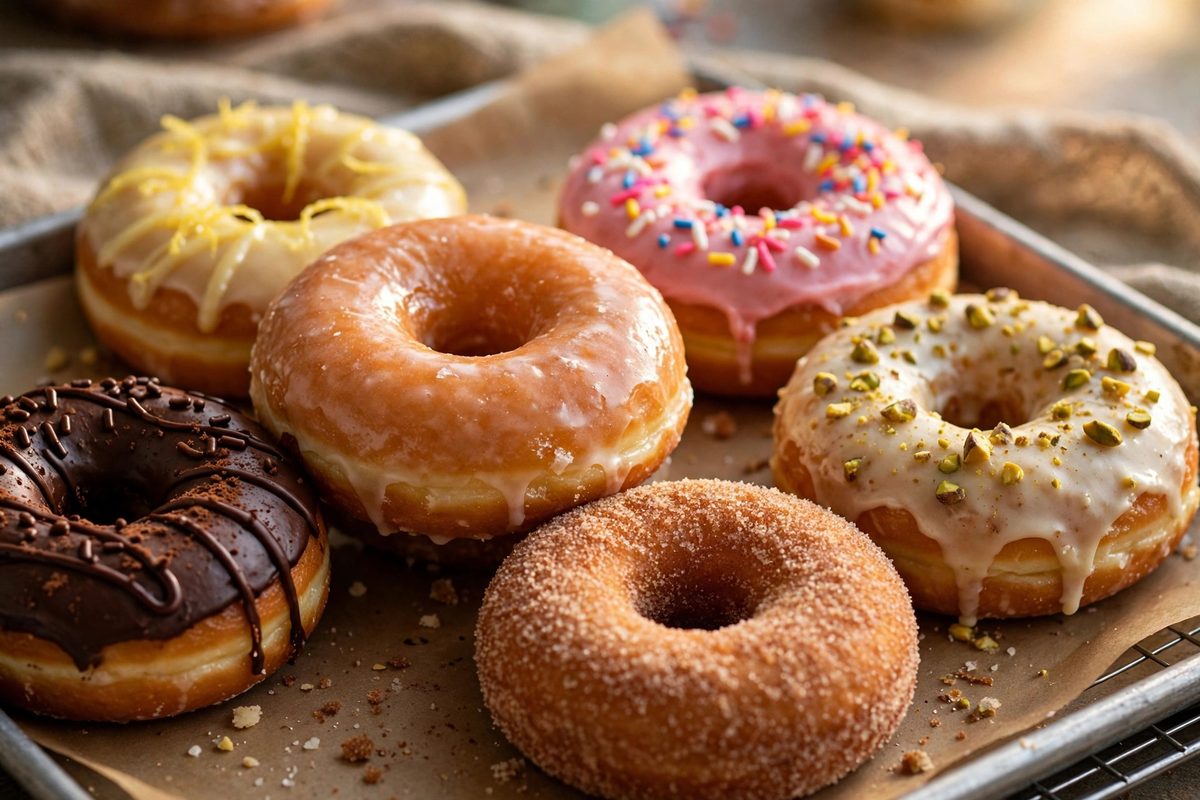
Here is the short answer: a donut has roughly 190 to 600+ calories depending on which donut it is — and that range is the whole story. A plain glazed ring is the lightest thing in the case at ~190–260 calories. A filled, frosted, topped donut can be a 500-calorie dessert wearing a breakfast costume. In this guide you will see the glazed baseline, the chain snapshot, the cake-versus-yeast math, and the only framing that matters: one donut versus the box — or check any treat instantly with our calorie calculator.
Donuts, cake, ice cream — log any of them with our calorie calculator and see the macro split with the macro calculator.
Check My TreatDonuts divide into two families — yeast-raised (light, airy, glazed) and cake (dense, crumbly, like a muffin in a ring) — and the family predicts the calories better than the flavor does.
| Donut (one standard ring) | Approx. calories | What drives it |
|---|---|---|
| Glazed yeast ring (Krispy Kreme Original Glazed style) | ~190 | Light dough, thin glaze — the floor of the case |
| Glazed yeast ring (Dunkin' style) | ~260 | Slightly larger and denser than the Krispy baseline |
| Chocolate-frosted yeast ring | ~280–320 | Frosting adds ~60–90 over glazed |
| Strawberry-frosted with sprinkles | ~280–310 | Frosting plus sugar sprinkles |
| Plain cake donut | ~280–330 | Dense crumb absorbs more frying oil |
| Chocolate cake donut | ~300–350 | Cocoa crumb plus glaze or frosting |
| Old-fashioned / sour cream cake | ~300–360 | Craggy surface holds extra glaze |
| Boston Kreme (custard-filled, chocolate-topped) | ~300–320 | Custard filling plus chocolate topping |
| Jelly-filled | ~320–380 | Sweet filling replaces the hole |
| Maple bar (long john) | ~350–420 | Larger bar shape, more dough, maple frosting |
| Apple fritter | ~400–500 | Big, irregular, extra glaze in every fold |
| Loaded / topped specialty (bacon, cookie crumble, candy-topped) | ~450–600+ | Toppings on top of frosting on top of filling |
The rule of thumb: every layer adds 60–150 calories. Glaze alone is ~60. Frosting is ~80–120. Filling is ~80–150. Toppings are ~50–150. A donut with all four layers is a different food from a plain glazed ring, even though both are called "a donut."
Chain nutrition pages make the range concrete. Krispy Kreme's Original Glazed is famously light at 190 calories — the lightest mass-market donut in America — because the ring is small (~48 g) and the glaze is thin. Dunkin's Glazed is 260 calories at a larger size (~70 g). Dunkin's Boston Kreme runs ~300, and its cake donuts sit in the 300–350 range. The lesson is not that one chain is "better" — it is that size explains most of the gap. A 48 g donut and a 70 g donut are not the same serving, and comparing their calories without their weights is meaningless.
Independent bakery donuts are usually larger than either chain's — a bakery glazed ring can weigh 85–100 g and run 300–400 calories before any frosting. If your local donut feels heavier than a chain donut, it almost certainly is.
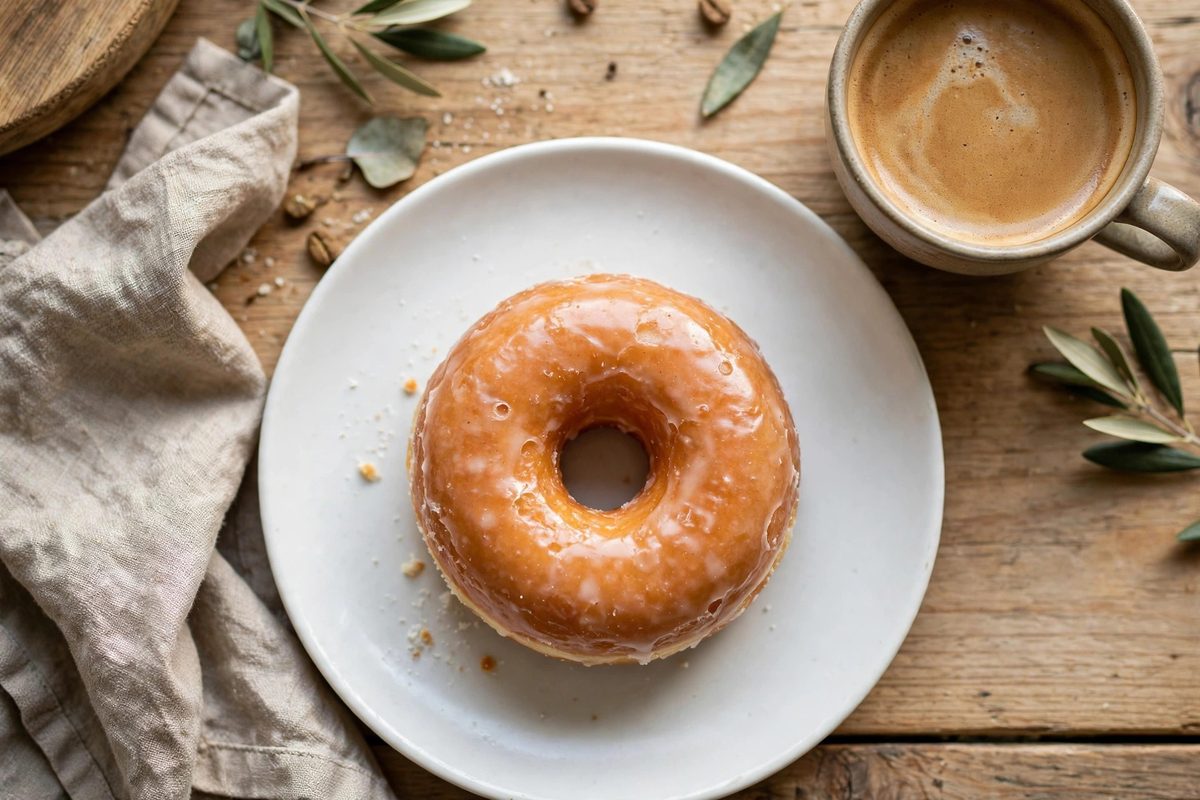
Yeast donuts rise with air. Their crumb is mostly holes, so a yeast ring weighs less and absorbs less oil in the fryer. Cake donuts are chemically leavened like muffins — a dense crumb that soaks up more fat. That is why a plain cake donut (~300) costs more than a glazed yeast ring (~190–260) despite looking plainer: density is calories.
The same logic explains the old-fashioned donut's craggy surface — every crack holds glaze, so a glazed old-fashioned (~300–360) out-calories a smooth glazed ring. And it explains the apple fritter: an irregular shape with folds of dough and pooled glaze, routinely 400–500 calories, is effectively two donuts fused together.
One donut hole runs about 50–90 calories, which sounds harmless — until you count how many you actually eat. A small cup of 5 holes is 250–450 calories, roughly a full donut or more, and because each hole is a single bite, the eating barely registers. Mini donuts at fairs and food trucks follow the same trap: 6 minis dusted with sugar run ~300–400 calories, eaten standing up in three minutes.
The fix is the same as for our cake slice guide: decide the number before you start. Three holes is a snack (~150–270). The cup is a meal.
A dozen glazed donuts is roughly 2,280–3,120 calories sitting in a box on the office table. Nobody eats a dozen — but the box works by making the second and third donut feel free. The research on this is consistent: food that is visible, free, and already open gets eaten in units you did not plan.
The strategies that actually work for donut lovers: pick your donut — if you want the Boston Kreme, have the Boston Kreme and skip the random glazed you do not even like; eat it sitting down, on a plate (standing at the box doubles intake); log it before the box opens using the chart above, so the number is decided rather than discovered. One 300-calorie donut at a Friday meeting changes nothing about a week; the pattern of untracked box donuts does. For the fast-food version of the same logic, see our cheeseburger guide.
Our calorie calculator keeps the box honest in seconds.
Calculate My TreatWritten by the Live Fitness Check editorial team · Reviewed against our calculator methodology · Last updated October 2026
Disclaimer: This guide is for educational purposes only and is not medical advice. Calorie figures are estimates; actual values vary by bakery, size, and recipe. If you are managing diabetes or another condition affected by sugar intake, talk to your doctor.