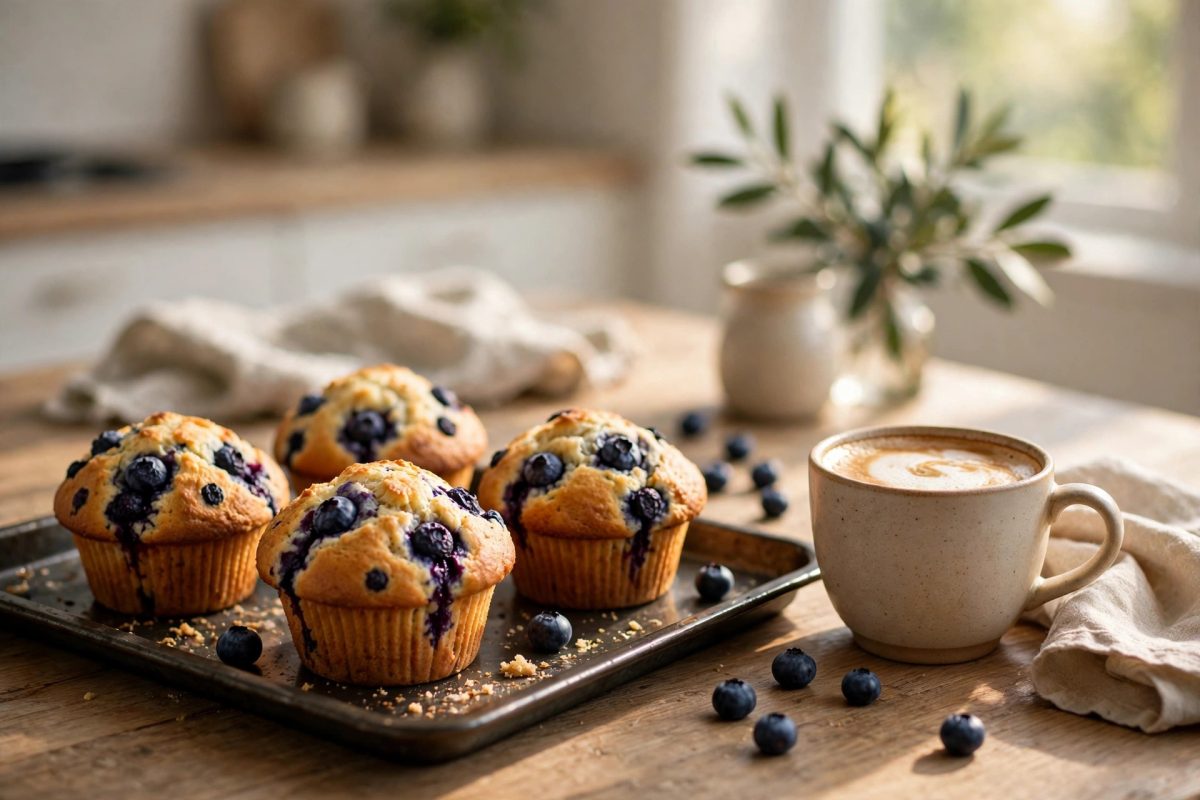
Here is the short answer: a muffin has roughly 150 to 850+ calories — and the size is the entire story. A small homemade muffin is ~150–200; a standard medium is ~300–400; a large bakery muffin is ~400–600+; and the "mega" muffins at some bakeries pass 800. The muffin you picture when you hear the word is probably the medium one, but the muffin a coffee shop hands you is usually the large one. In this guide you will see the size ladder, the type chart, the toppings math, and the lighter swaps — or check any breakfast instantly with our calorie calculator.
Muffin, coffee, the whole morning — add it up with our calorie calculator and see the macro split with the macro calculator.
Check My BreakfastMuffins are sold by the same name at wildly different weights, which is why database numbers for "a muffin" range from 110 to 850 calories. Weigh the muffin, not the word:
| Muffin size | Weight | Approx. calories |
|---|---|---|
| Small / mini-muffin | ~2 oz (55 g) | ~150–200 |
| Homemade standard | ~2.8 oz (80 g) | ~250–300 |
| Medium (store / café) | ~3–3.5 oz (90–100 g) | ~300–400 |
| Large bakery / coffee-shop | ~4–6 oz (120–170 g) | ~400–600+ |
| Bakery "mega" muffin | ~7 oz (200 g+) | ~650–850 |
Why the huge spread? Two drivers: portion size (a 200 g mega muffin is nearly 4 times the weight of a 55 g small one) and fat content (professional recipes use more oil or butter than home recipes to keep muffins moist for days on display). A large bakery muffin can carry more calories than a balanced lunch — and because it is a single item eaten in a few minutes, it rarely feels like it. The single most useful habit in this article: if the muffin is bigger than your fist, use the large row, not the medium one.
At the same size, the flavour moves the number by 50–150 calories — much less than size does, but enough to matter. Figures below are for medium (~100 g) muffins unless noted:
| Muffin type (medium) | Approx. calories | What drives it |
|---|---|---|
| Bran muffin | ~300–380 | Fibre helps, but oil and sugar still dominate |
| Blueberry (homemade) | ~250–350 | Berries are light; the batter is not |
| Blueberry (store / café large) | ~380–450 | Bigger + richer batter (a chain blueberry muffin runs ~380) |
| Corn muffin | ~300–400 | Cornmeal + butter; often served with extra butter |
| Lemon poppy seed | ~350–450 | Glaze adds sugar on top of the batter |
| Banana nut | ~400–500 | Nuts are calorie-dense (~180 per oz) |
| Chocolate chip | ~400–550 | Chips + richer batter; a half-cup of chips adds ~400 calories to a batch |
| Double chocolate / fudge | ~450–550 | Cocoa + chips + more sugar |
Two myths die here. First, bran muffins are not light — the bran adds fibre, but a commercial bran muffin still carries 300–380 calories of oil, sugar, and flour; it is a better muffin, not a low-calorie one. Second, "blueberry" is not a health claim — a handful of berries in a 400-calorie batter does not make the batter disappear. The berries help the flavour and add a little fibre; they do not rescue the numbers.
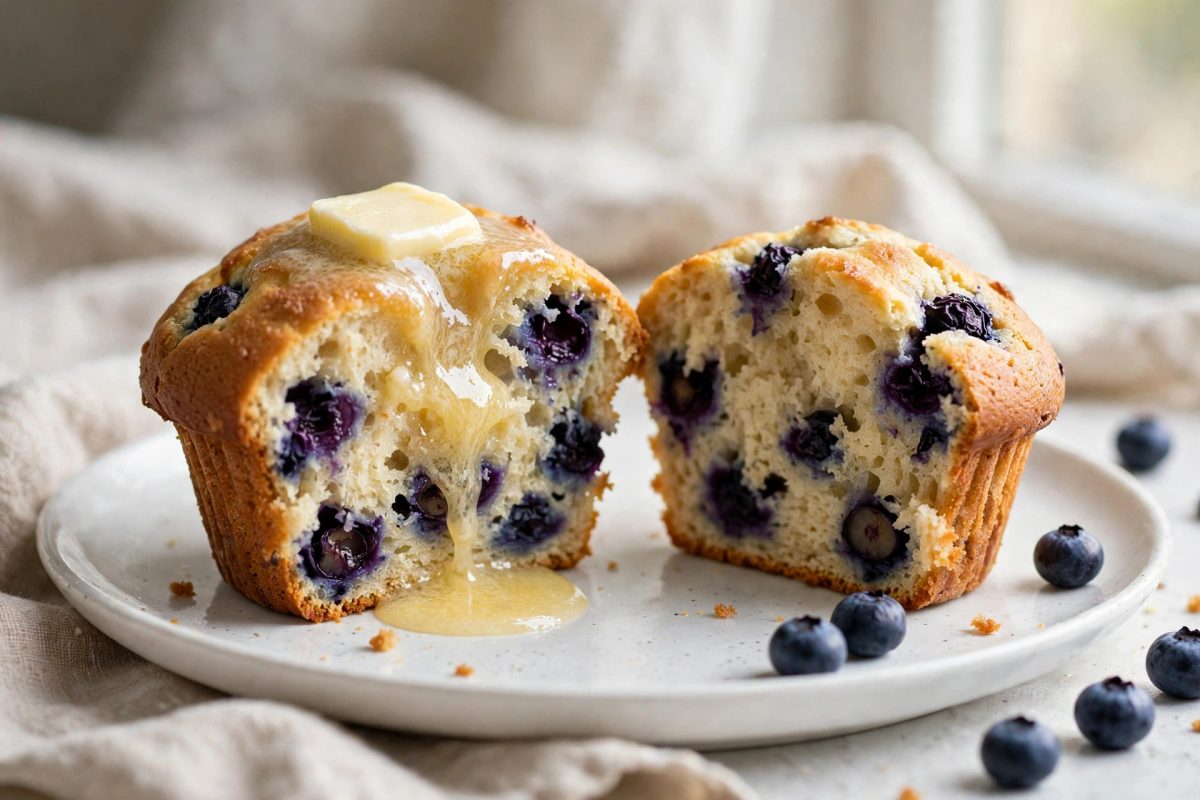
Muffins are often buttered or spread, and the toppings stack on an already-large base: butter (1 tbsp) adds ~100 calories, cream cheese (2 tbsp) adds ~100, jam (1 tbsp) adds ~50. A large bakery blueberry muffin (~450) with butter (~100) is ~550 calories — a full quarter of a 2,000-calorie day before you have had lunch. The English muffin deserves a separate note: it is a different food entirely (a flat, griddled bread, ~130–150 calories) and is not comparable to a cake-style muffin — if your goal is a lighter breakfast, the English muffin with an egg is a genuinely different choice, not a smaller version of the same thing.
And the cupcake comparison people always ask about: a frosted cupcake is typically ~300–400 calories — often less than a large bakery muffin. The cupcake looks like the indulgence and the muffin looks like breakfast, but the muffin's size advantage reverses the ranking. The "healthy halo" is the muffin's best trick: it is cake batter baked in a paper cup and eaten before noon.
Four swaps that actually work: eat half — a large bakery muffin split with someone is ~200–300 each, which is a normal snack, not a meal; bake at home with swaps — replacing half the butter or oil with unsweetened applesauce or non-fat Greek yogurt cuts a homemade muffin to ~200–250 without drying it out; pick the smaller flavour — a homemade blueberry (~250–350) over a chocolate chip (~400–550) saves ~100–200 at the same size; skip the butter — a warm muffin does not need 100 calories of butter to taste good, and that single cut is the easiest in this article. For the rest of the breakfast-pastry set, see our guides on bagels, donuts, and cake.
Our calorie calculator keeps breakfast honest in seconds.
Calculate My BreakfastWritten by the Live Fitness Check editorial team · Reviewed against our calculator methodology · Last updated October 2026
Disclaimer: This guide is for educational purposes only and is not medical advice. Calorie figures are estimates from nutrition databases and published chain data; actual values vary widely by recipe and size. If you are managing diabetes or another condition affected by sugar intake, talk to your doctor.
